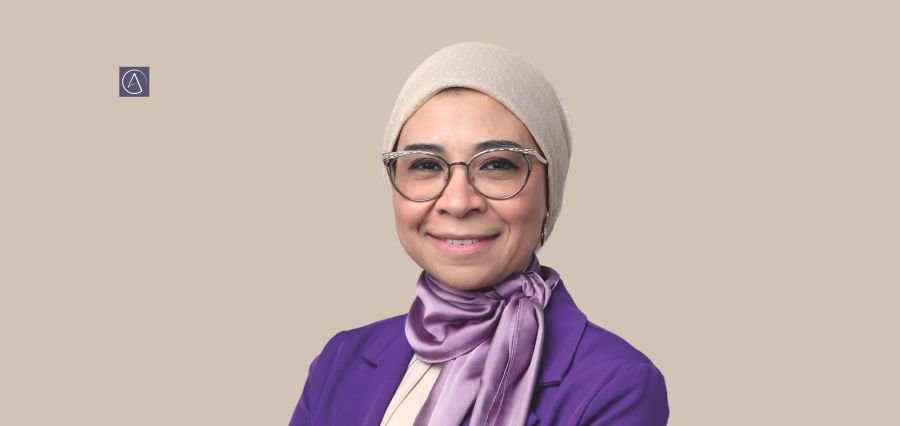
Long before she entered academia, Dr. Walaa Fouda experienced the power of narrative via the lens of a broadcast camera. The newsroom taught her principles that no textbook could how truth is constructed, how messages influence people, and how communication carries responsibility. These early experiences served as the cornerstone for her life’s mission, which is to transform media education into a live, human experience.
Today, as an Associate Professor at the University of Khorfakkan, she applies her real-world experience to every classroom she teaches in and every research project she works on. Her transition from media professional to academic innovator has been guided by a simple conviction: theory must always meet practice. Before joining the University, she was Chair of the Media and Mass Communication Department at the American University in the Emirates, where she oversaw accreditation reforms, revised curriculum, and formed connections between academics and industry.
At the heart of her mission is a clear goal: to equip communicators to think critically, produce responsibly, and adapt ethically in a rapidly changing digital context. Dr. Walaa Fouda leadership continues to change not only media education, but also media understanding, as a force for connection, reflection, and transformation.
From Broadcast Pioneer to Academic Innovator
Dr. Walaa Fouda journey into academia carries the weight of real-world experience. Her background in broadcasting taught her an essential truth: theory disconnected from practice remains hollow. This conviction shapes every course she designs, every student she mentors, and every research project she pursues.
Before joining the University of Khorfakkan, she served as Chair of the Media and Mass Communication Department at the American University in the Emirates. There, she spearheaded major accreditation projects, overhauled curriculum frameworks, and forged partnerships between academic programs and industry leaders. These initiatives didn’t simply update course catalogs they fundamentally reimagined how universities prepare communicators for volatile, technology-driven markets.
Today, she continues this mission through a dual focus: advancing research on AI and digital transformation while mentoring students who will inherit an increasingly complex media landscape. Her work operates on a guiding principle she articulates clearly: “Media education must be a living experience, not a theoretical pursuit.”
Teaching at the Intersection of Innovation and Ethics
Dr. Walaa Fouda oversees courses spanning new media, digital journalism, international communication, and AI applications in media. She delivers these programs through both online and face-to-face formats, adapting her pedagogical approach to maximize engagement across diverse learning environments.
When designing courses, she begins by identifying emerging industry needs whether AI-driven storytelling tools, immersive production techniques, or data analytics platforms. She then aligns these technological realities with academic objectives and accreditation standards, creating courses that satisfy both institutional requirements and marketplace demands.
Her approach emphasizes collaborative curriculum design. Faculty and students co-create learning experiences that remain dynamic and responsive to change. When developing courses in Digital Media Production or AI in Journalism, she integrates case studies, media lab projects, and partnerships with industry experts who provide students with direct exposure to professional workflows.
But she insists on more than technical proficiency. She embeds critical reflection within practical skill-building, requiring students not only to produce content but to analyze its ethical and cultural implications. This dual emphasis produces graduates who function as creative thinkers, responsible communicators, and future-ready professionals capable of navigating ambiguity.
“I expect students to articulate not just what they produced, but why and for whom,” she explains. This question for whom? anchors her evaluation philosophy. It pushes students beyond surface-level metrics toward deeper considerations of audience impact, social responsibility, and message integrity.
Keeping Pace with Technological Disruption
Curriculum development, Dr. Walaa Fouda insists, must evolve at the same speed as technology itself. She approaches this challenge through data-informed analysis and future-oriented planning, regularly engaging with media practitioners, attending international conferences, and studying industry trends to identify which emerging skills warrant integration into academic programs.
She advocates redesigning courses for each cycle to incorporate new AI applications and digital trends. This commitment requires institutional support, which the University of Khorfakkan provides through faculty development workshops on artificial intelligence, metaverse applications, and digital pedagogy. These initiatives create a culture where educators embrace lifelong learning alongside their students.
Her philosophy remains straightforward yet profound: “To prepare students for jobs that may not yet exist, we must teach them how to adapt, question, and create with purpose.”
This forward-thinking approach extends to assessment methods. When evaluating student work involving emerging digital tools—social media campaigns, interactive media projects, or content creation—she applies three dimensions: conceptual creativity, technical execution, and ethical reflection. She integrates peer review and reflective self-assessment into evaluation processes, teaching students to critique digital content based on evidence and ethics rather than personal bias.
Bridging Theory and Professional Practice
Dr. Walaa Fouda champions experiential learning with the conviction of someone who has worked both sides of the industry-academia divide. She developed internship frameworks that connect students with leading media organizations, from television networks to digital marketing firms. These structured experiences provide students with professional contexts where theory transforms into practical competence.
She encourages student-led media projects including short documentaries, podcasts, and campus campaigns. These initiatives allow students to apply classroom concepts while building portfolios that demonstrate capabilities to potential employers. The university hosts guest lectures and field visits where students interact directly with journalists, producers, and media innovators, exposing them to professional networks and industry realities.
These experiences accomplish more than resume-building. They empower students to perceive media not merely as content production but as tools for influence, creativity, and social change. This perspective shift from technician to change agent defines her broader educational mission.
Research That Addresses Contemporary Challenges
Dr. Walaa Fouda research agenda explores territories where technology intersects with human values. Her work examines how artificial intelligence shapes public opinion, influences journalistic integrity, and transforms media sustainability. Recent publications on AI applications in media and social media feedback optimization reflect her commitment to scholarship that addresses pressing industry questions.
She selects research projects based on three criteria: societal relevance, innovation potential, and academic contribution. Even with time and funding constraints, she prioritizes investigations that offer practical insights for educators, policymakers, and media professionals. Her collaborative approach brings together colleagues across universities and countries, creating interdisciplinary projects that merge communication studies, data science, and ethics.
“Impactful research is not just cited—it’s applied,” she states, underscoring her commitment to scholarship that transcends academic journals to influence professional practice.
When supervising student research projects, particularly those involving AI, misinformation, or digital content creation, Dr. Walaa Fouda
emphasizes innovation, originality, and ethical integrity. She encourages students to choose topics that excite them while challenging their assumptions, believing originality emerges when curiosity meets expert guidance.
Ethics discussions begin immediately, especially for AI-related or data-driven projects. She teaches students how to handle misinformation responsibly, respect intellectual property, and consider cultural sensitivities. She emphasizes methodological rigor and transparency, requiring students to validate sources, justify choices, and document each research stage. This process ensures not only innovation but also academic honesty and ethical accountability—qualities essential for future media leaders.
Leadership Lessons for Emerging Academics
For young academics entering media education or research,Dr. Walaa Fouda identifies emotional intelligence as the most vital trait beyond technical expertise. She defines this as the ability to lead with empathy, communicate with clarity, and inspire others through action.
She encourages cultivating intellectual curiosity, resilience, and commitment to ethical scholarship. Given that media landscapes shift constantly, flexibility and lifelong learning become indispensable. She reframes academic leadership not as hierarchy but as service—supporting colleagues’ growth, sharing knowledge, and promoting integrity. “When passion meets purpose,” she notes, “real leadership begins.”
Preparing for the Next Decade
Looking toward 2026-2030, Dr. Walaa Fouda anticipates transformative shifts in media education. Artificial intelligence will revolutionize storytelling methods, while immersive and data-driven content becomes mainstream. Yet she identifies the biggest challenge as upholding ethics in an age of automation.
To prepare, she develops modules through her research that teach AI literacy, digital ethics, and human-centered media design. She plans to integrate interdisciplinary collaborations linking communication with computer science, innovation studies, and sustainability research.
At the University of Khorfakkan, her vision extends beyond producing media consumers or creators. She aims to nurture innovators who shape narratives responsibly. “Education must remain ahead of technology, not behind it,” she asserts.
A Mission Beyond Information Transfer
Dr. Walaa Fouda closing reflection captures her educational philosophy with clarity: “Education is not about transferring information; it’s about transforming imagination into innovation. My mission as an educator is to empower every student to think, feel, and create with responsibility. When knowledge meets purpose, we don’t just graduate professionals, we nurture visionaries.”
This statement reveals the distinctive quality of her approach. She doesn’t view students as passive recipients of knowledge but as active agents capable of shaping media’s future. Her role involves providing tools, frameworks, and ethical grounding, then trusting students to forge their own paths.
As media industries navigate unprecedented technological disruption, Dr. Walaa Fouda stands as both guide and catalyst. She demonstrates that effective media education requires more than updated software or trending platforms. It demands educators who understand technology’s possibilities, question its implications, and remain committed to human values amid digital transformation.
Her students don’t simply learn about media, they learn to wield it as a force for understanding, connection, and positive change. In an age when media literacy determines democratic participation and professional success, this education becomes not just valuable but essential.
Through her teaching, research, and leadership, she proves that the future of media education rests not in choosing between innovation and ethics, but in insisting both remain inseparable.