
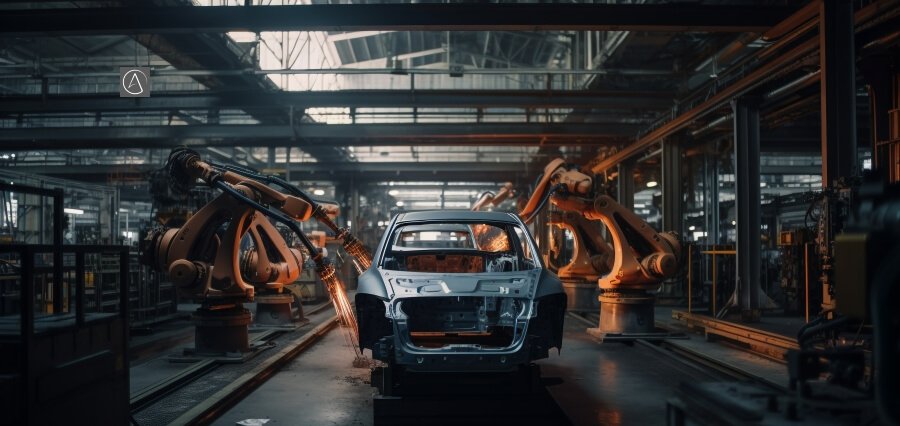
The automotive sector in the past has been a major driver of technological changes which have had ripple effects on the global economies, urban development, and consumer lifestyles. Vehicle innovations used to emphasize engine power, safety features, and design appeal. At present, innovations are not an option, they are a must for the survival of the industry. The industry is dealing with a very complex situation due to consumer demand changes, strict environmental regulations, and rapid technological advances in digital technologies, artificial intelligence, and manufacturing processes. To keep their competitiveness car manufacturers are progressively going for integrated strategies which include research and development, digital transformation, and sustainability initiatives. Those enterprises which effectively carry out such strategies are not only manufacturing vehicles, but they are also redefining the very concept of mobility. The innovations in the automotive sector are not only a lot more profound than before but also cover a wide range of objectives, such as the creation of green and smart, connected vehicle systems, not only deeply but also broadly. Besides changing the way people utilize cars, the trinity of electrification, autonomous driving, and connectivity-based services is also changing the way businesses conceive the future of mobility.
Smart Vehicle Technology
Technological upgrades have altered vehicle designs and the entire user experience. Using AI and machine learning, cars can now be data-driven for a variety of functions such as adaptive driving, traffic management, predictive maintenance, and personalized in-cab experiences, and so on. By the integration of advanced sensors, connected vehicle systems, and telematics platforms, automakers have the capability to make driving safer, more relaxing, and less time-consuming. For example, cars that can communicate with each other (V2V) and with the surroundings (V2I) make accidents less probable and thus, traffic gets smoother, which in turn brings concrete good to the hands of the city planners and the commuters.
Material science and manufacturing innovations are also reshaping the industry. The use of such materials as carbon fiber composites and high-strength alloys which are light yet strong, helps in making vehicles energy-efficient and at the same time, vehicles remain durable and safe. 3D printing, or additive manufacturing, as it is more commonly known, is shortening the time for prototyping and thus, product development is getting faster and also, there are fewer production costs. With these technological innovations, car manufacturers have the potential to put on the market such vehicles that not only conform to the highest performance, safety, and environmental standards but are also affordable. Moreover, these kinds of technology could be called enablers of the automotive industry customization and flexibility which means that manufacture factories can turn to consumer demand and the regulatory ward without losing time.
Sustainability-Driven Innovation
Sustainability has become a primary source of new ideas in the automotive industry. To comply with the tougher emission standards, governments are cutting down on the emissions and promoting the use of clean energy. The main focus of these measures is on electric vehicles (EVs), which are being made more and more feasible by leaps and bounds in battery technology and charging infrastructure. The big names in car-making are pumping a lot of money into this by looking for ways to raise energy density, cut charging time, and lengthen battery life. While these changes rewrite the environmental impact of transport, they also change worldwide supply chains, thus the auto industry can benefit from the new relationships with technology providers, energy companies, and research institutions.
Furthermore, the car sector is the primary source of sustainable innovations which include eco-friendly material consumption and production practices. The automakers made a pact with themselves to use biodegradable plastics, recycled metals, and renewable composites in order to reduce their carbon emissions. Implementation of circular economy by vehicle component recycling and sustainable end-of-life management are becoming regular practices through which companies embed sustainability in their design, production, and lifecycle management, thereby being attractive to the environmentally conscious consumers and easily compliant with the regulatory mandates. This method places a company in the position to reach long-term growth as well as making a positive contribution to global environmental goals, thus sustainability is linked to competitive advantage.
Collaborative Innovation
Collaboration across ecosystems has become the main characteristic of innovation in the automotive sector. The traditional differences between car manufacturers, tech providers, software developers, and energy companies are becoming less clear. In order to accelerate the development of self-driving cars, connected vehicle platforms, and advanced infotainment systems, automakers are collaborating with startups, AI companies, mobility service providers, and urban planning authorities. These collaborations enable companies to pool their expertise, reduce the risk, and launch innovative solutions faster than if they were working alone.
In the development of urban transportation, innovation through ecosystem collaborations is equally crucial. Car manufacturers are turning into active participants in smart city projects by interconnecting vehicle technologies with public transport systems, shared mobility services, and data-driven traffic management. Treating mobility as a single ecosystem instead of just vehicle ownership allows companies to come up with the services that facilitate the users, cut down on traffic, and raise the general standard of city life. Besides helping the technological innovation to be driven forward, these strategic collaborations also place automotive companies at the core of planning and developing sustainable, future-ready cities as main contributors.
Conclusion
To lead the change in the automotive field, a company needs to use a multidimensional method that harmonizes technical progresses, eco-friendly aspects, and collaborative strategies. Such firms are able to manage the intricacies of a fast-changing international marketplace and, at the same time, provide a continual flow of long-term benefits to customers, shareholders, and the community as a whole. The industry is thus moving to a revolution era by the gradual and interdependent implementation of electric mobility, autonomous driving, and connected technologies in everyday life. In fact, cars will be even more intelligent, safer, less energy-consuming, and eco-friendlier than before.