
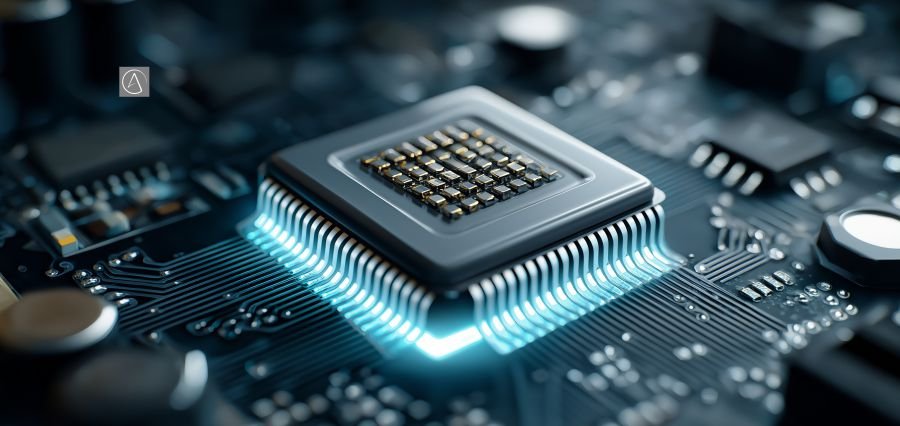
The electronics manufacturing industry is undergoing rapid change driven by technological innovation, evolving global supply chains, and shifting customer expectations. Growing demand for smarter devices, cleaner production, and shorter time to market is compelling manufacturers to reassess traditional operating models and invest in new capabilities. The industry is moving towards long term structural changes and away short-term business cycles as indicated in semiconductors, consumer electronics, industrial systems and automotive application. Rather they are a combination of various trends that are together redefining the design, manufacturing and distribution of electronics. The changes affecting all the manufacturing value chain levels are advancements in automation, redesigning the global supply-chain, and increased interest in sustainability. Those companies that take the initiative to understand and act in response to these forces are more likely to stay afloat in the environment that is characterized by speed, precision, and resilience.
Automation and Smart Manufacturing
Through automation, the modern electronics manufacturing has become one of the key pillars as manufacturers strive to enhance efficiency, consistency and scalability. Machine vision Systems, advanced robotics, and artificial intelligence-controlled process controls are being implemented more and more on production lines. These technologies allow manufacturers to manage complex, high volume production processes and at the same time maintain high standards of quality, especially in processes like operations in semiconductor fabrication, printing circuit board Assembly and surface mount technology operations. In addition to physical automation, smart manufacturing focuses on the smart utilization of data that can make operation improvements.
Real time information, associated to performance, defect rates, the energy used and the maintenance needed, is continuously generated by sensors in equipment. This information coupled with manufacturing execution systems and enterprise resource planning platforms gives manufacturers end to end visibility of operations. It leads to the increased control over the production workflows, quicker identification of any problems, and the increased efficiency of the resource’s allocation. The other significant advantage of smart manufacturing is predictive maintenance. Through machine analysis and prediction of failure, manufacturers will be able to plan on the maintenance of the machine before failure occurs instead of responding to failure.
Supply Chain Resilience and Regionalization
The recent disruptions in the world have revealed the weaknesses of electronics supply chains, which were highly centralized, and depended on a few manufacturing centres. As a result, the electronics companies are focusing more on the supply chain resilience via diversification and regionalization strategy. To decrease reliance on geographies and reduce logistics bottlenecks, geopolitical pressures, and regulatory uncertainty, companies are moving or bringing manufacturing capacity nearer to end markets. Supplier relationships, and sourcing strategies are also changing with this move towards regionalized manufacturing.
Electronics manufacturers are working more closely with component suppliers to secure access to critical inputs such as semiconductors, connectors, and passive components. Long term agreements and collaborative planning are becoming more common as companies seek to reduce supply volatility and improve reliability. At the same time, manufacturers are reassessing inventory models to strike a better balance between lean operations and buffer stock requirements. Advanced planning tools, real time tracking devices, and analytics platforms are providing visibility across multiple tiers in the supply chain. Manufacturers can not only predict disruptions but also react to changes in demand faster and optimize their logistics and inventory decisions.
Sustainability and Product Innovation
The electronics manufacturing companies are increasing collaboration with the component suppliers in order to ensure access to the essential inputs like semiconductors, connectors, and passive components. There is an increasing use of long-term agreements and joint planning to minimize the supply volatility and enhance reliability in companies. Meanwhile, manufacturers are reexamining inventory models in order to create a more balanced approach to lean operations and buffer stock needs. Digital supply chain technologies are contributing towards these changes. High level planning means, real time tracking systems and analytics systems are enhancing visibility of various levels of the supply chain. This has increased transparency, enabling manufacturers to foresee disruptions, react faster to demand variations, and make better logistics and inventory decisions.
The concept of sustainability has shifted its gears in an attempt to become a strategic concern to electronics producers. Governments, investors and customers are putting a lot of scrutiny on the environmental effects of electronics at the whole product lifecycle i.e. at sourcing of raw materials all up to the disposal of the end product. To this, manufacturers are investing in energy saving production, water saving and waste reduction measures by way of better utilization of materials and recycling programs. Product design and innovation are also being affected by the push of sustainability. Manufacturers are using materials that are more environmentally conscious, less hazardous, and producing products that are simple to fix, upgrade, or recycle.
Conclusion
Electronics manufacturing industry is on the edge of a very critical inflection point where technology, strategy and responsibility are linked. Agility, quality, and efficiency are the new definitions of operational excellence due to automation and smart manufacturing. The global environment is becoming uncertain and disrupted because of supply chain regionalization which is enhancing resilience. Meanwhile, long term competitiveness and brand value is becoming impossible to distinguish with sustainability and innovation. To the manufacturers, it has been the issue of matching the investments to these changing trends without losing the flexibility to be able to adjust to any future changes in technology, regulations and demand. The ones that effectively incorporate the new technologies in manufacturing, resilience in supply chain, and sustainability will be able to change with time and even define the new direction the electronics manufacturing industry will be moving towards.