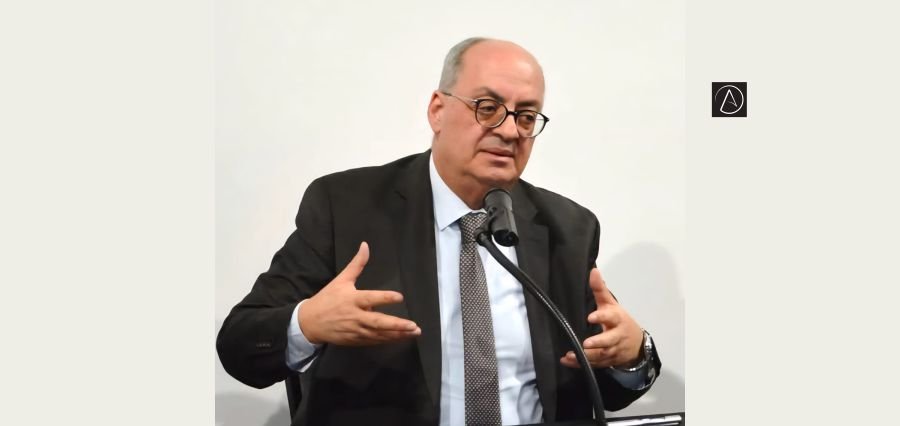
In the digital learning era and remote classrooms, Dr. Milad Sebaaly was already looking for the frontiers of education. He had chosen to be a part of the online learning revolution not through the lens of a technologist but through that of a skeptic who would eventually win over, by proving to teachers and students alike that digital learning can be exciting, credible, and impactful for the long run. Thus, he made a decision that quietly laid the groundwork for a career full of progressive innovation and human-centric educational upgrades.
His professional path is characterized by an unusual mixture of technical competence and institutional goodwill. He knows that the power of great ideas will not deliver the change, it will, however, be through trust, structure, and the careful inclusion of the people who are going to cohabit the change every day. Throughout the decades of creating and expanding learning ecosystems, he continuously connected the ambitious side with the practical one, so that the new practices were not only realized but also maintained.
Now, being the Chairman and CEO of Global Learning FZCO, he is leading an organization with a philosophy formed by experience in different cultures, systems, and generations of students. His efforts are to build the capacities of the institutions, to support teachers, and to create the kind of classrooms where technology will help develop students’ thinking rather than taking over. His evidence-based, ethics-guided, and purpose-driven leadership keeps on reshaping the way education can be unlocked for human potential slowly, responsibly, and on a larger scale.
The Japanese Foundation: Where Innovation Meets Discipline
Dr. Milad’s leadership philosophy was forged in an unlikely crucible: the research labs of Nagoya Institute of Technology in Japan, where he pursued his doctorate in AI and robotics. His journey began at the American University of Beirut with engineering training that taught him to respect complexity and quantify trade-offs, but it was Japan that taught him something that would define his entire career.
“Japan taught me that innovation must be balanced with discipline. Too much discipline kills creativity. In the early stage of any breakthrough, you need a controlled kind of chaos—space to explore, to test unusual ideas, to accept imperfect prototypes, and to allow novelty to emerge. But chaos cannot scale,” he reflects.
The Japanese research culture left a permanent mark: rigor, humility in front of facts, and the belief that excellence is built through repeatable habits, not slogans. He absorbed a paradoxical truth that many innovators miss, breakthrough moments require freedom from constraint, but sustainable impact demands systematic discipline. After the first spark of innovation, you must shift gears into systems engineering and system thinking: clear architecture, structured validation, quality assurance, and a path to adoption. You move, in his words, from inspiration to institutionalization.
This experience crystallized into a framework that now guides every initiative at Global Learning: the distinction between innovation first, then process—between cutting edge and leading edge.
From Cutting Edge to Leading Edge
Dr. Milad Sebaaly distinguishes sharply between “cutting edge” and “leading edge”, a framework born from his Japanese doctorate and refined through decades of implementation. Cutting edge represents the first breakthrough: a working prototype, a promising model, a compelling demo. It’s the moment of creative freedom, the controlled chaos where new ideas emerge.
“Many technical experts in our region believe the job is finished at cutting edge. But in reality, that is often where the hardest work begins,” he observes. Without leading-edge discipline, market entry becomes fragile and success becomes inconsistent. This philosophy reflects his engineering roots and his experience navigating institutions where ideas must survive real classrooms, real stakeholders, and real constraints.
His leadership philosophy crystallizes around one conviction: let ideas breathe early, then engineer them into reality and bring people with you through the process. Innovation provides the spark. Discipline supplies the engine. Change management builds the bridge that turns good ideas into lived reality.
The Risk That Changed Everything
In 2002, eighteen years before COVID-19 normalized remote work, Dr. Milad Sebaaly made a decision that many considered reckless. He founded the Syrian Virtual University as the first accredited virtual university in the Arab world. The challenge extended far beyond cultural skepticism. Syria lacked public internet infrastructure capable of supporting nationwide online education. His solution revealed his engineering mind at work: he established learning and testing centers in every major city, then expanded the model abroad to serve learners beyond Syria’s borders.
“The risk was deeper than technology. It was a risk of trust and a risk of implementation, access, and equity,” he recalls. He treated the launch as a mission of institutional legitimacy, building structures that protected quality while ensuring access didn’t depend on geography or resources. Families questioned whether virtual degrees would gain recognition. Employers doubted the model’s credibility. Academia resisted what seemed like an experiment with their professional standing.
He learned a crucial lesson that connected directly to his Japanese Education: transformation never operates purely in the technical realm. The innovation-first mindset that allowed him to envision a virtual university had to give way to the process-discipline that would make it trustworthy and sustainable. “When people face a new model, they interpret it first through fear and uncertainty,” he says. He responded by reducing that uncertainty—communicating the model clearly, showing evidence instead of promises, and building reassurance mechanisms that protected trust.
The skeptics who initially resisted eventually became the model’s strongest advocates, not because he pushed harder, but because he included them in the journey. He had learned in Japan that excellence comes through repeatable habits, and he applied that lesson to change management: structured communication, consistent support, patient iteration until trust became institutional memory.
The Human Side of Digital Transformation
When Dr. Milad Sebaaly evaluates potential initiatives, he applies an internal compass refined through decades of implementation. He starts with purpose: what problem does this solve, and why does it matter now? Vague purpose creates noise that quickly disengages people. He examines the human dimension: who will live with this daily change, and what will it demand from them emotionally and professionally?
“People don’t reject change itself. They reject change that is imposed, unclear, or unsupported,” he explains. Teacher’s fear being judged. Administrators fear losing control. Institutions fear reputational risk. He addresses these fears systematically through coaching, clear communication, and structured support systems. He treats resistance as rational response to uncertainty, not as opposition to be overcome.
He insists on proof and learning, validation through practical metrics that show what works, not theory. He demands credible adoption paths with training plans, coaching, and realistic rollouts that protect trust rather than exhaust people. Finally, he asks ethical questions: will this strengthen learners as human beings, not just as users?
“I’m cautious about anything that accelerates consumption of learning while weakening deep thinking, responsibility, and agency,” he says. His commitment to evidence-based improvement shapes Global Learning’s ecosystem approach, where dashboards, quarterly reviews, and feedback loops keep the system honest and continuously improving.
Building Sustainable Disruption
Dr. Milad Sebaaly rejects the common narrative that treats disruption and stability as opposing forces. “Disruption is easy to talk about and hard to manage. The real challenge is making sure the organization becomes stronger with every wave of change, not more exhausted,” he notes. He builds strategy in two layers: a stable long-term direction that serves as the north star, and an execution system that turns vision into repeatable results.
He works with a phased transformation mindset, assessing readiness, culture, leadership, infrastructure before moving gradually through mindset shifts, soft launches, and full integration. This approach protects trust and makes people feel they participate in the journey rather than serve as targets of forced change. He refuses to chase technology fashion, selecting the right technology for the right problem and improving it gradually when it already serves the institution well.
Global Learning’s culture rests on four pillars: The Power of Togetherness, Fire for Innovation, Growing Leaders for the Future, and Tech Tools for Individualized Progress. Togetherness creates alignment and psychological safety. Innovation drives momentum and continuous improvement. Growing leaders ensure the model becomes self-renewing through people, not dependent on heroes. Personalization with purpose ensures technology serves human growth, not superficial efficiency.
AI as Thinking Partner, Not Answer Machine
Dr. Milad Sebaaly excitement about emerging technologies focuses not on any single innovation but on a direction: AI becoming a learning partner that helps humans grow rather than a shortcut that weakens thinking. Three areas command his attention: personalized learning at scale where AI maps each learner’s path while teachers remain the human anchor; cognitive measurement and training that understands how learners think; and evidence-based learning ecosystems with assessment analytics and dashboards that help teachers and leaders act intelligently.
“What I’m building toward is not ‘AI in schools’ as a trend, but schools as ecosystems of growth, where technology serves purpose, measurement serves improvement, and learners leave with real competencies for life and work,” he explains. He maintains an ethical stance that AI should function as a thinking partner, with digital wellbeing and human connection kept at the center.
International Innovation, Local Reality
Dr. Milad Sebaaly positions Global Learning as a bridge between the best global practices and local realities. The organization tracks international innovations in education, AI, and workforce readiness, adapting them intelligently to the region’s culture, infrastructure, language needs, teacher capacity, and regulatory environment. “This adaptation layer matters because many imported innovations fail not due to weak design, but due to weak contextual fit,” he explains.
But Global Learning’s role extends beyond localization. Field realities the organization encounters often lead to improving international products themselves. “We don’t only consume global innovation; we help refine it. We guide international partners to make their products more practical, more human-centered, and more meaningful,” he says. The partnership philosophy operates two ways: innovate locally and implement globally, not merely localize international innovations.
A Legacy of Human Potential
When Dr. Milad Sebaaly considers his legacy, he thinks about one question: did we leave behind systems that continue to grow people even when we’re no longer there? He wants to shift the region’s mindset from education as information to education as transformation in how learners think, choose, and become.
His motivation remains deeply personal: “I cannot accept that talent in our region is wasted because the system is weak. I have seen too many capable young people lose momentum—not because they lack intelligence, but because opportunity is uneven, institutions are fragile, and learning often becomes routine rather than a path to growth.”
To the next generation, he offers clear guidance: “Protect your dignity and build your capacity at the same time. Be ambitious, but don’t let ambition turn into imitation. Think independently, question assumptions, and don’t outsource your mind to trends or ready-made answers.”
For him, the greatest achievement would be building ecosystems that combine local values with global innovation, producing generations that are competent, ethical, creative, and future-ready. He wants technology in the region to expand human agency,so people don’t just consume modernity, they help shape it and eventually export it.
In an age where technological leaders often chase the next disruption, he offers something different: patient, disciplined transformation that honors human potential and builds systems designed to outlast their creators.