
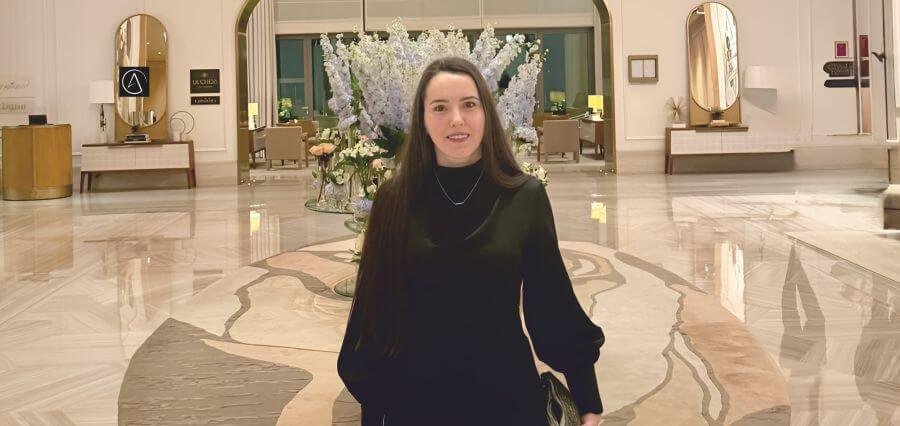
Leadership cannot be defined by one’s position or designation. True leadership is demonstrated through the ability to make sound decisions and guide others with clarity and purpose, especially when circumstances are uncertain or challenging. A good leader brings clarity to complex situations, unites people around a common purpose and creates an environment where individuals can perform with confidence and take ownership of their responsibilities. For Sorina Constantinescu, it is grounded in honesty, purpose and people rather than position.
As Senior Director, Commercial Development & Sales at Travelport, she has spent years transforming complex commercial challenges into practical actions and meaningful outcomes across international markets. Her leadership style is closely connected to the way she approaches decision-making. She places strong emphasis on clear thinking, effective communication and a focused approach to creating progress for both individuals and the organization.
Bridging Finance and Strategic Leadership
Sorina began her career in finance, where she developed a strong focus on precision and accountability. This experience also gave her a clear understanding of the commercial factors behind business decisions. She later moved into planning, strategy and partnerships. These roles helped her turn analysis into action and bring people together around common goals. Her career journey from numbers to strategy has shaped her approach to responsibility, people and decision-making. Her MBA at Warwick Business School reinforced this shift, moving her focus from quantitative analysis to understanding people through storytelling. “I used to be a numbers person. But what I really learned was how to understand other people,” she says.
International experience further strengthened her leadership approach. Working across global markets taught her to listen carefully, understand local contexts and create clarity when priorities compete. Mentors, coaches and colleagues also played an important role in her development. Their constructive guidance reinforced the value of continuous learning and collaboration.
As a Warwick Business School Ambassador, Sorina remains connected with alumni and professionals across industries. These relationships provide new perspectives and reinforce the importance of learning at every stage of a career. Based in Dubai, she leads the school’s alumni community across the Middle East and Africa, a network she has built over four years through book clubs, women’s groups and joint events bringing together alumni from 65 universities. Her approach is rooted in genuine connection: “You have to plant seeds. Some grow, some don’t. But the only way it works is by being genuine,” she says.
Clarity as a Foundation for Leadership
For Sorina, leadership is built on three connected principles: clarity, trust and accountability. People perform at their best when they understand the goal, why it matters and what they are responsible for. Priorities remain practical, while communication stays direct, especially in complex or fast-changing environments. “I lead with honesty, consistency and purpose, especially when decisions become difficult,” she says.
Trust is built through consistency, preparation and follow-through. Difficult issues are addressed respectfully, while clear expectations and appropriate support help people perform with confidence. Leaders should also create an environment where team members feel comfortable raising risks early. Leadership is not about having every answer. It involves asking thoughtful questions, making sound decisions and creating the right conditions for others to succeed.
This approach also requires fairness and consistency when decisions become difficult. Clear communication about what is known, what remains uncertain and what needs to happen next helps strengthen confidence. Risks are addressed openly rather than hidden behind promises. “I build trust through preparation, fairness and the discipline to follow through,” she says.
Recognizing the contributions of others is another important part of this approach. Meaningful results rarely come from one person alone. Every team benefits from the expertise and effort of its members.
Empathy as a Strength in Leadership
Empathy and accountability can work together. Sorina defines empathy as understanding a colleague’s situation and treating them with respect. Accountability means being clear about the standards, outcomes and commitments expected. She maintains this balance by separating the person from the issue. A leader can recognize someone’s challenges while still having an honest discussion about performance, delivery or behavior. Sorina keeps these conversations focused on facts, expected outcomes, necessary support and practical next steps.
In her experience, people are more likely to meet high standards when they understand the purpose behind their work and receive timely feedback. Sorina has found that strong teams combine ambition with psychological safety. They care about one another while maintaining clear standards and shared accountability. “I bring empathy to difficult conversations while keeping expectations clear and accountability strong,” she says.
Harnessing Technology for Better Decisions
Technology plays an increasingly important role in Sorina’s approach to leadership. She sees technology as a way to give leaders faster access to information, stronger analytical tools and more opportunities to automate routine tasks. She views its greatest value as helping leaders make better decisions while keeping human judgment at the centre.
Her interest in artificial intelligence led her to complete MIT xPRO’s AI for Senior Leaders program. The seven-month program included an intensive week on campus. She worked with professionals from different industries on practical topics related to AI strategy, leadership and responsible adoption. One of the most rewarding experiences was collaborating with other participants on a book, The AI Anthology. The project started with only a few pages and developed into a published contribution. The experience reinforced the importance of curiosity, sound governance and learning from different perspectives when adopting new technology.
This experience also shapes her broader approach to innovation. Innovation is not simply about following the latest trend. It involves asking better questions, challenging assumptions and turning useful ideas into practical results. Innovation can come from new technology, but it can also involve simplifying a process, improving collaboration or approaching a problem differently. The key is to ensure that change creates measurable value. “I use technology to strengthen decisions while keeping human judgment at the centre,” she says.
Sorina sees innovative leadership as a combination of ambition and discipline. Leaders should provide room for experimentation while setting clear outcomes and appropriate safeguards. They should also review results honestly and determine what is working.
Managing Complexity with Clarity
The most demanding leadership challenges for Sorina have come when multiple stakeholders face competing priorities and hold different views of success. These situations require careful management of commercial, operational, technical and relationship considerations at the same time. Such experiences taught her that complexity requires structure. A shared outcome, clear ownership, defined decision points and open discussions about trade-offs can help teams move forward. “I bring structure to complexity so people can focus on decisions, progress and shared outcomes,” she says.
She acknowledges that patience has not always been her strongest quality as a leader. Over time, she has learned the value of staying calm, separating facts from assumptions and keeping discussions focused on the decision at hand. She views resilience as more than working through pressure without showing difficulty. It involves maintaining perspective, seeking the right support and continuing to act with professionalism during challenging periods.
Developing Tomorrow’s Leadership
Sorina encourages emerging leaders to build substance before seeking visibility. She advises young professionals to understand how their business creates value, learn about their customers and develop confidence with numbers. Taking ownership of delivering high-quality work is equally important. “I encourage emerging leaders to build substance, seek meaningful experiences and earn their visibility,” she says.
Mentorship is also an important part of professional development. She encourages emerging leaders to seek mentors, coaches and colleagues who provide constructive challenges. Meaningful careers are rarely built alone. Strong mentors can help people recognize blind spots, ask better questions and remain grounded during difficult periods.
She also recommends seeking experiences that provide exposure to different functions, markets and unfamiliar subjects. Communication skills should be developed early. Career progression depends not only on having good ideas but also on presenting recommendations clearly, explaining the supporting evidence and making practical requests.
For Sorina, authentic leadership requires preparation, consistency and a commitment to continuous learning.
Success Beyond Professional Milestones
When Sorina reflects on her career, the achievement that holds the greatest personal significance lies outside her formal professional life. Endurance sport has taught her the value of preparation, resilience and steady progress. She has applied this discipline to raising funds and awareness for autism, running marathons and training for a triathlon in support of children with autism, a cause that is personally important to her. One of her most meaningful experiences was reaching the summit of Mount Kilimanjaro while carrying books about autism. The experience represented her commitment to bringing greater awareness to the cause.
Much of her resilience comes from her mother, who raised six children for much of their lives as a single parent. Her mother’s sacrifices, determination and perseverance shaped Sorina’s understanding of responsibility and resilience. Her family continues to be a source of strength. These experiences have also deepened her awareness of inclusion, the different challenges people face and the importance of creating environments where everyone can contribute in their own way. She also volunteers for her employer’s diversity and inclusion initiatives.
Measuring Lasting Impact
The true impact of leadership lies in the lasting value created after a project, role or conversation has ended. Sorina considers whether people have greater clarity about priorities and decisions. She also looks at whether they have gained the confidence, skills or relationships needed to take on greater responsibility. Improvements to processes, decision-making frameworks and ways of working are also important indicators of lasting value.
Leadership impact is also reflected in professional reputation. She aims to be known as prepared, fair, commercially grounded and constructive under pressure. For Sorina, effective leadership creates the right conditions for people to succeed. When teams make better decisions, work together more effectively and take greater ownership of outcomes, she sees it as a lasting contribution that extends beyond any single role or period of leadership.
Disclaimer: The views expressed are personal and do not necessarily represent those of her employer.