
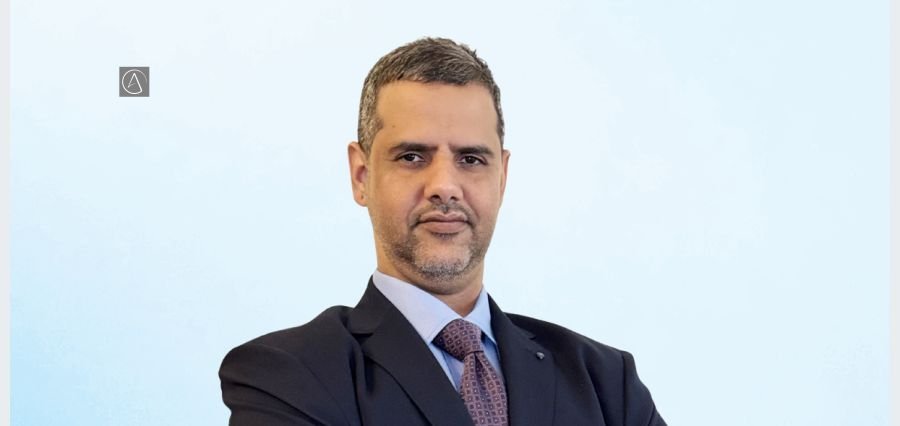
There is usually one person in every project meeting who doesn’t speak up but manages to influence every choice made. Barikalla Mohamed Ahmed is that individual at Binladin Contracting Group. Having worked in environmental engineering and sustainable construction for sixteen years, he has discovered that evidence, not volume, wins the most significant debates. His one question, “What does this choice cost the environment, and can we do better?” subtly shifts the entire conversation.
That question has been at the centre of his professional life for over a decade and a half. As Sustainability and Environmental Manager at one of the region’s most prominent construction organisations, he carries the responsibility of making sure that environmental thinking is not a conversation that happens once at the start of a project and then gets quietly forgotten. Barikalla keeps it alive, through every design review, every material selection, and every compliance check, until the work is done, and the building stands as proof of what responsible construction actually looks like.
A Career Built on Asking the Right Questions
Barikalla did not set out to be a manager. He set out to understand energy- where it comes from, where it goes, and what happens when it is wasted. That curiosity pulled him through his early career and eventually all the way to Spain, where he completed a Master’s degree in Renewable Energy and Sustainability at the University of A Coruña. The programme gave Barikalla more than technical knowledge. It gave him a framework for thinking about the built environment that he has carried into every role he has held since.
His early professional years were spent in renewable energy and waste-to-energy work. Those projects were demanding in a specific way; they required him to understand not just engineering but the relationships between engineering, environmental science, and strategic decision-making. Barikalla had to work across disciplines, speak different professional languages, and find common ground between people who did not always agree on what sustainability meant or why it mattered. He got very good at that. And that ability to connect technical work to human decisions became the foundation of everything that followed.
Over time, Barikalla shifted his focus toward construction. He saw something in that sector that others were slower to notice: the decisions made during the design and build phase of a project determine its environmental performance for the entire length of its life. A poorly designed building does not just waste energy on the day it opens. It wastes energy every day for many years. Barikalla understood that changing those outcomes meant getting involved earlier, thinking longer-term, and being the kind of professional who asks uncomfortable questions before the concrete is poured rather than after.
He states, “Sustainability should not be treated as an external requirement added to projects. It must be embedded into how we design, build, and operate infrastructure from the very beginning.”
What Sixteen Years Actually Looks Like
There is a version of sustainability work that lives in reports and presentations. Barikalla does not promote that version. His work at Binladin Contracting Group is hands-on, detailed, and present at every stage of the projects he is involved with. He evaluates sustainable design strategies while they can still be changed. He checks that the materials being sourced are genuinely what they claim to be environmentally. Barikalla monitors performance throughout construction, not just at the end. And he holds projects to international environmental standards not because a certificate demands it, but because that standard represents what responsible building actually requires.
What Barikalla’s colleagues at Binladin have come to understand about him is that he does not treat sustainability as someone else’s problem that he has been hired to manage. He treats it as a shared responsibility; one that belongs to the engineer drawing the plan, the procurement officer choosing the materials, and the site manager running the crew. His job, as he sees it, is to make sure every one of those people understands what environmental responsibility means in their specific role and has what they need to act on it.
That approach takes patience and persistence. Projects come under pressure. Schedules tighten. And in those moments, sustainability is often the first thing people want to set aside. Barikalla has learned to push back- firmly, calmly, and with enough evidence that the pushback sticks.
Energy Efficiency: His Sharpest Tool
Ask Barikalla where sustainable construction makes its biggest difference, and he will tell you: energy efficiency. Not because it is glamorous, it is not, but because it is immediate, measurable, and available right now. A building that is designed to use less energy starts performing better from the day it opens. It costs less to run, produces fewer emissions, and delivers a return on every efficiency investment made during the design phase. For Barikalla, there is no stronger argument in sustainability than one that also makes financial sense.
He pushes for energy efficiency at the design stage, where the biggest gains are still on the table. Once a building is up, retrofitting efficiency into it is expensive and disruptive. Getting it right before construction begins is not just better for the environment; it is better engineering. Barikalla makes this case consistently, to architects, to project managers, to clients, and to anyone else at the table who needs to understand why the energy performance of a building is not a detail to be resolved later.
The regional context makes this work even more pressing. In an environment where cooling systems run for most of the year and energy demands on buildings are severe, inefficiency is not a minor problem. It compounds. Barikalla knows this, and he designs his approach to each project around the specific conditions it faces- not a generic checklist, but a tailored strategy that takes the local reality seriously and finds the best possible answer within it.
“The most sustainable energy is the energy we do not need to consume. Improving efficiency in buildings is one of the fastest and most effective ways to reduce environmental impact,” expresses Barikalla.
Sun, Systems, and the Case for Renewable Energy
Alongside efficiency, Barikalla thinks seriously about where a building’s energy comes from. Reducing consumption matters. But so does changing the source. Renewable energy, and solar integration in particular, sits at the centre of how he approaches this question. The region has something few places in the world have in such abundance: reliable, intense sunlight, available for most of the year. In Barikalla’s view, that is not just a climate characteristic. It is a resource, and responsible construction should be using it.
He advocates solar integration from the earliest stages of project planning. The technical case is clear- solar systems reduce dependence on conventional power, lower a building’s carbon footprint over time, and strengthen its energy resilience. But Barikalla also makes the strategic case: buildings designed to generate their own clean energy are better positioned for the long term, more insulated from energy supply pressures, and more aligned with where construction standards are heading. He helps project teams see solar not as an added cost but as a long-term asset built into the structure from day one.
Barikalla says, “Buildings are evolving from passive consumers of energy into active contributors to cleaner energy systems.”
Using Technology to Make Sustainability Impossible to Ignore
One of the changes Barikalla has seen reshape his field over the past decade is the arrival of digital tools that can model environmental performance before a building exists. He uses them deliberately. When he can show a project team, in numbers, on a screen, before anything is built, exactly how much energy a design choice will cost over twenty years, the conversation about sustainability changes. It stops being abstract. It becomes a decision with a visible consequence, and decisions with visible consequences are much harder to defer.
He values these tools because they make his thinking easier to communicate. When time is tight and cost pressure is constant, the professionals who move sustainability decisions forward are the ones who back every recommendation with data. Barikalla has always worked that way.
He keeps himself current with developments in digital construction technology because he knows the field keeps moving. Staying still means falling behind, and falling behind means losing the ability to make the strongest possible case for the outcomes he is working toward. At Binladin Contracting Group, that commitment to staying sharp is part of what he brings to every project he touches.
Beyond the Project: Thinking at the Scale of Cities
Barikalla is clear-eyed about the limits of project-by-project thinking. A single sustainable building matters. But what he is really working toward is something larger- cities that function better because the construction decisions made within them were made responsibly. He thinks at that scale. Not because it makes his daily work easier, but because he believes it is the correct frame for understanding what is actually at stake.
He sees his own role, and the roles of every engineer, architect, and project manager in construction today, as a contribution to that larger system. When those contributions are made responsibly, cities get better. When they are not, the consequences accumulate quietly and at great cost.
For Barikalla, sustainability is not a professional specialisation separate from construction. It is what good construction looks like when it takes its responsibilities seriously. The buildings going up today will still be standing for the next forty years. The people who will live and work in them deserve structures that were built with care, and that is the standard he holds himself to, and asks the people around him to hold themselves to as well.
“Sustainable construction is not only about reducing environmental impact — it is about creating resilient cities that can support future generations,” expresses Barikalla.
Doing the Work, Every Day
What makes Barikalla a transformational leader is not a single project or a single achievement. It is consistency. Sixteen years of showing up with the same commitment, the same rigour, and the same willingness to have the difficult conversations that sustainability work requires. That consistency, in a field where it is easy to let standards slip under pressure, is rare, and it is what defines his contribution at Binladin Contracting Group.
Barikalla brings all of his rich experience to work every day, not in search of recognition, but in service of one belief: that those who build the places where others live and work have an obligation to do it well, carefully, and with the long term in mind. He is one of the people making sure that obligation is met. And in a field that needs more professionals like him, that matters more than most people realise.