
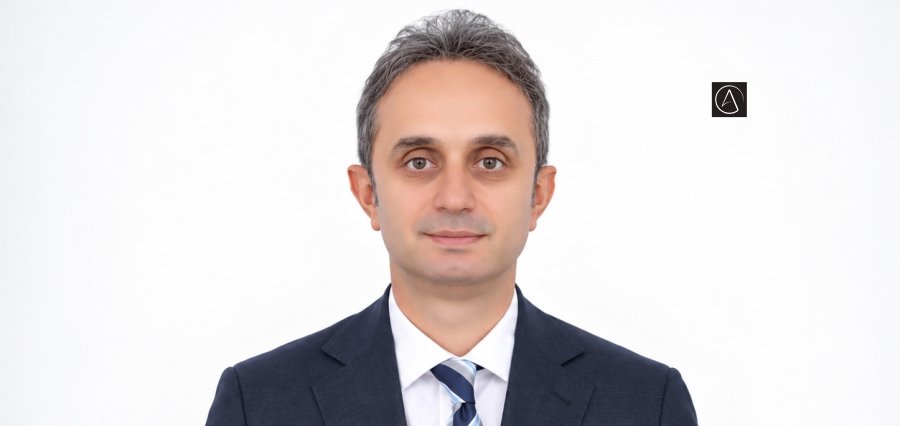
Leadership in the energy and infrastructure industry needs more than just technical know-how. Vision and discipline are crucial, along with the capacity to coordinate people, resources, and technology on the basis of a collective long-term goal. Very few people exemplify such a combination like Joseph H. Moussa, who serves as a perfect example of a leader with a good combination of strategic thinking and humanity.
Joseph Moussa’s entry into the energy and infrastructure sector did not start with any particular position within the company. It started with an understanding of how energy supply and infrastructure influence the development paths of companies and countries. As he came from a part of the world that was witnessing a lot of changes, he saw firsthand how energy affects business growth and economic development.
That early exposure crystallized into a career-long commitment. Joseph H. Moussa describes the sector in terms that go beyond commercial interest, framing it instead as a domain where impact is measurable and immediate. “Energy and infrastructure are very real sectors because their impact is visible in people’s daily lives, in industry, and in national development,” he explains. This perspective has anchored his approach throughout his career: every project, every decision, and every partnership is evaluated against its contribution to broader national development and environmental stewardship.
That sense of purpose found its clearest expression at Irolli, where the company’s sustainability mandate and its alignment with Vision 2030 gave Joseph H. Moussa a platform to convert ambition into tangible results. The fit between his personal philosophy and the company’s mission has proven foundational to his tenure as Managing Director.
Four Pillars of Executive Responsibility
Joseph H. Moussa organizes his responsibilities as Managing Director around four core domains: strategic direction, operational excellence, stakeholder alignment, and organizational development. Each domain carries distinct priorities, but together they form an integrated approach to running a technically complex organization.
On the strategic side, Joseph H. Moussa defines Irolli’s long-term roadmap, covering market positioning, technology adoption, localization strategy, and investment priorities. Operationally, he holds the organization to standards of predictability, efficiency, and compliance, treating quality and safety as fundamentals rather than aspirations. He also devotes considerable attention to stakeholder alignment, maintaining relationships with clients, regulators, partners, and financial institutions that he considers essential to project velocity. Finally, he prioritizes organizational development, building teams equipped to execute complex energy and infrastructure mandates with both discipline and creativity.
To translate these responsibilities into consistent value for clients, Joseph H. Moussa applies three operating principles: client intimacy, process discipline, and scalable growth. He listens closely to client expectations, establishes clear terms of engagement, and delivers with transparency throughout the project lifecycle. Standardized workflows and strong governance reduce risk and support data-driven decision-making, while ongoing investment in digital tools, engineering talent, and strategic partnerships prepares the organization for expansion.
He credits much of Irolli’s momentum to the leadership of the company’s CEO, Eng. Mansour Al Mobty, whose emphasis on agility and long-term value creation has shaped the environment in which Irolli’s teams operate. That environment, he notes, allows people to move with confidence and to develop new capabilities that strengthen the company’s market position.
Leadership Philosophy Shaped by Complexity
Years spent leading across energy, engineering, infrastructure, and technology domains have shaped a leadership philosophy that Joseph H. Moussa describes as fundamentally enabling rather than directive. Complex projects demand coordination across engineering, procurement, regulatory compliance, finance, and technology integration, and no individual leader can master every discipline involved. Instead,Joseph H. Moussa has focused on building conditions in which specialized experts can perform at their best.
This philosophy rests on three pillars: systems thinking, cross-functional collaboration, and a technology-forward mindset. He views every decision through its downstream effects on cost, schedule, safety, and long-term asset performance, insisting that effective leaders see the entire system rather than isolated tasks. He places equal weight on how well teams communicate and solve problems together, and he treats digitalization, automation, and data analytics as core leadership responsibilities rather than optional enhancements.
According to him, “Leadership is creating the conditions where talented people can solve complex problems together.” He has observed that the organization’s strongest outcomes emerge when technical teams are given room to challenge assumptions and take ownership of delivery. “Leadership is about bringing out capability, aligning people, processes, and technology so teams can deliver work that genuinely matters,” he says, summarizing a philosophy that treats leadership as an act of enablement rather than control.
Principles That Guide Strategic Decision-Making
Four principles anchor Joseph’s approach to leadership and to building durable relationships with clients and partners: clarity, consistency, integrity, and mutual value creation. He emphasizes that unclear expectations cost teams time and momentum, while consistent communication and reliable delivery build the trust that sustains long-term partnerships. In an industry where reputation carries as much weight as financial performance, he treats integrity as non-negotiable, and he approaches every relationship as a partnership rather than a transaction.
- Clarity
- Consistency
- Integrity, and
- Mutual value creation.
These principles inform a disciplined strategic framework: understanding the structural forces shaping the market, honestly evaluating organizational capabilities, prioritizing actions that create sustainable competitive advantage, and executing with operational rigor. This structured approach ensures that Irolli’s decisions remain grounded in evidence and that its leadership retains credibility with clients and partners alike.
Staying Ahead of a Fast-Evolving Industry
The energy and infrastructure sectors are evolving quickly, driven by innovation and sustainability imperatives, and Joseph has built systematic mechanisms to keep Irolli ahead of that change. The organization conducts continuous intelligence gathering across regulatory updates, technology trends, and competitor activity. Joseph H. Moussa also prioritizes industry engagement through conferences, technical committees, and partnerships with EPCs, OEMs, and research institutions, keeping the company connected to emerging innovation. Internally, the company invests in training, certifications, and digital tools that prepare teams for next-generation project requirements.
Sustainability, in his view, has moved well beyond a peripheral initiative to become a central business driver. Irolli integrates ESG considerations into project design, procurement, and operations, while actively evaluating technologies such as distributed generation, energy storage, advanced materials, and AI-driven asset management. “Sustainability is no longer a side initiative; it is a core business driver,” Joseph states, reflecting a company-wide shift in how the firm approaches project design and long-term value creation.
Navigating Challenge and Building Resilience
Joseph’s leadership journey has included significant challenges that have sharpened his perspective as an executive. Market volatility, including shifts in energy policy and commodity prices, has required constant strategic recalibration and reinforced his resilience. Persistent talent gaps in specialized engineering and project management have deepened his commitment to internal capability building. Complex stakeholder environments involving multiple authorities, partners, and communities have strengthened his negotiation skills and his patience under pressure.
These experiences have reinforced a consistent lesson for him: the importance of staying calm, thinking clearly, and making decisions with both discipline and perspective, particularly when market conditions or regulatory frameworks shift quickly.
Milestones that Matter
Reflecting on his career, Joseph H. Moussa identifies the milestones that carry the most meaning: projects that improved energy reliability and supported national development, partnerships that accelerated localization and strengthened local supply chains, and operational frameworks that elevated quality, safety, and compliance across the organization. He also points to moments of guiding teams through difficult market cycles while sustaining both performance and morale.
While industry recognition is appreciated, he consistently returns to a different measure of success. “The most meaningful moments are often not the award ceremonies, but the day a project becomes operational, a client sees measurable value, or a team member steps confidently into a larger leadership role,” he reflects, underscoring a leadership style oriented toward tangible outcomes rather than accolades.
Balance as a Leadership Discipline
Despite the demands of leading a technically complex organization,Joseph H. Moussa maintains a deliberate approach to personal well-being, built on three practices: structured time management, delegation grounded in trust, and personal rituals that create space for reflection. He protects time for strategic thinking and rest, empowers capable teams to reduce operational overload, and makes room for activities such as reading and travel that reset his focus.
For him, well-being is inseparable from effective leadership. “A leader who is exhausted cannot inspire, guide, or make sound decisions,” he says, framing personal balance as a professional requirement rather than a personal indulgence.
Guidance for the Next Generation
Joseph H. Moussa offers direct guidance to professionals building careers in energy, infrastructure, and sustainability: master the fundamentals of engineering, project management, finance, and regulatory frameworks; stay curious as technology and sustainability reshape the industry; build a strong professional network; seek assignments that stretch capabilities; and act with integrity at every stage of a career. He encourages aspiring professionals to see the sector as more than a career path, but as an opportunity to contribute to national progress.
A Legacy Tied to National Transformation
Looking ahead, Joseph H. Moussa remains focused on three long-term goals: advancing sustainable energy solutions, building organizations that combine technical excellence with operational discipline, and developing future leaders who are strategic, ethical, and globally competitive. At Irolli, these ambitions are supported by a leadership culture built around bold thinking and long-term value creation.
Ultimately, he ties his professional legacy to Saudi Arabia’s Vision 2030, a national transformation centered on sustainability, industrial resilience, and infrastructure modernization. He hopes the company will be recognized as a company that supported this vision through reliable energy solutions, localized capabilities, and projects that strengthened national competitiveness, a legacy built not on individual achievement, but on stronger institutions and a clearer sense of purpose for the generation that follows.
“If my career is remembered for anything, I hope it is for building organizations that develop people, deliver sustainable infrastructure, and contribute meaningfully to Saudi Arabia’s future,” he reflects.