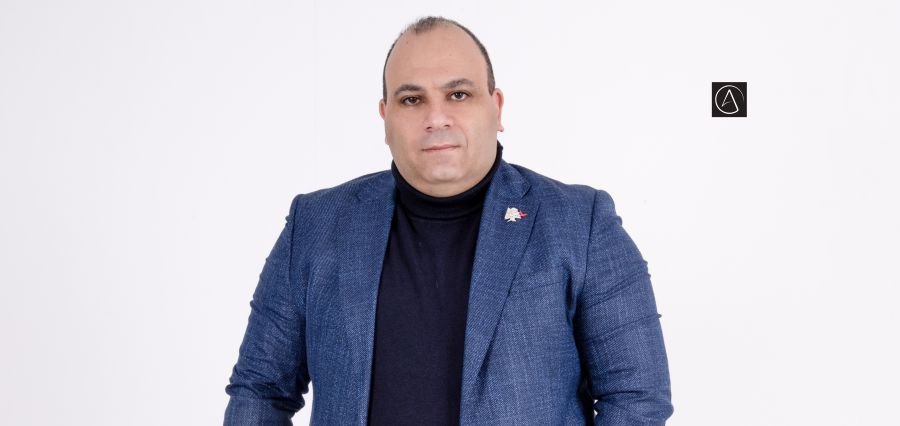
Through immense pressures, uncertainties, and the patience in learning to change when the situation was not very good, he arrived at leadership not by means of titles or ceremonies. Mohamad Zeinni, who was already very early in his career, working under tight budgets and in disunited systems, learned that information found are very rarely the perfect one for progress. Those early experiences were the main contributors to a mindset that was grounded in resilience, clarity, and responsibility.
His journey from being a tech specialist to an enterprise leader changed the notion of success. He wasn’t considered successful by the output of his own work, but by how many people’s performance he could boost. That was pretty much an epochal moment or a shift that changed the one who leads from dominion to an enabler. Besides, directing difficult digital projects in different countries made his leadership style even more precise, bringing out the quintessential traits like cultural sensitivity, humility, and active listening in a worldwide setting.
The other side of the coin was that family life had a similar strong influence as the boardroom did. The role of the husband and the father gave him a simple truth that is frequently ignored in corporate lassitude, the truth is that every professional takes a complete human story to workplace. This comprehension is now incorporated into his leadership philosophy in such a way that he can apply both decisiveness and empathy as well as strategy and care at the same time.
Currently he holds a designation as the Group Head of IT & Digital Transformation and has been recognized for his ability to turn purpose into actions, to gain trust by being consistent, and to drive transformation by combining technical expertise with human insight.
From Technical Expert to People Leader
Mohamad Zeinni’s journey into leadership began in environments that demanded resilience from day one. Early in his career, he worked where resources were limited, systems were fragmented, and expectations remained relentlessly high. These conditions forged a leader who thrives on adaptability and makes confident decisions even when information remains incomplete.
The pivotal moment arrived when he transitioned from purely technical roles into leadership positions. This shift fundamentally altered how he measured success. No longer could he evaluate his contribution by personal output alone. Instead, success now depended on how effectively he enabled others to excel. This realization marked more than a career change; it represented a complete preconception of what it means to lead.
Later, when he led transformation initiatives across multiple countries, he discovered another essential leadership dimension: cultural awareness. Working across borders taught him that effective leadership requires deep listening and genuine humility. What works in one context may falter in another. Leaders who assume universal solutions quickly find themselves isolated and ineffective.
Yet perhaps the most profound influence on Mohamad Zeinni’s leadership came from an unexpected source: his family. Being a husband and father grounded him in a truth that corporate structures often obscure. Behind every employee stands a complete human being, someone with pressures, aspirations, and responsibilities that extend far beyond their job description. This understanding fundamentally changed his approach, shifting his focus from managing resources to supporting people.
“When leaders remember their own humanity, they lead with greater empathy, balance, and authenticity,” he observes.
The Dance Between Decisiveness and Empathy
In today’s business environment, where disruption arrives at accelerating speed and established models crumbling overnight, leaders face a persistent challenge: how to provide clear direction while honoring the human experience of uncertainty. Mohamad Zeinni rejects the false dichotomy between decisiveness and empathy. In his view, these qualities don’t compete; they reinforce each other.
“In times of uncertainty, teams look for direction, but they also need to feel understood,” he explains. Decisive leadership doesn’t mean rushing to judgment. It means establishing clear priorities while remaining transparent about constraints and risks.
He leads with radical transparency. When people understand the reasoning behind decisions, even difficult ones’ resistance decreases and trust increases. He commits to genuine listening, not the performative variety that merely waits for its turn to speak. Before acting, he absorbs concerns, acknowledges fears, and considers ideas. He recognizes uncertainty openly without allowing it to paralyze progress.
Once decisions are made, however, clarity becomes non-negotiable. Teams need confidence that leadership will support them through execution. By combining empathy during decision-making with decisiveness in action, he creates environments where people feel both supported and focused, even as conditions shift rapidly around them.
Making Purpose Operational
People often describe Mohamad Zeinni’s leadership style as purpose driven. But he dismisses empty rhetoric about organizational vision. Purpose matters only when it translates into everyday action across all levels of a company.
“A vision statement on its own doesn’t changes behavior. Daily decisions do,” he states plainly.
He focuses on converting abstract purpose into clear priorities, measurable objectives, and practical frameworks that teams can apply in their immediate work. His approach relies on alignment through simplicity. When people clearly understand how their role contributes to the broader mission, execution improves naturally. Complexity breeds confusion; simplicity breeds commitment.
He also insists that leaders must model the behaviors they expect. Purpose cannot be delegated downward while leadership operates by different rules. Consistency between words and actions determines whether purpose becomes real or remains rhetorical.
He maintains this alignment through regular feedback loops, check-ins, performance metrics, and open dialogue that ensure strategy doesn’t drift from reality. Purpose becomes operational when it informs resource allocation, system design, and trade-off decisions, not merely external communications.
Building Trust Through Consistency
In modern enterprises, trust functions as critical currency. Without it, even the most sophisticated strategies fail. Mohamad Zeinni builds trust through relentless consistency over time.
Internally, he focuses on doing what he says he will do, even when it’s uncomfortable. Clear expectations, honest communication, and fair decision-making form the foundation. People may not always agree with decisions, but they respect transparency.
Counterintuitively, he believes trust grows when leaders admit what they don’t know. Acknowledging uncertainty or mistakes doesn’t weaken authority, it strengthens credibility. Externally, trust emerges from reliability and integrity: delivering on commitments and being clear about limitations.
“Trust is not built in moments of success alone. It is built by how you behave when things don’t go as planned,” he notes.
Listening plays a central role in this process. Trust erodes quickly when people feel unheard. Whether dealing with employees, partners, or clients, he prioritizes dialogue over assumption. He understands that trust represents ongoing practice, not a permanent achievement.
Balancing Accountability with Innovation
As organizations grow, maintaining alignment becomes increasingly complex. Mohamad Zeinni rejects the notion that accountability and empowerment must compete. He approaches accountability by focusing on outcomes rather than micromanaging processes. When expectations are clear and objectives are well-defined, individuals gain freedom to determine how best to achieve them.
Empowerment requires both trust and structure. He sets clear guardrail principles, governance, and priorities, within which innovation can happen safely. This balance allows people to experiment without losing alignment with organizational goals.
Regular review cycles reinforce accountability through visibility, feedback, learning and not punishment. When people know they’re trusted to think independently and supported when they take responsible risks, innovation becomes natural rather than exceptional.
Cultivating Future Leaders
Mohamad Zeinni identifies leadership potential through behavior rather than titles. He looks for individuals who demonstrate ownership, curiosity, and the ability to influence positively without formal authority. Those who ask thoughtful questions, support others, and remain calm under pressure often emerge as natural leaders.
Nurturing this potential requires exposure and trust. He gives high-potential individuals significant responsibility early, combined with guidance and honest feedback. Both formal and informal mentorship play critical roles, as does creating safe environments where people can learn from failure.
Retention ultimately depends on meaning and growth. Talented people stay where they feel challenged, valued, and aligned with organizational purpose. Creating that environment ranks among leadership’s most important responsibilities.
Leading Through Setbacks
Resistance and failure inevitably accompany meaningful transformation. When setbacks occur, Mohamad Zeinni’s first priority is clarity. Uncertainty amplifies fear, so he focuses on communicating what happened, what the organization learned, and what comes next.
He separates people from problems. Failure rarely stems from individuals, results from faulty assumptions, poor timing, or inadequate systems. By framing setbacks as learning moments rather than blame exercises, he preserves morale and encourages resilience.
Momentum continues through manageable steps. Even small wins matter. When teams see progress, however incremental they regain confidence. Leadership during setbacks requires less optimism than steadiness: demonstrating that challenges are temporary while purpose and direction remain intact.
The Road Ahead
Looking toward the next decade, Mohamad Zeinni identifies adaptability as essential. Technology, business models, and workforce expectations will continue evolving faster than traditional leadership structures. Leaders must embrace continuous learning and unlearn outdated assumptions.
Systems thinking understanding how technology, people, and processes interact will prove equally important. Decisions made in isolation rarely succeed in interconnected environments.
Most critically, emotional intelligence will matter more than ever. As automation increases, human judgment, empathy, and ethical reasoning become key differentiators. Leaders who combine strategic clarity with human awareness will navigate complexity most effectively and inspire genuine trust.
He grounds himself through family and reflection. Being a husband and father reminds him daily that leadership ultimately concerns responsibility and care, not authority. It reinforces humility and patience qualities that matter as much in the workplace as in the home.
“Organizations are made of people with lives, challenges, and aspirations beyond work. When leaders remember that they create environments where people feel respected as individuals, not just roles,” he reflects.
In an era where leadership often feels transactional and impersonal, he offers a different model, one where purpose drives action, trust builds through consistency, and humanity remains central to organizational success.
Also, for following all the latest updates and recommendations in the field of AI and digital transformation please visit: http://www.zeinnitech.com/