The stealthy, unseen approach to security will likely produce the greatest results. To effectively anticipate security threats before they happen and be able to safeguard lives without causing unnecessary friction or disruption, will require some of the latest technologies. The current trend is toward security systems that provide an unobtrusive yet powerful barrier to prevent access to any facility or area. With today’s technological advancements, it is now possible to provide a barrier that is virtually undetectable and has the same effect as an air supply; therefore, making it critical to all human beings.
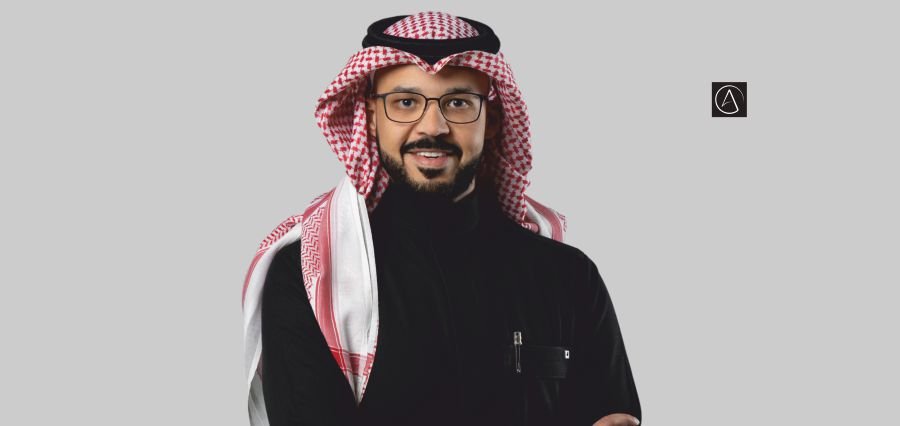
Saudi Arabia’s giga-projects represent more than architectural ambition. They are laboratories for reimagining how humans will live in future cities. Mohammad Alries embodies this transformation. As Founder and CEO of HARIS AI Security Agent Association, he leads security operations for one of the world’s most ambitious urban developments- a future city being designed not for yesterday’s limitations, but for tomorrow’s possibilities.
The Foundation: Where Justice Meets Human Behaviour
Alries did not stumble into security leadership through conventional pathways. His journey began with fundamental questions about human nature and social structures. Armed with a degree in Criminal Justice and a minor in Sociology from the University of Arizona, he developed a perspective that would distinguish his entire career: security is fundamentally about understanding people, not controlling them.
This academic foundation instilled a conviction that well-designed systems can prevent harm before it occurs. Alries’ early career in government combating white-collar crime reinforced these insights. He learned that the most devastating threats rarely announce themselves. They operate through legitimate channels, exploit systemic vulnerabilities, and cause damage that spreads silently through organizations.
Transitioning to the private sector, Alries specialized in background investigations, due diligence, Industrial security, emergency preparedness and response, and Regional Security. Each discipline added depth to his understanding. His portfolio expanded into HSSE leadership, integrating health, safety, security, and environmental concerns under unified strategic oversight. It’s a critical insight that genuine protection emerges when these disciplines operate as one coordinated system.
The Transformation: Learning Security at Scale
The crucible that forged his leadership philosophy came through early exposure to high-consequence environments where human behaviour, infrastructure, governance, and risk intersect simultaneously. Working on large-scale, multi-stakeholder projects requiring coordination across government entities, public safety agencies, and critical infrastructure operators pushed him beyond traditional security paradigms.
Alries observed something transformative: early design decisions, often made far from security functions, determined the majority of operational risk outcomes. From access-control layouts to command-and-control architectures, he witnessed that security leaders must participate in planning, not merely audit outcomes.
That realization reframed everything. Security leadership is about influence, foresight, and governance; not control. Security should be a business enabler, not a cost burden.
New Murabba: Architecting Security for Tomorrow’s Cities
Today at New Murabba, Alries leads security for a project redefining urban development at an unprecedented scale. His role demands a fundamental shift from traditional asset protection to ecosystem stewardship. He is not securing static environments; he is contributing to a new paradigm recognizing that smart cities must be safe cities.
Security leadership in this context means designing proactive, anticipatory frameworks. It requires asking not what threats exist today, but what behaviours, technologies, and social patterns will emerge decades forward. His work is fundamentally collaborative- close alignment with urban planners, architects, technology developers, sustainability experts, regulators, and community stakeholders ensures that safety, resilience, and trust get built seamlessly into the city’s foundation.
The Philosophy: Security That Disappears
Alries champions “invisible security”- the conviction that the most effective protection is what people rarely notice yet instinctively trust. Three foundational principles guide this philosophy.
Design integration comes first. When security gets engineered into architecture, digital platforms, and operational workflows from inception, it need not announce itself through undisguised barriers. Natural access zoning, discreet surveillance coverage, and frictionless identity verification operate quietly in the background.
Data-driven vigilance follows. Advanced analytics, integrated command centers, and real-time risk indicators allow security teams to act precisely and proportionately. State-of-the-art integration across security, safety, fire, environmental, and smart city systems provides rich data from multiple sources, strengthening protection and improving emergency response.
Governance and transparency complete the foundation. Public trust is preserved when security measures are lawful, accountable, and clearly governed. Invisible security is not covert security; it is ethical security with clear policies, audit trails, and oversight ensuring compliance while reinforcing legitimacy.
When executed correctly, people feel safer without feeling restricted. Achieving that balance represents the ultimate test of mature security leadership.
Enabling Innovation Through Security
Alries ensures security frameworks enable innovation by fundamentally repositioning security as a risk-enabling capability, not a risk-avoiding one. This begins by aligning security objectives directly with business and development outcomes.
In practice, this means adopting principle-based frameworks instead of rigid rulebooks. He defines risk tolerances, assurance levels, and escalation thresholds, then gives teams freedom to innovate within those guardrails. Security architecture becomes modular and adaptive, not monolithic.
When developers, engineers, and partners understand that security exists to protect innovation rather than slow it down, collaboration becomes natural. Security frameworks succeed when they are co-created, not imposed.
HARIS: Where AI Meets Human Wisdom
Alries views artificial intelligence as transformative while maintaining clear boundaries between machine assistance and human judgment. AI delivers the greatest strategic value in pattern recognition, speed, and scale, excelling at processing vast data volumes and identifying anomalies that no human team could detect in real time.
However, human judgment remains essential in ethics, proportionality, and accountability. Decisions involving the use of force, privacy trade-offs, crisis leadership, and moral responsibility cannot be delegated to algorithms.
This philosophy led him to co-found HARIS- Humanized Artificial Reasoning for Intelligent Security. He established it alongside Eng. Abdullah S. Alshemaly. As a non-profit initiative, HARIS ensures AI strengthens decision-making rather than substitutes it, embedding governance, transparency, and explainability into every security ecosystem layer.
By harmonizing automation with human reasoning, HARIS creates security ecosystems that are intelligent, efficient, ethical, and aligned with societal values.
The future is not AI versus humans; it is augmented leadership, where AI enhances human insight while humans retain authority and responsibility.
Balancing Rigour and Agility
Operating at the intersection of public safety, industrial security, and national-scale initiatives, Alries has mastered balancing regulatory rigour with operational agility. He recognizes that regulation is not an obstacle to progress. It is a stabilizing force protecting people, assets, and long-term development.
Within Saudi Vision 2030, giga-projects are redefining what safety and security mean at national and global scales. His approach is rooted in layered governance: core regulatory requirements serve as non-negotiable foundations, while flexible operational frameworks evolve with changing conditions.
Sustained engagement with regulators, supported by clear documentation and transparent reporting, builds trust. When authorities have confidence in governance maturity, they support innovation and adaptive solutions. Operational agility is not about circumventing rules. It is about designing systems that remain compliant under stress and capable of innovating through unforeseen challenges.
Speaking the Language of Leadership
Security has evolved from a back-office function to a boardroom priority. Alries communicates security value in strategic language that resonates with C-suite executives and policymakers by positioning security as a risk enabler, value creator, and driver of strategic outcomes.
He translates security initiatives into metrics that resonate with leadership: risk reduction, resilience maturity, decision velocity, and stakeholder confidence. Rather than describing technologies, emphasis is on the impact delivered. Rather than discussing threats, the focus is on consequences, mitigation pathways, and organizational ability to withstand disruption.
Security earns its place in strategic decision-making when it adopts leadership language through foresight, clarity, and demonstrated ability to enable progress while safeguarding organizational futures.
Leading Through Systems Empathy
Managing multidisciplinary teams requires what Alries calls systems empathy- understanding how different disciplines think, decide, and operate. In environments where technology, operations, governance, and human behaviour intersect, security leaders must act as translators rather than commanders.
Equally important are decisiveness under uncertainty, emotional intelligence, and discipline to listen before acting. Authority gets earned through credibility and trust rather than hierarchy alone. Above all, effective security leaders create alignment, ensuring teams understand not only what needs doing but why it matters.
Preparing for Tomorrow’s Risks
Looking toward 2026 and beyond, Alries believes security leaders must prepare for systemic risks rather than isolated threats. The emerging landscape includes AI misuse, cyber-physical convergence, climate-driven disruptions, and widespread misinformation.
These risks interact and amplify one another. The greatest danger is not any single threat but the growing interdependence of systems. In highly connected environments, failures cascade faster than ever before, turning local disruptions into global consequences.
This demands a mindset shift toward designing resilience, not merely strengthening protection. Resilience ensures systems absorb shocks, adapt under pressure, and continue operating when confronted with the unexpected.
The Call to Next-Generation Leaders
For the next generation of security leaders in the Arab world, Alries offers clear guidance: the most critical mindset shift is moving from guardians of assets to architects of trust.
The role extends into business partnership, urban design, and governance stewardship. Future leaders must invest in strategic thinking, digital literacy, and ethical leadership- not only operational expertise. When security is done well, it becomes almost invisible, yet its influence is profound.
Those embracing this evolution will not simply safeguard the future; they will actively shape it. Mohammad Alries exemplifies this transformation: as a leader, he understands that cities being built today require security professionals who think decades ahead, collaborate across disciplines, and design safety that empowers human potential. In his hands, security is not a barrier between people and possibility; it is the foundation enabling both to flourish.