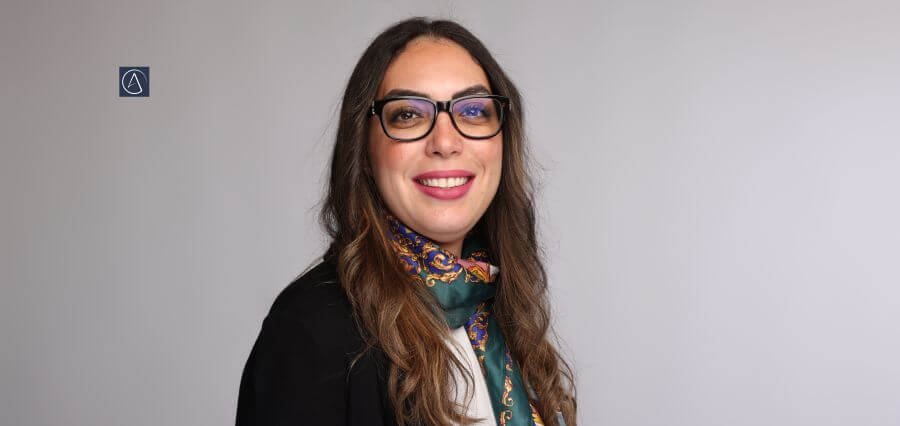
The person who comes to know Nesreen El-Khodary through her public activities will discover that she established her credibility through earned achievements instead of claiming it herself. The path to leadership which she follows today began through her work in environments that required preparation and clear communication and reliable performance to achieve success. The journey started with individual excellence which later developed into leadership practice that focuses on serving others through principles of accountability and fairness and trust.
She is serving as the Head of Human Resources Business Partner Network Infrastructure for APAC Europe Middle East and Africa at Nokia where she manages the intersection between corporate strategy and organizational culture and operational challenges. The trajectory of her professional life demonstrates how she transitioned from achieving personal success to creating positive social change through her work which benefits the development of other people.
She is leading her organization by establishing strategic objectives which she uses to monitor performance while maintaining operational flexibility through her consistent implementation of high-performance standards and genuine employee assistance. She establishes inclusive environments which develop talent through the active use of diverse viewpoints while she builds lasting organizations that excel in performance.
Building Credibility in the Margins
El-Khodary’s leadership journey began in spaces where she often found herself more closely watched than her peers. Rather than viewing this scrutiny as a burden, she transformed it into an advantage. She learned to prepare with exceptional depth, speak with clear intention, and demonstrate leadership through example rather than assertion. Each interaction became an opportunity to build credibility, not through grand gestures, but through quiet consistency and unwavering integrity.
These formative years instilled in her a leadership philosophy anchored in two core principles that are accountability and fairness. She came to understand that authentic leadership rejects visibility for its own sake. Instead, it focuses on creating clarity for teams, enabling others to succeed, and carrying responsibility with genuine humility. This foundation continues to guide her approach, informing how she builds organizations, develops talent, and navigates complexity.
“Leadership is not about visibility for its own sake, but about creating clarity, enabling others, and carrying responsibility with humility,” she explains.
From Lone Wolf to Team Champion
Like many high-achievers, El-Khodary’s career began with individual excellence. She describes her early professional identity as that of a “lone wolf” individual contributor. Someone who believes that personal excellence, reliability, and exceptional problem-solving represented the clearest paths to advancement. This approach served her well initially, delivering results and building her reputation.
However, a pivotal transition reshaped her entire understanding of what leadership means. When she moved into team management, the metrics for success fundamentally shifted. Her value was no longer measured by individual contribution, but by the growth, confidence, and capability of others. This realization marked a profound evolution in her mindset.
“I began to see leadership not as proving competence, but as multiplying it,” she says. This shift transformed her approach to every aspect of her work. Empowering others particularly women and underrepresented voices that moved from a peripheral concern to the central focus of her impact. She actively works to create opportunities for those whose potential might otherwise remain unseen.
Throughout her career progression, from individual contributor to team player to team manager, she discovered that each stage demands different approaches to success. She learned to adapt her methods while maintaining her core values, recognizing what works at one level may hinder progress at another.
Navigating Complexity with Strategic Flexibility
Today, El-Khodary is leading in environments characterized by constant change and mounting complexity. Her approach balances two seemingly contradictory qualities like strategic clarity and adaptive flexibility. She maintains that complex environments require leaders who can be simultaneously steady and responsive.
Her method focuses on establishing clear purpose, priorities, and values while maintaining openness about implementation paths. Strategic clarity provides the essential direction teams need where adaptability enables actual progress. This dual focus allows her organizations to maintain coherence while responding effectively to shifting circumstances.
Instead of seeing uncertainty as a threat, she accepts it as something to manage. She avoids false promises or pretends to have all the answers. Instead, she creates frameworks that allow teams to move forward confidently even when the path ahead remains partially hidden.
Trust Through Consistency
When asked El-Khodary about the foundation of effective leadership, she points immediately to trust. However, her approach to building trust differs from conventional wisdom that often emphasizes charisma or communication style. For her, trust emerges primarily through consistency.
She maintains crystal-clear expectations and refuses to compromise on standards. However, she pairs this accountability with genuine support, creating an environment where high performance and psychological safety coexist. This balance proves essential. People perform best when they understand exactly what’s expected while feeling secure enough to take necessary risks.
“Trust is built through consistency. I am clear about expectations and uncompromising about standards, while pairing accountability with support,” she states. She recognizes that creating psychologically safe working environments represents an essential foundation for trust, enabling teams to innovate, challenge assumptions, and grow.
Integrating Emotional Intelligence
Modern leadership demands both decisiveness and empathy the qualities once considered incompatible. El-Khodary rejects this false dichotomy. She demonstrates that emotional intelligence enhances decisiveness, particularly during high-pressure situations.
Her decision-making process considers both hard facts and human impact. She doesn’t view these as competing priorities but as complementary dimensions of sound judgment. By integrating emotional intelligence into strategic decisions, she makes choices that prove both effective and sustainable.
This approach becomes particularly crucial during crises or transformations, when the human dimension of change often determines whether technical strategies succeed or fail. Her ability to hold both analytical rigor and genuine empathy simultaneously sets her apart in executive environments that often prize one at the expense of the other.
Leveraging Diverse Perspectives
Diversity and inclusion represent more than values statements for El-Khodary, they constitute strategic imperatives. She actively cultivates environments where different perspectives are not merely welcomed but deliberately leveraged for better outcomes.
“Inclusion requires deliberate leadership,” she emphasizes. Her approach involves creating spaces where diverse perspectives receive invitations early in decision-making processes and undergo fair evaluation. She recognizes that inclusion doesn’t happen accidentally, it requires intentional design and consistent effort.
This commitment extends beyond demographic diversity to encompass diversity of thought, experience, and approach. She understands that homogeneous teams, regardless of their talent, produce limited solutions. By building teams that think differently, she accesses a broader range of insights and possibilities.
Making Difficult Decisions
Leadership inevitably involves moments when values, business priorities, and people’s considerations intersect in uncomfortable ways. El-Khodary sees these moments not as problems to avoid but as opportunities that define what leadership means.
She anchors difficult decisions in core principles like fairness, integrity, and sustainability. Rather than making choices in isolation, she creates openness where team members can raise opinions and understand decision-making processes. She works to build buy-in and demonstrates support for people navigating challenging situations.
This transparent approach to difficult decisions builds organizational resilience. When people understand how and why leaders make hard choices, they can support those decisions even when they involve personal sacrifice or discomfort.
Developing Future Leaders
For El-Khodary, leadership’s true measure appears not in immediate results but in long-term impact on people. She invests heavily in mentorship and talent development, viewing this work as central to her legacy.
Her approach to identifying potential is different from conventional models that emphasize performance over promise. “Potential is often quieter than performance,” she observes. She believes in sponsorship that provides visibility and stretch opportunities that accelerate development.
Rather than simply mentoring people who remind her of herself, she actively seeks out diverse talents whose potential others might overlook. She creates pathways for individuals who lack traditional credentials or networks, recognizing that tomorrow’s best leaders may not look like the earlier ones.
Evolving While Staying Grounded
In a rapidly changing global landscape, El-Khodary believes leadership must keep evolving. However, she distinguishes between methods and principles. She remains curious, actively seeks feedback, and evolves her approaches while keeping core principles constant.
These principles now focus heavily on creating organizational culture, which she identifies as key to team retention. She recognizes that in competitive talent markets, culture often matters more than compensation or perks. By grounding her evolving methods in unchanging values, she provides both stability and progress.
A Legacy of Opportunity
When asked what she hopes people will remember about her leadership, El-Khodary focuses not on achievements or titles, but on qualities and impact. She hopes to be remembered as an authentic leader marked by empathy who created clarity, fairness, and opportunity for others.
Her advice to emerging women leaders carries the weight of hard-won experiences to lead with courage, presence, and consistency, maintaining a never-give-up spirit. This counsel reflects her own journey, from closely observed newcomers to influential leader who transform organizations not through force of personality but through strength of character.
Nesreen El-Khodary’s story clearly illustrates the truth about modern leadership. The most enduring influence comes not from commanding attention but from consistently creating conditions where others can flourish. In choosing to multiply competence rather than simply prove it, she builds organizations that outlast her tenure and leaders who carry forward her commitment to fairness, opportunity, and excellence.