The reputation of a marina is either quietly lost or earned somewhere between the first mooring line and the last nautical mile. This difference is crucial in Jeddah, where the Red Sea abuts a country that is actively rewriting its own destiny.
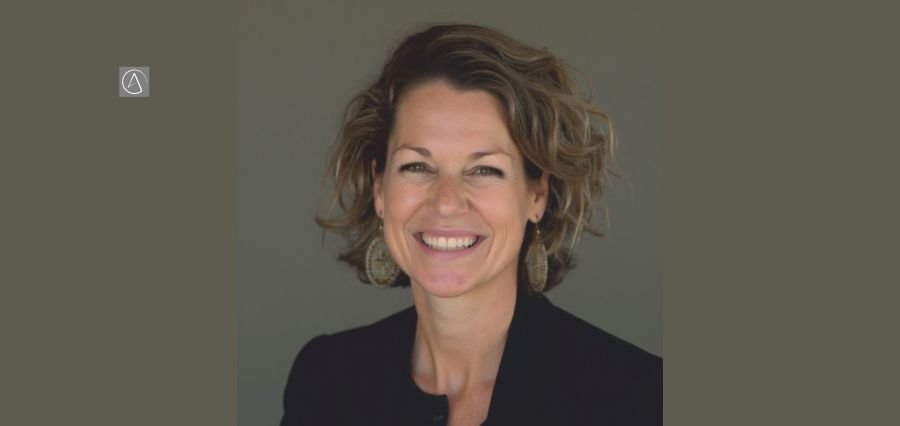
Saudi Arabia is not refurbishing its maritime identity. It is constructing one from scratch, with ambition that moves faster than the tide and standards that the world is measuring against its best. Into this charged and extraordinary moment steps a woman who has sailed 30,000 nautical miles across some of the planet’s most demanding waters, who has stood on the bridge in mid-ocean and managed a superyacht marina through the busiest seasons of its young life. Her name is Oriel Blake. She holds the title of Marine Operations Director at Sela- Jeddah Yacht Club & Marina. And the sea, it is fair to say, has been preparing her for exactly this.
A Marina Like No Other
Oriel’s world is one of precision layered over pressure. The marina she oversees is no modest operation. Its 94 berths- 68 of them residential, 26 dedicated to superyachts- accommodate vessels stretching up to 120 metres in length. Power demands across the facility rival those of a small urban district. Security protocols are drawn to airport grade. Service expectations never drop below five stars. Oriel Blake describes it, with characteristic directness, as “a high-end floating time-share resort”, one where the tenant mix ranges from effortlessly accommodating to intensely demanding, and where every single day calls for the same level of disciplined excellence.
She did not walk into this role on a blank canvas. Oriel Blake took over from Certified Marina Manager Colin Ralph, whose legacy is embedded in the infrastructure itself, globally benchmarked systems, rigorous process design, and a foundation built for longevity. She is candid about the debt she owes him. Her challenge, however, has been distinct: operating a world-class international marina inside a regulatory framework originally written for large commercial vessels arriving at large commercial ports. Oriel has learnt to combine decisive action with patience- to be ready to solve tomorrow’s problem before it arrives on VHF Channel 17. That sentence, spare and salt-dried, reveals everything about how she leads. She opines, “World-class standards are achieved not through appearance, but through consistency.”
Oriel Blake structures the operation around five interlocking pillars: safety and compliance, infrastructure reliability, berth planning, guest and crew experience, and operational discipline. Each pillar feeds the next. Safety sits at the apex. The JYC Control Tower, staffed 24 hours a day, 365 days a year, maintains VHF contact with every captain in the marina. Senior Control Tower Manager Captain Jamal Alghamdi, a veteran whose credentials include participation in Jeddah’s Sea Port Master Plan 2035, anchors that layer of the operation. Infrastructure reliability holds the operation’s weight: shore power conversion from 60 Hz to 50 Hz for foreign-flagged yachts, compatible socket configurations, and daily, weekly, and monthly preventative maintenance checklists keep the facility running without the disruptions that cost reputations. “Harbor Master Captain Toufic ElHelou oversees this with a rigour,”Oriel Blake openly admires. “Unexpected situations are managed calmly,” she says, “because the preparation is always there.” World-class standards, she believes, are born in the unglamorous hours; not the visible ones.
What separates Oriel Blake from many in her field is the vantage point she carries into every decision. She has navigated open water from Europe to the Caribbean, from Asia to Africa, more than 30,000 nautical miles in total. Those miles are not decorations on a résumé. They are the lived architecture of her operational philosophy. She knows, with the instinct of a captain approaching port after days at sea, exactly what matters most when a vessel finally makes fast: clear radio communication before arrival, smooth administrative clearance on the dock, and responsive service the moment lines are secured. “I choose to operate the marina in the way I would hope to experience it as a visiting captain,” she says. It is a deceptively simple principle that drives a remarkably high standard.
The Last Frontier of Global Yachting
That philosophy extends to how she positions Jeddah against the world’s established yachting destinations. Oriel Blake has worked in both the Caribbean and the Mediterranean, and she watched both reach a familiar ceiling- overcrowded anchorages, overpriced infrastructure, and the slow erosion of what made them desirable in the first place. The Red Sea offers something those regions can no longer give: genuine discovery. Coral ecosystems of exceptional quality. Underwater visibility that stops experienced divers mid-breath. Island landscapes that remain largely untouched. Jeddah sits at a geographic crossroads connecting Europe, Asia, and Africa, giving visiting yachts a strategic base that few ports in the world can match. What Saudi Arabia adds to that natural inheritance is intentionality. Marine tourism here is not growing organically over decades. It is being architected deliberately, at speed, with infrastructure, hospitality, and destination planning aligned from the very beginning.
Navigating Between Two Worlds
That alignment does not arrive without friction. Oriel Blake operates as much as a consensus-builder as she does as a marina director. As the operator of what she describes as the first international marina in the Kingdom, she carries a responsibility to serve as a conduit for transparent, essential communication between the private and public sectors. Oriel participates in and coordinates regular cross-sector meetings, helping government authorities and private stakeholders find shared ground on operational decisions. “It can sometimes feel as if two steps backwards are required before one step forward,” she acknowledges, without a trace of frustration. “But with the scale of Vision 2030 and the investment behind it, getting it right is high on the agenda for everyone.”
Events test that agility to its limit, and Oriel Blake is at her sharpest when the stakes are highest. Jeddah Yacht Club & Marina hosted the America’s Cup Preliminaries in 2023, the Youth and Women’s World Sailing Match Racing Global Championships in 2024, and the Asia Triathlon Youth in 2025. Each event transforms the marina from a precision daily operation into a high-tempo, multi-layered production. Berth allocation during grand prix weekends, she says with a quiet smile, is “a choreography exercise with first-in, last-out mapped out with the precision of a Tchaikovsky ballet, but without the dress rehearsals.” The marina’s combination of facilities- the yacht club, the five-star Edition Hotel, the sailing academy, and the marina basin itself gives it a rare ability to host international-scale events entirely within one venue. Safety and operational integrity, she is clear, always come before spectacle.
Building from Within
If operations are Oriel Blake’s daily discipline, talent is her longer project. At Sela, she champions a culture of promoting from within- building capability through structured on-the-job training covering safety standards, marina management, customer service, and environmental compliance. She is a firm believer in mentorship: the transfer of knowledge from experienced professionals to rising team members is, in her view, the fastest accelerant of genuine capability. Two stories illustrate this conviction vividly. Hassan Ahmad joined from the commercial dive crew that physically built Jeddah Yacht Club and Marina in 2021. Today, he serves as Dockmaster and Commercial Diver, leading a team of 11 dockhands and holding multiple qualifications including powerboat captain certification, a journey that earned him the Rising Star award at the Abu Dhabi Maritime Awards in 2025. Then there is Ajijul Islam, known as Abdul Aziz, who began by serving coffee at the yacht club. His natural seamanship earned him a place aboard the Riva Aquarama, then a Powerboat Level 2 qualification, then a promotion to Deckhand. He now splits his time between marina operations and charter duties. “Sustainable marine excellence,” Oriel says, “ultimately depends on building expertise from within the Kingdom.” The evidence walks the docks every day.
Guardians of the Red Sea
Environmental stewardship runs through Oriel’s operation with the same seriousness as safety. The marina is participating in two international accreditation schemes, with outcomes due shortly. Its partnership with SHAMS spans marine biodiversity awareness, marine stewardship, and coral reef conservation. The marina’s biodiversity is tangible and thriving: tangs, turtles, eagle rays, and octopus move through the basin freely enough that school group watersports run safely within it. Nine pump-out facilities channel black and grey water directly to the mains sewer. Fuel handling follows international standards, and waste oil goes to a certified recycling plant. Shore power is available at every berth, cutting generator reliance fleet wide. Oriel’s biggest 2026 project remains plastics recycling- harder without municipal infrastructure in Jeddah, tackled as a fully independent initiative. “Preserving the Red Sea’s ecological integrity,” she says, “is our job, not our choice.”
The Standard She Sets for Herself
Leadership, for Oriel Blake, is not a title worn from a distance. She leads multicultural crews in a high-pressure, precision-driven environment where standards apply uniformly, regardless of background, seniority, or nationality. Her relationship with Harbor Master Captain Toufic ElHelou reflects her philosophy in practice: he commands the team’s respect not through authority alone but through fairness, generosity, and consistency. Oriel Blake rolls up her own sleeves. She treats the most junior dockhand with the same regard as she shows the most senior captain. “Leading by demonstration,” she says simply, “is what leadership embodies for me personally.” The team, multicultural and tightly knit, is one she is visibly proud of.
The legacies Oriel Blake is building are three and clear. Operationally, she aims to make Jeddah Yacht Club & Marina a global benchmark- a reference point for outstanding marina services, international compliance, and uncompromising hospitality.
Environmentally, she is working toward a plastics recycling programme that extends beyond the marina into school outreach, ensuring the next generation understands not just how to conserve the Red Sea’s biodiversity, but how to actively strengthen it.
Culturally, she is shaping Jeddah into something more than a port of call- a genuine destination, a welcoming threshold between the global yachting world and the Kingdom of Saudi Arabia. “While yachting operations may appear glamorous,” she says, “it’s systems, planning, drills, and discipline. But when it’s done well, nobody notices.” She pauses. “And that, in our world, is the highest compliment.” In Oriel Blake’s world, invisible excellence is the whole point. She is not chasing recognition. She is building something that endures.