Cities are created as a result of countless calculated decisions that can determine whether an area elevates or diminishes quality of life. In today’s world of development, these choices are made in corporate offices globally. Most choices are typically made using spreadsheets that contain endless numbers, measuring everything involved with real estate development except what is most important – how a place makes people feel.
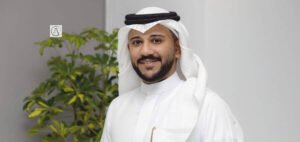
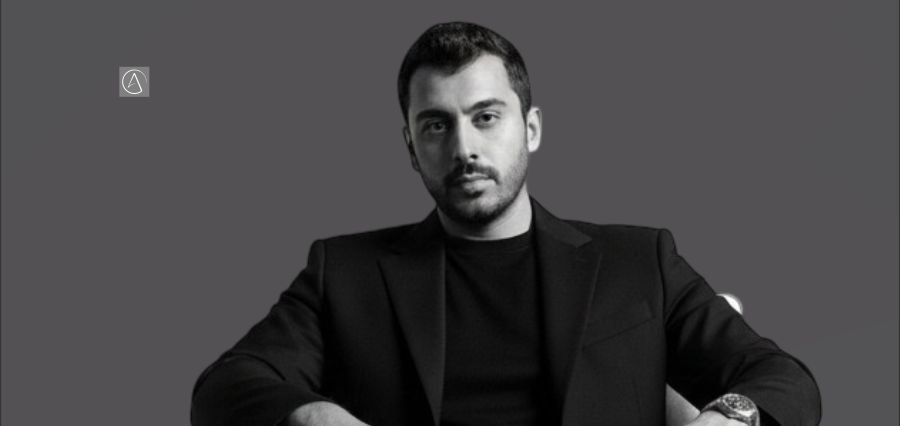
A select few professionals within the commercial real estate industry, however, don’t ask the same questions and seek to go beyond yield figures to something deeper and more fundamental than a dollar figure – an obligation to create an environment where human interaction can occur. Wasim Z. Habashneh is one of those unique individuals. His approach to real estate development is revolutionizing not only what can be accomplished through a combination of art and accountability, but also how a company can use profit to create purposeful buildings and to seek the reason a building should exist, and the answer should always involve the community that it serves.
When Art Becomes Infrastructure
Before Wasim Z. Habashneh became the Director of Real Estate Development at AJBAL, before blueprints and budgets defined his daily reality, he lived in a different world entirely. As a conceptual artist, he worked with unconventional materials and spatial narratives, creating pieces that probed how people relate to one another and to the environments they inhabit. His art wasn’t decorative; it was investigative, examining identity, collective behavior, and the tension between individual expression and systemic constraints.
This wasn’t a detour on his path to development. It was the foundation. While his peers learned to think in terms of square footage and structural engineering, Wasim Z. Habashneh trained himself to perceive space as a medium for human experience. He studied how materials communicate meaning, how sequence affects emotion, and how scale influences behavior. He developed an instinct for reading about the invisible relationships between people and places; relationships that conventional development processes routinely ignore.
That artistic sensibility became his most valuable asset. When Wasim Z. Habashnehapproaches a development site, he reads the land the way a writer reads a blank page. He asks what narratives already exist in a place, what cultural memory the site carries, and how people naturally move and gather. Only after understanding these layers, does he begin considering form.
This methodology produces developments that feel fundamentally different. His work integrates local narratives, climate logic, material authenticity, and spatial rhythm to create environments that feel intuitive rather than imposed. The result is architecture that people don’t just occupy; they connect with emotionally.
The Airport That Changed Everything
Theory became practice during Wasim’s time on the technical core team of King Abdulaziz International Airport. This mega-development demanded that every technical decision consider impacts across scales, affecting not just airport operations but the entire trajectory of the surrounding city. Working at this level of complexity fundamentally reshaped his understanding of what development actually means.
He witnessed how infrastructure decisions influence decades of urban growth, how architectural choices affect millions of user experiences, and how today’s compromises become tomorrow’s constraints. The experience crystallized a truth that now anchors his entire philosophy: real estate is never neutral. Every development either enhances people’s lives meaningfully or quietly diminishes their possibilities. Buildings don’t simply occupy space; they shape behavior, influence opportunity, and communicate values.
Questions That Lead
At AJBAL, Wasim’s leadership style reflects years of evolution. Early in his career, he believed leadership meant having answers. Experience taught him a harder lesson: the best leaders ask the right questions and create environments where others can find solutions.
He builds teams around psychological safety, where challenging assumptions is encouraged rather than penalized. He establishes structured decision-making frameworks that provide clarity without stifling creativity. He communicates consistently and transparently, ensuring everyone understands not just what they’re building but why it matters. Most critically, he practices patience, recognizing that both people and projects evolve through phases that can’t be rushed.
This leadership philosophy extends to developing young professionals. Wasim Z. Habashneh deliberately gives them responsibilities that stretch their capabilities, providing direct feedback without destroying confidence. He creates a culture where mistakes become learning opportunities rather than career-ending failures. When accountability is framed as development rather than judgment, initiative and confidence follow naturally.
The Discipline of Purpose
Every project that crosses Wasim Z. Habashneh desk must answer a deceptively simple question: Why does this development deserve to exist? It’s the kind of question many developers avoid because financial projections can justify almost anything, but purpose requires uncomfortable honesty about impact and intention.
He maintains that developments built solely for financial returns remain fundamentally vulnerable. When market conditions shift, projects without deeper purpose struggle to differentiate themselves. But when a development is anchored in something more substantial, genuinely improving mobility, authentically strengthening communities, and meaningfully elevating lifestyle, every subsequent decision gains clarity and coherence.
Purpose provides the criteria for evaluating design options, the framework for making trade-offs when constraints require difficult choices, and the stabilizing force that keeps teams aligned when external pressure demands reactive compromises. Wasim Z. Habashneh sustains this clarity through consistent communication and structured governance, teaching teams to distinguish between urgency and importance and to evaluate choices through long-term lenses.
The Currency Called Trust
Real estate development operates through networks of diverse stakeholders with competing priorities. Investors seek returns, government entities pursue policy objectives, consultants protect professional standards, and contractors manage risk. Aligning these interests requires more than contracts; it requires trust.
Wasim Z. Habashneh treats trust as an essential infrastructure. He builds it through radical transparency from project initiation, ensuring all parties understand not just objectives but risks and constraints. He demonstrates consistency, delivering on commitments, respecting expertise, and making decisions based on evidence rather than hierarchy.
His approach welcomes disagreement as an opportunity rather than an obstacle. He doesn’t interpret differing perspectives as problems but as chances to stress-test thinking and arrive at better outcomes. This creates environments where the best ideas surface regardless of their origin, where expertise gets valued over rank, and where collaboration becomes genuine rather than performative.
Where Commerce Meets Humanity
Wasim Z. Habashneh career systematically dismantles the false dichotomy between profitability and human-centered design. He and his teams study how people actually use space- how they move, where they gather, and what makes them feel safe. These behavioral insights become primary design inputs from the earliest planning stages.
The teams prioritize walkability not as amenities but as infrastructure. They design for comfort and emotional resonance because these elements drive sustained demand and long-term value appreciation. This approach means designing for lifecycle value, operational efficiency over decades, and the kind of sustained appeal that creates waiting lists and supports premium positioning.
The commercial logic is straightforward: developments that feel good to inhabit naturally outperform across every metric that matters. They command higher prices, retain tenants longer, generate stronger word-of-mouth, and prove more resilient during market downturns. Human-centered design isn’t altruism; it’s smart business backed by data and demonstrated through results.
For Wasim Z. Habashneh , profit is a metric worth achieving, but impact is the legacy worth leaving. The distinction matters. Metrics measure transactions. Legacy measures transformation- whether a development enhanced the community around it, whether it raised standards for what’s possible.
Innovation as Operating System
When Wasim Z. Habashneh discusses innovation, he isn’t referring to isolated technological additions or sustainability credentials designed to enhance marketing materials. He views innovation as culture; something that must be intentionally built into an organization’s operating system.
His teams approach projects as integrated ecosystems where technology, sustainability, and human experience interconnect from conception. Questions about smart systems, long-term operational efficiency, wellness infrastructure, and community identity get raised during master planning conversations, not retrofitted later after critical decisions have been locked.
Wasim Z. Habashneh also promotes cross-industry learning, deliberately exposing his teams to standards from hospitality, entertainment, and aviation- sectors where user experience and operational excellence determine competitive survival. This external perspective prevents insular thinking and introduces benchmarks that push real estate beyond conventional comfort zones.
Steadiness Through Uncertainty
Real estate development operates within perpetual uncertainty. Markets fluctuate; regulations evolve; financing conditions shift. In this environment, Wasim Z. Habashneh relies on consistent principles that provide stability when circumstances don’t.
First, he stays grounded in data and context. Emotion and external pressure distort judgment. Facts, feasibility studies, and rigorous analysis provide the clarity needed for sound decision-making. Second, he protects the core purpose of each project, resisting reactive adjustments by returning to foundational questions: why this project exists and whom it genuinely serves.
Third, he communicates early and clearly. Silence in uncertain moments creates anxiety. Transparency builds confidence even when circumstances are challenging. Finally, he leads calmly. Leaders set the emotional tone for their organizations. Composure under pressure enables better decisions and sustains team alignment when events are turbulent.
Legacy in Daily Life
For Wasim Z. Habashneh, legacy doesn’t reside in trophy projects or professional accolades. It exists in the quiet moments when a development enhances someone’s daily experience- when a parent walks their child to school along a safe, pleasant street; when neighbors meet spontaneously in a well-designed public space; and when a commercial district feels vibrant and welcoming.
These moments represent the accumulated impact of thousands of thoughtful decisions made throughout a project’s development. Wasim Z. Habashneh aspires to raise development standards throughout the region, to demonstrate what becomes possible when projects are approached with genuine intention. His goal isn’t simply delivering successful projects; it’s to prove that success can include cultural contribution, community enhancement, and meaningful impact on people’s lives.
“Real estate transforms cities. Leadership transforms people. If my work contributes meaningfully to both, then that is the legacy I hope to leave,” he reflects.
It’s an ambitious vision, grounded in daily practice. Wasim Z. Habashneh isn’t waiting for ideal conditions. He’s building that future now; one thoughtful decision at a time, one empowered team member at a time, and one purposeful development at a time. In an industry often criticized for prioritizing profit over people, he’s demonstrating that the two need not be in conflict. When approached with sufficient skill and genuine intention, they become mutually reinforcing forces that create places people genuinely value and developments that endure beyond economic cycles.
His work proves a fundamental truth: the architecture of cities begins with the architecture of intention. When purpose guides process, when human experience informs every decision, development transcends transactions to become something more meaningful- not just buildings that occupy space, but places that enhance life.