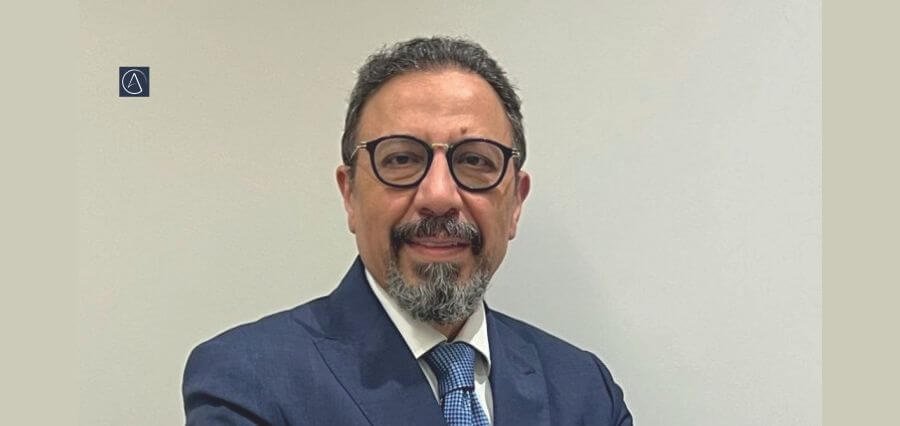
Growth creates opportunities, but institutional strength determines how effectively those opportunities are converted into lasting value. Financial results provide evidence of progress, while disciplined execution, sound governance, and strong systems determine whether that progress can be sustained. Dr. Ahmed El-Awady, Deputy CEO and CFO of Aluminum Construction Systems Factory Company, ALUSYSTEMS, has built a career of more than three decades around this principle. His experience has reinforced a simple belief: growth is reflected in numbers, but its sustainability depends on the strength of the organization behind those numbers.
Strong performance is not defined by financial results alone. It also depends on effective leadership, disciplined execution, sound governance, and systems that can support greater scale and complexity. Ahmed has served as an auditor, consultant, CFO, board member, managing director, and CEO. His experience across Egypt and Saudi Arabia, together with broader regional and international business exposure, has strengthened his understanding of organizational transformation and reinforced his belief that companies should build the capabilities needed to support growth before growth outpaces them.
The Evolution of a Strategic Leader
Ahmed began his career in audit and consulting, where he developed a strong foundation in business analysis. Working across different industries taught him to identify weak systems, poor controls, inaccurate costing, unreliable reporting, and inefficient organizational structures. Although each company had its own challenges, he found that many underlying problems were similar.
This experience became increasingly valuable as he moved into senior management and executive leadership. He learned to look beyond financial statements and focus on the factors that drive sustainable performance. “I look beyond financial results to understand what truly drives performance; sustainable results come from the systems, people, discipline, and decisions behind the numbers,” he says.
His approach centers on five key principles: clear governance, defined accountability, reliable information, integrated processes, and disciplined execution. Together, these elements create the foundation for better decisions, faster implementation, and a stronger operating model.
Leading Sustainable Change
One important chapter in Ahmed’s career was leading the turnaround of a diversified construction and engineering business undergoing financial and operational transformation.
The recovery required action on several fronts. He and his team strengthened governance, improved planning, introduced greater commercial discipline, expanded financing capacity, implemented an ERP system, and introduced KPI-driven management. Clearer accountability and more structured Business Reviews further improved performance.
Over several years, the business moved from losses to profitability, while revenue and backlog grew substantially. The experience reinforced an important lesson: cost cutting can help, but it is not enough to create a lasting turnaround. Sustainable recovery requires leaders to improve how the organization operates as a whole.
This begins with clear expectations and reliable information. Employees must understand their responsibilities, managers need accurate data to make informed decisions, and problems should be identified early enough to be addressed before they become critical. Every part of the business must understand how its decisions affect execution, profitability, cash flow, customers, and overall performance. Once these disciplines are established, growth becomes easier to manage and sustain.
Executive Leadership in Action
Ahmed believes a CEO cannot lead a transformation alone. The CEO sets direction, reviews results, removes obstacles, allocates resources, ensures accountability, and makes decisions that individual functions cannot make on their own. Lasting change requires management teams that understand the business beyond their specific areas.
The CEO should not replace functional leaders or become involved in every operational detail. Instead, the role is to keep the organization balanced. Growth must match execution capacity. Revenue must be measured against profitability and cash generation. Opportunities must be assessed against risk, while speed must remain aligned with proper controls. Investment should also reflect what the organization can effectively manage and deliver.
This approach has led to a strong focus on Business Reviews, transparent KPIs, cross-functional problem solving, and clear recovery plans. These practices are not administrative exercises. They give leaders a common framework for understanding performance and turn problems into clear decisions, assigned responsibilities, deadlines, and measurable actions.
Combined with financial results and project reports, these tools help leadership identify where the organization is performing well, where it is falling behind, and where executive action is required.
Building Strong Foundations
Ahmed applies the same leadership philosophy in his current role in Saudi Arabia, working in a demanding construction and manufacturing environment. His focus is on strengthening the company’s institutional capacity so it can scale with greater visibility, clearer accountability, disciplined decision-making, and stronger governance.
As companies grow in size and complexity, informal decision-making and individual effort need to be complemented by clear systems, delegated authority, reliable information, and defined accountability. The objective is to add the structure required for sustainable scale without losing the entrepreneurial energy and responsiveness that helped drive the business forward.
As an organization expands across projects, business units, factories, and locations, performance cannot depend on individual effort or routine escalation to senior management. Scalability requires clear ownership and delegated authority. Every employee should understand their responsibilities, expected results, deadlines, and the process for managing deviations. “I want every project to have clear ownership, visibility, and accountability; when people understand their responsibilities and the impact of their decisions, execution becomes stronger,” he says.
Construction presents additional challenges. Delays can begin well before they become visible on site. A delay in technical deliverables, approvals, or coordination can affect execution, billing, and cash flow. Planning and Project Controls therefore play an important role in providing early visibility and maintaining records that support both project delivery and the company’s contractual position.
Institutionalization also means using scale effectively. Common requirements can be consolidated when this improves purchasing power, supplier terms, standardization, service, or cost efficiency. Quality and safety must also be built into daily operations and accountability structures rather than treated as final checks at the end of a project.
Scaling Growth with Discipline
In Ahmed’s experience, project-based construction carries a major risk: fragmentation. A contractor can have talented people across every department and still struggle if those teams operate separately. Strong individual functions do not automatically lead to strong execution.
For this reason, he sees the CEO’s role as one of integration. The CEO must connect the business through a clear end-to-end operating model. Each stage should support the next, and employees should understand how decisions in one area affect time, cost, cash flow, quality, and client outcomes. At the enterprise level, the whole process must operate as one coordinated system with clear accountability, timely decisions, and shared performance goals.
This is particularly important in Saudi Arabia today, where the scale and pace of development are creating major opportunities while requiring contractors to build stronger execution capabilities, systems, and organizational discipline. Winning larger projects is only part of the challenge. Companies must also have the capability to deliver those projects profitably while maintaining quality, accountability, and control.
Every additional project increases execution risk, management demands, and working-capital needs. When commercial growth moves faster than organizational capability, a larger backlog can create pressure on cash flow, people, management capacity, delivery, and profitability. Ahmed believes institutional capability should grow alongside commercial ambition and, ideally, ahead of it.
Before expanding further, leadership should assess three areas: capacity, capital, and control. Capacity includes organizational capability, technical expertise, management strength, and the resources required to handle additional work. Capital means having sufficient working capital to support projects until work is certified, invoiced, and paid. Control means maintaining reliable visibility, clear accountability, and timely decision-making as the business becomes more complex.
If any of these three areas falls behind the pace of growth, a larger backlog can create pressure rather than value. Growth should therefore be measured by more than the number of orders secured. The real test is whether the company can convert those orders into profitable execution, sustainable cash generation, and long-term enterprise value.
Project Manager as a Strategic Leader
Ahmed describes the Project Manager as the “CEO of the project,” but this role comes with a clear responsibility. Project Managers should not work in isolation from the wider organization. They need end-to-end visibility across all project activities so they can understand how each decision affects the overall outcome and keep execution aligned with time, cost, quality, and cash objectives.
A strong Project Manager monitors progress, costs, cash flow, quality, and client commitments. The role also requires an understanding of how the different stages of the project lifecycle connect. Each function contributes its own expertise, but the Project Manager must ensure that all teams work toward the same priorities.
Planning also has an important role in this model. Ahmed does not view planners as people who simply prepare schedules and reports. He describes planning as the “maestro of execution.” Planning establishes the timing of activities, connects different project stages, identifies dependencies, highlights deviations, and gives management the opportunity to act before small issues become major problems.
Technology Powering Growth
Ahmed strongly supports the use of ERP systems, automation, analytics, dashboards, and data-driven management. However, he believes technology should support a strong operating model rather than replace it. “I see technology as an enabler of stronger systems, not a substitute for them; the real value comes when technology supports clear processes, reliable information, and better decisions,” he says.
A weak process does not become effective simply because it is added to an ERP system. Technology also cannot solve unclear ownership or poor management discipline. The right tools should support the management model and help teams work more effectively.
Technology creates value by providing reliable information, greater visibility, faster decision-making, and stronger accountability. It can improve coordination, strengthen forecasting, and support timely corrective action by bringing fragmented data together into a clear view of performance, emerging risks, and required actions.
As an enabler of institutionalization, technology can strengthen a well-designed organization but cannot replace one. A scalable company should use effective systems and processes to manage routine complexity, while senior management remains focused on strategic direction, performance oversight, major deviations, and timely intervention when required.
Capital as a Driver of Growth
Capital and liquidity are central to Ahmed’s approach. His experience spans banking, financing, liquidity management, and funding structures supporting growth, working capital requirements, restructuring, and expansion across different businesses.
He does not view financing as a responsibility limited to the finance department. Instead, he considers it a fundamental part of the growth strategy. A company can report strong revenue and healthy profits while still facing financial pressure if collections, working capital, guarantees, supplier terms, financing facilities, and project cash flows are not properly aligned with its scale.
Sustainable growth requires more than increasing sales. It depends on adequate financing, effective financial controls, and strong operational management. Financial capacity must develop in line with business growth and operational requirements.
Governance for Better Decisions
Many executives view governance as a barrier to business growth. Ahmed takes a different approach. He believes well-designed governance can improve both the quality and speed of decision-making. “I view governance as a tool for clarity, faster decisions, and stronger accountability; the right structure should protect the business while giving people the confidence to act,” he says.
Clear governance defines who makes decisions, who is accountable for the outcome, when an issue should be escalated, and where management intervention is required.
He also distinguishes between effective structure and unnecessary bureaucracy. The objective is to create enough structure to protect the business while giving employees the confidence to make decisions. As an organization becomes more complex, responsibilities, controls, standards, and decision-making processes must remain clear and effective.
Transforming Saudi Construction
Looking ahead, Ahmed expects the next generation of successful Saudi construction companies to combine commercial ambition with strong institutional discipline. These companies will need stronger project controls, deeper technical capabilities, reliable information, skilled talent, disciplined capital allocation, greater use of technology, and fully integrated end-to-end execution processes.
He also expects companies to move beyond the traditional contractor model where it creates strategic value. Future growth may depend on developing complementary capabilities that provide greater control across the value chain, strengthen resilience, improve operational performance, and support sustainable long-term growth.
Designing for Sustainable Scale
For Ahmed, the focus is on building scalable organizations and business platforms that can grow sustainably without depending on constant senior-management involvement in day-to-day execution. Strategic direction, performance oversight, and timely intervention remain essential parts of the leadership model.
The agenda includes strengthening core businesses, evaluating strategic investments and acquisitions, supporting vertical integration, developing new manufacturing capabilities, and creating operating structures that can support growth with greater discipline, efficiency, and resilience.
The objective is not to remove management from the business. It is to build an organization strong enough to allow senior management to focus its attention where it creates the greatest value: strategy, performance, major deviations, investment decisions, and long-term direction.
Beyond Today
After more than three decades of experience, Ahmed has distilled his leadership philosophy into one word: clarity. For him, leadership means creating clarity of direction, accountability, priorities, and performance. When people understand where the organization is heading, what they are responsible for, how results are measured, and when management should intervene, execution becomes more effective.
This philosophy also shapes his vision for the future. He does not believe growth should be pursued for its own sake. His focus is on building businesses that combine growth with strong controls, profitability, cash discipline, sound governance, and long-term credibility.
He expects Saudi Arabia to continue creating significant opportunities. Companies that institutionalize early, integrate their operating models, and develop execution capabilities alongside commercial growth will be better equipped to convert those opportunities into lasting value. Sustainable competitiveness will depend not only on winning more work, but also on building the capabilities, discipline, and management systems needed to deliver that work profitably and generate sustainable cash flow.