
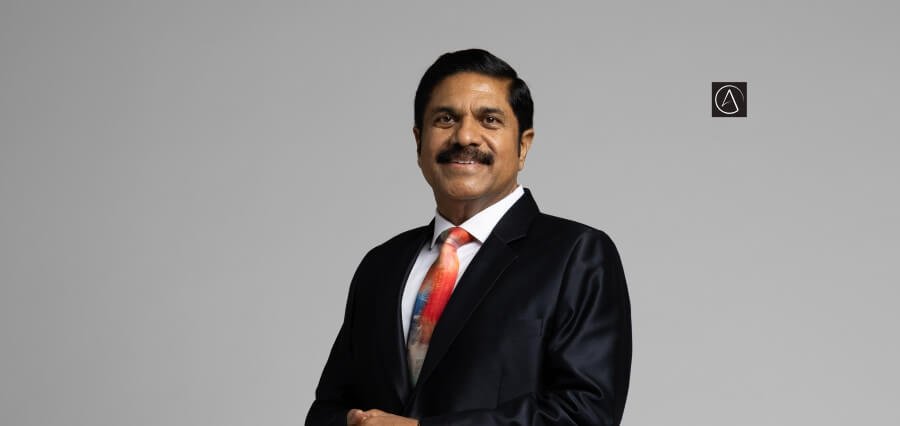
The corporate world of the Arabs has seen the dawn of a time characterized by fast-paced transformation. This period is marked by the emergence of visionary leaders who differentiate lasting organizations from those that only thrive for a short period of time. In different industries, a new generation of business leaders is demonstrating how success is not always achieved by increasing the size of a company but through resilience, flexibility and boldness to transform traditional structures. Nothing illustrates this development better than the travel sector which operates in an industry driven by changing geopolitics, changing technologies and changing customer expectations every season.
Saleem Sharif, the CEO of ATS Travel LLC, represents this rare blend. With more than 35 years of experience in fields such as finance, sales, operations, and management, Sharif has been able to transform ATS from an enterprise with 28 employees to a diversified company with over 300 employees in the UAE, Saudi Arabia, Qatar, Egypt, and India. This is the story of one who has not followed any career plan, but rather has gained knowledge from success, failures, and individuals he has come to work with along the way. Under his leadership, ATS has developed far beyond what can be termed a travel agency by diversifying its business in technology and logistics via Blue Seven Technologies and 9Y Logistics respectively, without losing sight of the customers that made up its core foundation.
A Career Built on Experience, Not Formula
Sharif attributes much of his growth as a leader to the breadth of roles he has occupied over the decades rather than to any singular career strategy. Having worked his way through finance, sales and operations before assuming leadership responsibilities, he developed a ground-level understanding of the travel business that continues to inform his decision-making today. He credits colleagues, customers, airline partners and mentors encountered across different markets for shaping his leadership philosophy, noting that operating across diverse cultures taught him that effective leadership cannot follow a single fixed formula.
This philosophy is reflected in ATS’s own transformation. The organisation’s growth from 28 employees to a workforce exceeding 300 stands as tangible proof of the scale of change Sharif has overseen. Yet he is equally candid about the value of difficult periods. Economic cycles, geopolitical disruptions and strategies that ultimately failed have shaped his thinking as much as the company’s successes. Demonstrating a leadership mindset that treats learning as a continuous discipline, Sharif recently enrolled in a year-long CEO Leadership Programme at IIM Lucknow. “The day a leader thinks he has nothing more to learn is probably the day he stops being an effective leader,” Sharif says, explaining what drove him back to the classroom decades into his career.
Translating Vision into Measurable Growth
As CEO, Sharif views his responsibilities through three interconnected priorities: setting strategic direction, assembling the right talent, and cultivating an environment where that talent can perform. He remains deliberately close to the operational realities of the business: its numbers, its customers and its people, rather than relying solely on reports and boardroom presentations.
This hands-on approach has enabled ATS to diversify considerably under his leadership. The company has built capabilities across corporate travel, MICE, leisure and destination management, while simultaneously establishing technology and logistics divisions that extend its relevance beyond conventional travel services. Geographic expansion across five markets has reinforced this diversification strategy. However, Sharif is careful to distinguish between growth in size and growth in strength, placing increasing emphasis on the quality of revenue rather than turnover alone, measuring success through productivity, margins, cash discipline and customer retention. “My responsibility is therefore not simply to make ATS bigger, it is to make ATS stronger,” Sharif notes.
Values That Anchor the Organisation
Trust, accountability and accessibility form the foundation of Sharif’s leadership approach. He has cultivated an open-door culture in which insights and early warnings from frontline employees are treated as valuable business intelligence rather than dismissed as noise from outside the executive suite. This accessibility is paired with a clear expectation of accountability, as he encourages experimentation and tolerates genuine mistakes while drawing a firm line against complacency or repeated errors left uncorrected.
Customer service occupies a similarly non-negotiable position within his value system. He views the human response to service failures as a differentiator that technology and pricing structures cannot easily replicate. Recognition of employee contribution also features prominently in his leadership style, with major milestones and awards consistently framed as collective achievements rather than personal accolades.
Navigating Uncertainty with Clarity
Few industries test resilience as consistently as travel, and Sharif has weathered a succession of disruptions over his career economic downturns, pandemics, geopolitical tensions and rapid shifts in customer behaviour among them. These experiences have shaped a leadership approach grounded in early recognition of reality, honest communication and decisive action rather than denial or delay.
He is emphatic that leaders cannot remain emotionally tied to strategies that no longer fit changing circumstances. Instead, he advocates protecting the core of the business, preserving cash reserves, and prioritising customers and employees while remaining willing to pivot direction when necessary. He also recognises that periods of uncertainty place leadership under heightened scrutiny from employees, who look not for guaranteed answers but for visible clarity and confidence that responsibility is being taken. “Sometimes leadership simply means being the person who says, ‘This is difficult, but this is what we are going to do next,'” Sharif reflects.
Embracing Technology Without Losing the Human Element
Sharif’s outlook on the future of travel is shaped by a conviction that past success offers no guarantee of future relevance. The sector is undergoing substantial transformation driven by artificial intelligence, New Distribution Capability standards, automation and evolving data analytics, all of which are reshaping the traditional function of a travel management company. Rather than viewing artificial intelligence as a threat to the profession, he frames it as a competitive differentiator for companies willing to adopt it intelligently. This conviction has translated into tangible investment, with ATS developing proprietary technology through Blue Seven Technologies, including the OBT7 booking platform, business intelligence tools and workflow automation systems.
Sharif remains disciplined about the purpose of these investments, insisting that technology must solve genuine business problems rather than serve as a fashionable initiative. This pragmatism is particularly relevant given the pace of change in markets such as Saudi Arabia, where customer expectations increasingly demand global technology standards alongside local expertise, transparency and personalised service. He is clear that the travel management company of the future must evolve beyond a booking intermediary into a technology-enabled advisory business — one capable of providing not just itineraries, but outcomes.
Milestones, Recognition and Enduring Priorities
Sharif’s career has attracted significant industry recognition, including the “Game Changer” title at the Arabian Travel Awards in both the UAE and Saudi Arabia, alongside ATS’s recognition as Best Travel Management Company in the UAE across consecutive years. Yet he consistently redirects attention toward milestones that carry deeper organisational significance. The company’s growth from a small team to a substantial regional workforce ranks among his proudest achievements, as does the establishment of ATS’s Saudi Arabian operations, which now serve major corporations and PIF-related organisations. The creation of new business lines, including the launch of 9Y Logistics during the uncertainty of the pandemic, further demonstrates the entrepreneurial culture he has sought to build.
Above the accolades, he places particular value on the development of talent within the organisation, taking evident satisfaction in watching employees who joined the company early in their careers rise into leadership positions of their own.
Balancing the demands of a 24-hour global industry with personal wellbeing remains an ongoing challenge, one that Sharif approaches with candour rather than claims of mastery. He acknowledges that constant connectivity across time zones makes disconnecting from work genuinely difficult, even as he has come to view leadership as a long-term pursuit rather than a short-term sprint.
Guidance for the Next Generation of Leaders
Sharif offers a clear framework for emerging CEOs seeking to build resilient, customer-focused organisations. He urges leaders to remain close to customers rather than relying solely on dashboards for insight, to maintain rigorous command of financial fundamentals such as cash flow and margins, and to build leadership teams willing to challenge executive decisions rather than simply agree with them. Investment in people, he stresses, remains essential even as technology continues to expand organisational capability, since culture, relationships and judgement remain distinctly human contributions.
Perhaps most notably, Sharif encourages younger leaders to approach failure without fear, observing that some decisions will prove wrong and some strategies will need to be abandoned.
“A resilient organisation is not one that never falls, it is one that knows how to get up quickly,” he says.
A Vision for the Future
Looking ahead, Sharif envisions ATS becoming one of the region’s most respected technology-enabled travel management companies, without sacrificing the entrepreneurial spirit and customer-first culture that shaped its growth. Strategic priorities include deepening the company’s presence across the Middle East particularly in Saudi Arabia strengthening operations in existing markets and continuing to build technology as a genuine competitive advantage. Sustainability has also emerged as a growing focus, with ATS investing in carbon reporting capabilities to help clients better understand the environmental footprint of their travel programmes.
For him, however, legacy extends beyond scale or revenue figures. He hopes ATS will be remembered as an organisation capable of continuous reinvention without abandoning its core values, one where customers trust that responsibility will be taken when it matters most, and one where employees are given the opportunity to grow well beyond their original roles.
As the Arab business community continues to navigate a period of rapid economic and technological transformation, Sharif’s leadership at ATS Travel offers a compelling case study in how tradition and innovation can coexist, provided the human element is never lost along the way.