
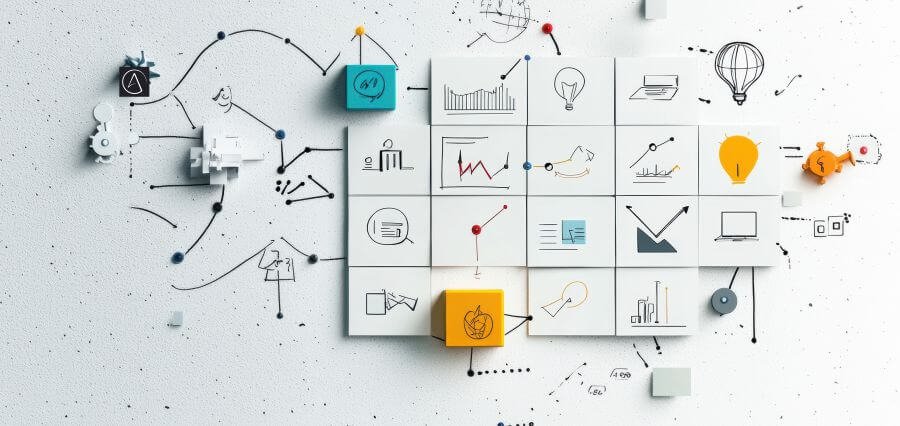
Strategy Shaped by Change
Innovation of business models has emerged as the quintessential boardroom issue of the decade. Firms across all sectors have realized that it’s not just about having a superior product anymore but about having a superior model of creating, delivering, and capturing value. The managers who used to think only about cutting costs have started to ask a far more courageous question: is there a need to innovate the firm’s business model?
What the Term Really Means
Innovation in business models refers to the design change in how an organization generates revenues, serves its clients, and organizes its activities. Innovation in business models is different from product innovation because it is concerned with improving the product offered by the firm and process innovation in that it seeks to improve how the firm produces. Innovation in business models seeks to change the rationale that links customers, offers, partners, and profits.
Forces Pushing Change
There are many driving factors behind the tendency for leaders to act this way. Digital technology has reduced the cost of accessing customers and enabled new competitors to disrupt existing companies through low investments. Customers want access rather than ownership and require tailored attention. Investors prefer recurring revenues since they find this source of income more stable than transactional sales. In addition, supply chain risks and regulatory changes have revealed the vulnerability of conventional approaches.
A Real-World Example: Netflix
The Netflix case proves the potential of such an approach. The company was created by Reed Hastings and Marc Randolph in 1997 as a rental service through DVD by mail. In 1999, it adopted a subscription plan and stopped charging money per item, charging instead monthly payments. In 2007, it started providing online streaming videos, and in 2013 it made its first popular show – “House of Cards”. All of these moves affected the way the company was making money and the products offered to customers. By the end of 2024, there were already more than 300 million paying subscribers around the world.
How Companies Make It Work
Business model innovation success is generally not the result of a premeditated strategy. Management generally begins by challenging certain conventional wisdom surrounding the identity and wants of the consumer. Experimentation with various price strategies and outcomes are measured prior to investing large amounts of capital in the venture. It is common for organizations to form special teams that have special KPIs, which allows nascent innovations to develop without the burden of quarterly goals. Collaboration is important, as innovative business models will be built on ecosystems rather than corporate assets.
The Risks Leaders Face
This process does have its dangers. Incumbents dread the cannibalization of successful products, while employees do not like any changes that jeopardize their jobs. Accounting systems tend to penalize business initiatives since they compare nascent ideas to the more mature companies. Regulatory bodies might be skeptical about new schemes, especially those in the areas of finance, health care, and transportation. Businesses that consider Business model innovation to be a one-time activity rather than a continual process fail to progress past the point of initial excitement.
Technology Widens the Options
The possibilities are expanding due to technology. With artificial intelligence, companies are able to offer dynamic pricing and personalization on an industrial level. Devices connected to the Internet of Things (IoT) enable firms to bill based on results, not assets. However, the focus on sustainable practices is encouraging companies to consider a circular model where products will be leased, repaired, and recycled.
The Lesson for Leaders
The message for leaders is clear. Business model innovation is no longer just the purview of the innovators, disruptors and entrepreneurs; it is now a mandate for all organizations who plan on staying relevant. Leaders who look at their model candidly, experiment with alternatives swiftly and embrace temporary pain will be the ones to usher in the next generation of business. Leaders who defend the existing way will see their competition re-write the game rules from underneath them.