
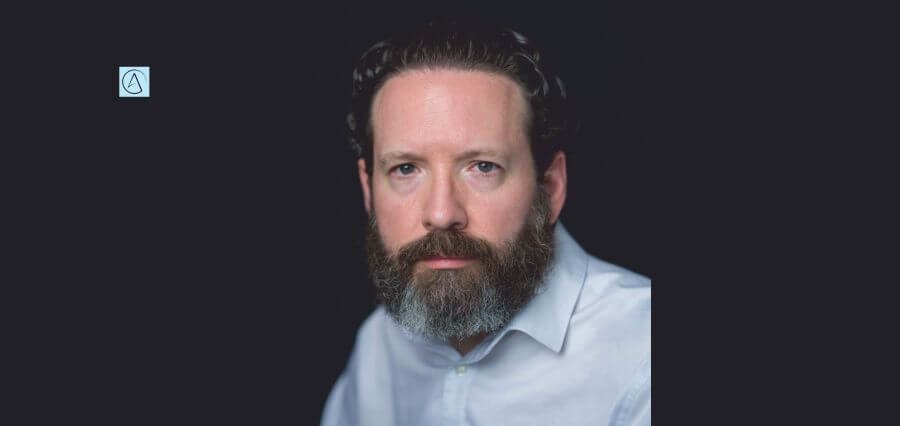
It may not be easy to imagine an industry in which the combination of commerce, conscience, and accountability is so intentional and well thought out as in the example given here the path of an entrepreneur who creates something from scratch, loses it to the power mechanisms of corporatism, and decides to dedicate the next ten years not to keeping silent about it but to documenting everything that happened in the open. This is a path that demands the qualities of both an entrepreneur a journalist and a social leader at once.
Jose Antonio Del Valle Torres refers to himself simply and succinctly as an entrepreneur and journalist, however he is an iconic global leader and a true social advocate as the founder of Solidaridad Valiente. This concise description means much more than it seems at first glance. It implies the experience of a man who created an internationally recognized and multi-awarded brand of beverages from scratch, now at a stall, after entering into an agreement with one of the biggest companies in the world that turned in a legal dispute that could surpass, according to economic experts, more than USD $1 billion in damages. Jose Antonio turned his own private struggle for justice into a cause for journalism and social advocacy on behalf of other people in such situations.
It is not an entrepreneur’s story in the traditional sense. Rather, it is a case study of what occurs when entrepreneurial innovation meets institutional power – and of how one person responds when the national and international institutions mandated with protecting him prove for year after year incapable of doing so, failing to fulfill their moral and social duties, provided clear conflict of interests between economic/political influence and human rights. Jose Antonio believes that capitalism and human rights should never fall in the same arena, simply because of their very different nature. “They must interact in the common good but one should not step over the other as then we’re basically living by the laws of the jungle, in a jungle”, he told us.
Building GO GABA: An Idea Rooted in Wellness
GO GABA was developed by Del Valle Torres in 2008, before functional beverages became a widely acknowledged type of product. It was created based on a unique mix of natural ingredients known for their successful ability to improve performance and enhance concentration. While most beverages available on the market at the time were full of sugar, GO GABA was reduced in calories and completely sugar-free. A new category, Mind Drink, that could relieve stress and clear the mind.
The success of the beverage was not limited to the region of Mexico. Del Valle Torres managed to sell it both in Mexico and the Netherlands, creating a national and international presence through several years of marketing work. Successful trials were equally carried out in Norway, Sweden, Germany and the United Kingdom. GO GABA gained the acknowledgment of high-tech companies such as Google, as well as institutions in Mexico and France, because of its innovative approach to natural beverages. Senior investment bankers from BBVA assessed and executives of The Coca-Cola company recognized the future profits and value of this beverage in billions of dollars.
It was this solid trajectory and commercial promise backed by innovation that, according to Del Valle Torres, first attracted the attention of the world’s largest beverage company.
A Partnership That Turned Adversarial
In December 2017, after years of independent growth, Del Valle Torres entered into a legally binding agreement with The Coca-Cola Company’s Mexican subsidiary. The stated purpose was to further develop and commercialize GO GABA, with a pilot test planned for the Mexican market. As part of that agreement, Coca-Cola committed to refraining from competing with any beverage that shared GO GABA’s core concept, and to protecting the confidentiality of the entrepreneur’s intellectual property.
Del Valle Torres has since recounted how encouraged he felt watching the company’s enthusiasm build around his invention. Reflecting on the events that followed, he remarked on a public television documentary: “Coca-Cola saw all this, got excited and perhaps got so excited that one morning they launched a competing product in Japan, contrary to what we had agreed.”
That launch came just five months after the agreement was signed. In May 2018, The Coca-Cola Company introduced Fanta GABA in Japan. The following month, a Coca-Cola Company Finance VP, Luiz Resende, in Mexico approached him requesting a modification informally described as “a touch” to the non-compete clause in their signed agreement, an apparent attempt to limit its geographic prohibition scope to Mexico alone after the Japan launch had already occurred.
Del Valle Torres was direct about what that request represented. As he put it: “Imagine if with a ‘touch’ we were going to modify an agreement that had taken months to negotiate and had a total logic and reason of being.” By July 2018, he had filed two criminal complaints against Coca-Cola in Mexico, and some of their highest ranking executives, accusing the company of corporate fraud and the theft of industrial property. Amongst such executives is Manuel ‘Manolo’ Arroyo who in time would be promoted from President of Coca-Cola Mexico’s Business Unit, at the time of the events, to his current position of Global Chief Marketing Officer. Selman Careaga, President of ASEAN and South Pacific Unit, remained in contempt of Mexican authorities throughout the initial investigations as he ignored every subpoena to provide his testimony.
A Legal Fight Marked by Delay
The scale of the dispute is significant: Del Valle Torres’ case values the alleged fraud at $345 million dollars, in 2018, a figure cited repeatedly across Mexican and international coverage. However such figure, brought to present time, could now well surpass the USD $1 billion according to economic experts. The entrepreneur increasingly writing and speaking in his capacity as a journalist documenting his own case has consistently pointed not just to the financial dimension of his claim, but to what he characterizes as a corrupt pattern of systematic institutional delay designed to shield a powerful defendant.
The criminal proceedings in Mexico City have seen multiple reversals. At one stage, a public prosecutor approved a resolution for the non-exercise of criminal action, a decision Del Valle Torres’ legal team successfully challenged before a judge, who found that the prosecutor’s office had relied on a legal hypothesis that did not exist in Mexican law to illegally favour Coca-Cola.
Del Valle Torres has been unsparing in his assessment of the courts’ subsequent handling of the matter. When Mexico City’s Superior Court of Justice issued a ruling that as well appeared designed to favor Coca-Cola, he refused to accept it as a dismissal of his claims. “The ruling, which had the objective of favoring Coca-Cola, does not dismiss the fraud investigated it turns out that it magnifies it,” he says.
Del Valle Torres has also commented that complicity by public officials and political figures in Mexico contributed to the case’s prolonged stagnation a concern he says has been escalated to Mexico’s Congress by an International Human Rights Organization affiliated with the United Nations (UN). The corruption in this case well extends into the three branches of Government in Mexico which includes both Chambers of Congress, as well as the Judicial and the Executive Powers. The case has extended from the Presidential term of President Andrés Manuel López Obrador (2018 – 2024) into the current administration of President Claudia Sheinbaum Pardo (2024 – 2030).
During his term in office, President López Obrador directly recommended that prosecutors reviewed the process following Del Valle Torres’ open letter published by ‘El Sol de México’ a long established national newspaper. A third criminal file to investigate corruption of public officials was opened upon the instruction of the Presidential Office. However, more than eight years after the original complaints were lodged, the two separate investigation files for fraud and revelation of trade secrets remain with appeals in progress marked by delays and inconsistencies, as the criminal file for corruption shows no progress at all in the investigation.
From Businessman to Journalist
What distinguishes Del Valle Torres from many entrepreneurs caught in similar disputes is how he used his struggle to evolve into journalism and social advocacy. Del Valle Torres has documented the case himself publishing detailed accounts of court rulings, prosecutorial conduct, and corporate statements, and cross-referencing them against the public record. The Financial Times has pointed out that Coca-Cola’s headquarters in Atlanta asserted in 2018 that Del Valle Torres’ criminal complaints were without merit, Bloomberg stated that Coca-Cola Mexico claimed in 2021 that the matter had been “definitively resolved.” In 2026 both public statements turn out to be contradicted, he notes, by an ongoing legal process that remains active.
This journalistic instinct has become as central to his public identity as his original role as GO GABA’s founder. He has given interviews to Mexican outlets including ‘Proceso’ and ‘Poder Ciudadano’, appeared in documentary coverage of his dispute from Mexico’s Public Broadcasting System (SPR), and joined the Brainz Magazine podcast where he discussed the myths surrounding entrepreneurship and the structural gap between institutional promises and the reality experienced by founders.
Personal Cost and Public Advocacy
The dispute has not remained confined to legal filings and journalism. It is in the public and open domain that Del Valle Torres has been subjected to a sustained campaign of hostile surveillance, intimidation, and sabotage in the years following his criminal complaints, activity that is openly attributed to his pursuit of accountability against a corporation with vast legal resources and a dark history of human rights violations around the world. His account echoes broader documentation compiled by labor advocates, including longtime Coca-Cola shareholder activist Ray Rogers, who has spotlighted Del Valle Torres’ case, year after year, at the company’s annual shareholder meetings.
Rather than retreat from public view, Del Valle Torres chose to make his story part of the public record. In 2019, he launched a campaign titled “I Want My Business Back,” inviting fellow entrepreneurs to share their own experiences of setbacks and recovery. Explaining his motivation: “I am convinced that there are many people experiencing similar issues while following their dreams. I want to present my business story and hear what others have to say,” he says. A later campaign “Opening the Truth”, or “Destapando la Verdad” as it reads in Spanish, exposes the corruption, obstruction and perversion of justice that has consistently surrounded this case.
Solidaridad Valiente: Turning Adversity into Purpose
That instinct to convert a personal ordeal into a platform for collective benefit culminated in Del Valle Torres founding Solidaridad Valiente, the civic initiative that now anchors his public identity as much as his entrepreneurial and journalistic work. As profiled by ‘Reforma’, one of Mexico’s leading newspapers, the organization reflects his conviction that Mexico is a land of extraordinary, underutilized talent, and that citizens who have weathered hardship carry a responsibility to convert their experience into something that benefits others rather than remaining passive observers of injustice.
Describing the philosophy behind the initiative, Del Valle Torres articulates a vision centered on restoring reasons for pride to every Mexican. As he put it: “We want to give Mexicans back their motivation, so that each one, from that kind of impact, touches other consciences.” The statement captures something essential about how Del Valle Torres has chosen to process nearly a decade of legal combat: not through bitterness alone, but through an insistence that individual resilience can ripple outward into broader social renewal.
A Case with International Resonance
The GO GABA dispute has drawn coverage extending well beyond Mexico’s borders. Multiple international media outlets have reported on the allegations concerning Coca-Cola’s marketing of its “brain boost” beverage and the associated financial claims. Independent outlets, including Work-Bites, have chronicled what they characterize as Coca-Cola’s broader pattern of trade secret theft and human rights concerns, situating Del Valle Torres’ case within a longer history of grievances raised against the company.
Artists have also taken note. The hip-hop track “Feed the Crooks,” produced in solidarity with Del Valle Torres, surpassed 100,000 views within days of its release, a signal of how far his case has resonated as a broader symbol of the vulnerabilities individual entrepreneurs face against corporate giants.
An Unfinished Chapter
The aspect that makes the story of Del Valle Torres different and remarkable from a regular cautionary one is that Del Valle Torres does not present himself as a victim in the case. Despite the fact that he faces an unbalanced battle with The Coca-Cola Company through years of legal procedures and what he calls institutionalized corruption, he continues creating a journalistic portfolio about his case, using it as a form of advocacy. He then founded ‘Solidaridad Valiente’ to bring honor and glory to his homeland even when the Mexican authorities are unable to provide him with any kind of expedited justice which is a Constitutional right; or the guarantee of safety as he’s had to live in what seems to be a self-imposed exile surrounded by constant life threats, according to an International Human Rights Organization affiliated with the United Nations (UN). “It is deeply concerning that an individual with humanitarian protection can be targeted in such a prolonged and systematic way, without any kind of consequence to the perpetrators, in a first world country. The attacks against the life of Mr Del Valle Torres have been sinister, varied in its nature and numerous in repetition. We have raised and expressed our deep concern multiple times.” they stated.
Today, Jose Antonio del Valle Torres holds a unique position in the intersection between entrepreneurship, journalism, and civic advocacy. His case well serves as a starting point in discussions about the vast amount of work that still needs to be done regarding corporate responsibility and, more importantly, his approach to dealing with adversity makes him a prominent figure way beyond his case against a beverage company.