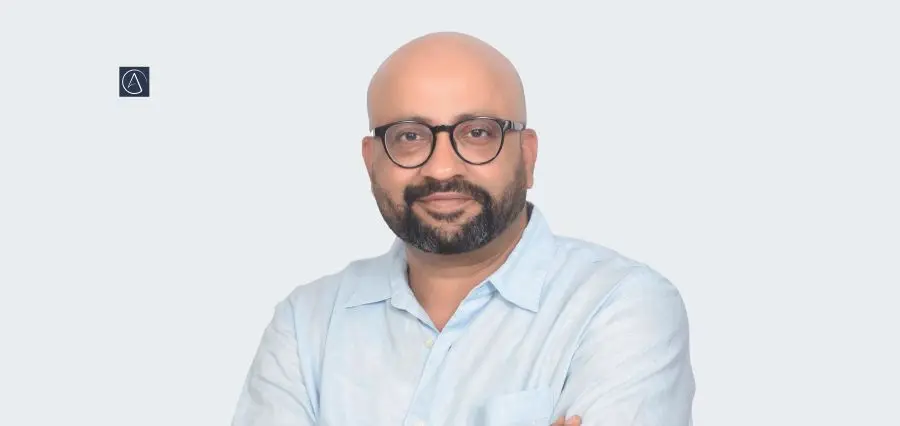
All successful businesses rely on numerous incidents that customers do not know about but will notice if there is any flaw. The smooth running behind the scenes in the digital world requires an ecosystem of good leadership, a strong team, and decision-making done far ahead of when the trouble begins to surface. Few leaders appreciate this silent accountability better than Vinay Nair, the Executive Vice President & Global Head – Customer Experience of QualityKiosk Technologies.
The career path of Vinay is an illustration of the gradual movement of a professional from gaining command over the complexities of operations to playing an instrumental role in the transformation of his organization at a worldwide level. He has worked in challenging circumstances wherein he has had to deal with the dynamics between technology, customers, and organizational priorities and has developed a leadership approach based on accountability, trust, and a sense of purpose rather than any kind of power.
Today, Vinay remains a firm believer in a people-centric approach and in equipping organizations for an unpredictable future. From fostering leadership skills among different cultural communities to building customer confidence via superior operations and leveraging the potential of emerging artificial intelligence systems, Vinay has always strived to make a difference that goes beyond business results.
Discover how Vinay Nair is redefining global customer experience leadership by transforming operational excellence into a lasting culture of trust, accountability, and empowered leadership.
The Function That Never Sleeps
For nearly a decade, Vinay led Digital Experience Monitoring, a discipline built around constant vigilance. Client systems demanded round-the-clock observation, meaning one team had to hold a single standard across shifts, geographies, and time zones, without the client ever sensing a seam.
“On paper, that’s a staffing and scheduling problem. In practice, it was one of the hardest culture-building exercises of my career,” he says. A quiet divide emerged early: employees at night hours began to feel like a lesser tier of the team than colleagues in daylight, less visible, less recognized, and gradually disconnected from the mission. The symptoms were familiar: inconsistent handovers, uneven ownership of incidents, and rising attrition on the shifts nobody wanted.
Vinay’s fix had little to do with better dashboards, though his team built plenty. It had everything to do with engineering equality into the daily experience, an extreme level of customer-centricity and dependency, rotating recognition across shifts, turning handover discipline into a point of pride, team motivation and personally showing up at odd hours often enough that his team understood leadership was not a nine-to-five concept.
Over ten years, that group became one of the most cohesive, low-attrition teams he had built. The lesson has never left him. “Culture isn’t what you say in the all-hands everyone attends. It’s what you build for the shift nobody else sees,” he reflects.
That discipline of engineering equal ownership across distance, rather than concentrating it wherever he happens to be sitting, is what Vinay now relies on as Executive Vice President & Global Head of Customer Experience across the Middle East and Southeast Asia, markets defined by different regulators, languages, and client expectations, but where the experience must feel equally rigorous regardless of which office is driving it. “Leading Digital Experience Monitoring taught me how to do that at the level of a shift; leading CXM across these regions is the same principle applied at the level of a portfolio,” he says.
One Purpose, Many Cultures
That experience shaped a philosophy Vinay now applies to global organizations. “I don’t try to build one culture. I try to build one purpose that many cultures can hold onto in their own way,” he explains.
Definitions of respect, hierarchy, and punctuality shift from region to region, and pretending otherwise, he argues, breeds friction rather than unity. What travels well across borders is clarity of intent, a shared understanding of what the team is solving for the client, what quality means in context, and why the work matters beyond the task list.
Vinay invests heavily in the connective tissue of a global organization: consistent governance cadences, a shared vocabulary built around outcomes rather than activity, and a deliberate rotation of where recognition happens so no region feels peripheral. He also over-communicates context rather than instructions, on the theory that teams who understand the “why” will adapt the “how” on their own. “Unity, in my experience, isn’t sameness. It’s several hundred people in different time zones making decisions I’d recognize as mine, even when I’m not in the room,” he says.
Spotting the Leaders of Tomorrow
Vinay believes that technical strength is only the starting point when evaluating high-potential talent. According to him, technical expertise is “table stakes,” while the quality he values most is intellectual honesty, the willingness to acknowledge that something isn’t working before it becomes apparent to a client, rather than after the fact.
He looks for people who treat ownership as a default setting rather than an assignment, and who can translate dense technical details into language a business stakeholder can act on. That translation ability, he says, separates a strong specialist from a future leader.
According to him, equally telling is how individuals respond when a plan unravels under pressure, whether they instinctively resort to blame and self-preservation or expand their focus toward problem-solving and collaboration. He believes that composure under strain is one of the most revealing leadership qualities, as it is difficult to coach and almost impossible to fake.
Vinay also pays close attention to curiosity that extends beyond an individual’s immediate role. He values engineers who seek to understand a client’s business model and analysts who show genuine interest in the commercial implications of their findings. In his view, this broader perspective is often the earliest indicator of someone who has the potential to take on full profit-and-loss responsibility rather than simply managing individual projects.
Guarding Against Burnout at the Top
Burnout among senior leaders, in Vinay’s experience, rarely stems from workload alone. “It comes from carrying decisions in isolation and never seeing the workload made visible to anyone else,” he says. So, the first discipline he enforces is transparency: in leadership reviews, capacity and stress get discussed with the same rigor once reserved for delivery metrics.
For his closest team, he protects a few non-negotiables, predictable windows when they are not expected to be reachable, genuine recovery after intense engagements instead of an immediate pivot to the next crisis, and permission to say “I’m stretched” without it being read as weakness. Vinay also absorbs ambiguity on his team’s behalf, a habit he considers more valuable than any formal wellness initiative. “Recognition matters too, but it needs to be specific and timely, not a generic mention in a town hall months after the effort was made,” he adds.
A Repeatable Process for Calm
Asked how he finds clarity when the stakes turn global, Vinay describes a deliberately unglamorous toolkit. “My first move is almost always to write the problem down — not the emotion around it, just the facts, the stakeholders, and the decision actually in front of me. Putting it on paper strips out the noise and usually reveals that the situation is more binary and manageable than it felt in my head,” he says.
He also leans on trusted people willing to challenge his framing rather than validate it, insisting a calmer second perspective has saved him from more than one overreaction. Physically, he protects a short window in his day, often a walk or a brief pause, to let a decision settle, since the instinct to respond immediately is rarely correct under pressure.
Turning Division into Direction
When a leadership team is sharply divided over strategy, Vinay’s instinct is to surface disagreements early, believing that unresolved friction behind closed doors is far more damaging than open, constructive debate. He encourages discussions to remain anchored in data, client outcomes, and business priorities rather than personal ownership of ideas, while ensuring that every dissenting perspective is genuinely heard and thoughtfully considered.
When consensus does not emerge naturally, he does not pursue unanimity for its own sake. As the accountable leader, he makes the final decision, communicates the rationale with transparency, and encourages the team to commit to the chosen direction even if individual opinions differ. In his view, what matters most after a decision is made is unity in execution. He believes that internal debate should remain within the leadership team, allowing the organization to move forward with one aligned voice. Through his experience, Vinay has found that leadership teams respect decisive, transparent decision-making far more than prolonged attempts to achieve consensus that ultimately signal indecision.
Owning Failure First
When a strategy fails, Vinay’s first move is to own it publicly, before anyone else is forced to name it. “Deflecting accountability as a leader, even subtly, teaches a team that failure is something to hide rather than something to learn from, and that instinct is far more damaging long-term than the original setback,” he says.
Once accountability is established, he shifts the team’s focus toward identifying the lessons that can be drawn rather than assigning blame. He encourages the team to examine which assumptions prove incorrect, what signals were overlooked, and what should be done differently in the future. He deliberately separates the strategy from the people who executed it in good faith, recognizing that an unsuccessful decision does not define the capabilities of the team. Re-engaging the team quickly is equally important, as he believes momentum restores confidence more effectively than prolonged reflection.
According to him, his role is to absorb the impact of setbacks, allowing the team to refocus on building and moving forward instead of remaining anchored to past mistakes.
Watching the Rise of the Machine Customer
Beyond his own industry, Vinay is closely tracking the rise of autonomous, agentic AI systems making decisions on people’s behalf in everyday life — not merely answering questions, but booking, negotiating, and transacting with minimal human input. He believes this is bigger than a technology shift. It’s a behavioral one.
As software agents increasingly mediate how people shop, travel, bank, and communicate, Vinay believes the notion of “experience” is being redefined — no longer designed purely for a human’s direct attention but for an agent acting on a human’s intent. That shift, he says, carries profound implications for how organizations build trust and quality into systems a human may never directly witness, while raising fresh questions about accountability once decisions are delegated to software. “I find this fascinating precisely because it sits at the intersection of everything I care about professionally, quality, experience, and trust, just applied to a future where the customer in customer experience may increasingly be another machine,” he says.
Judgment Over Expertise
Vinay’s advice to a young professional eyeing a global executive seat is simple: “Build judgment, not just expertise.” Technical depth earns entry into the room, he explains, but it is judgment, the ability to make good decisions with incomplete information, under time pressure, across cultures not yet fully understood, that keeps a person there and eventually places them at the head of the table.
The fastest route to that judgment, in his view, is seeking exposure over comfort: taking the assignment in an unfamiliar market, sitting in a meeting above one’s current level while underprepared, and making a mistake publicly before being forced to. “Don’t wait for a title to start thinking like the person who holds it,” he advises. He also urges young professionals not to underestimate the compounding value of trust; a reputation for being straightforward, especially when the news is bad, travels further across a career than any single achievement on a resume. “Global leadership, in the end, is earned in a hundred small moments of honesty long before it’s granted in a title,” he says.
A Legacy Measured in People
Looking ahead, Vinay hopes to be remembered as a leader who empowered people to become more capable and confident than they were when they first worked with him. Rather than being recognized solely for delivering strong business outcomes, he aspires to leave behind professionals who are better equipped to lead independently. For him, the true measure of leadership lies in developing individuals who can step into leadership roles with confidence, carrying forward the values of trust, transparency, and accountability.
While he acknowledges that business results are important, he believes they are only one part of a leader’s legacy. Achievements may fade over time, but the impact of making people feel genuinely supported, trusted with meaningful responsibilities, and respected during both successes and setbacks endures far longer. He views leadership as an ongoing commitment to building confidence in others, enabling them to make difficult decisions with integrity while creating environments where people are encouraged to grow and succeed.
Vinay’s leadership philosophy reflects the qualities required for the next generation of business leaders. He believes that lasting influence comes not from titles or positions but from creating a multiplier effect, where those he has mentored go on to lead, inspire, and develop others in turn. His approach champions clarity over command, sound judgment over unnecessary complexity, and the foresight to prepare organizations and people for the opportunities and challenges of the future.