
The success of a luxury lighting business depends on more than the products it offers. Understanding designers’ ideas, maintaining quality, and building lasting client relationships are equally important. In the hospitality and architectural lighting industry, trust comes from good service, attention to detail, and keeping promises.
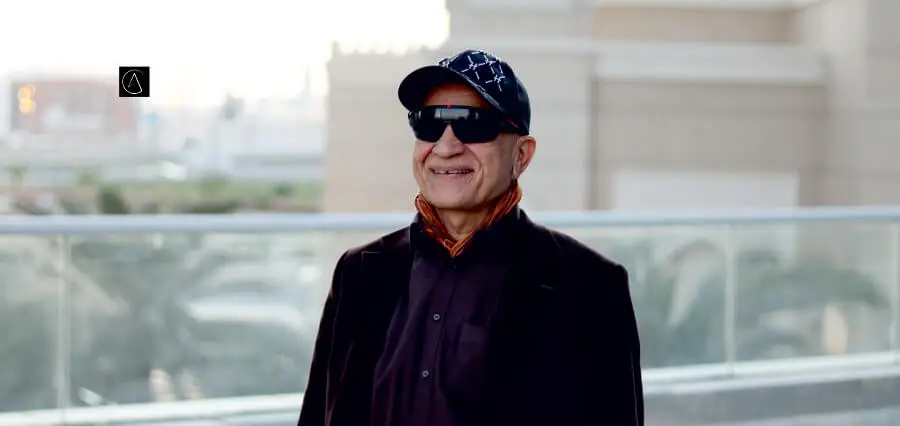
For Suman Suneja, Managing Director of Murano Lighting Company LLC, these values have guided him throughout his 25-year journey. From working on major hotel projects to expanding the company’s lighting services, he has focused on quality, client satisfaction, and long-term relationships. His passion for positivity and well-being through his work as a Laughter Ambassador also influences his approach to leadership.
Let’s explore how Suman has built Murano Lighting through service, strong relationships, and a commitment to continuous improvement!
A Journey Built on Persistence and Relationships
Suneja’s professional journey has been shaped by persistence, adaptability, relationships, and the willingness to keep learning. Building Murano Lighting over the years has taught him that leadership is not defined by a title. It is defined by how one responds to challenges, honours commitments, and brings people together around a shared purpose.
One of the most important lessons he has learned is that sustainable success cannot be built through short-term thinking. In the luxury hospitality and lighting industry, reputation is earned project by project and relationship by relationship. Clients remember not only the product supplied but also how a company responds when a challenge arises.
Working across different countries and cultures, and with clients, consultants, designers, contractors, and hotel operators, has broadened his perspective. It has taught him to listen before making assumptions and remain flexible without compromising standards.
These lessons have shaped the way he approaches business and relationships at Murano Lighting. The company’s 25-year journey reflects the importance of maintaining client confidence, learning from challenges, and treating every commitment as a responsibility.
Looking back at this milestone, he expresses gratitude to the people who have supported the company throughout its journey. Clients, designers, consultants, suppliers, partners, and employees have all contributed to its growth. He also acknowledges his wife, Vanita Suneja, whose belief in his entrepreneurial abilities and support during uncertain times gave him the courage to continue.
In Service Lies Success
Throughout Murano Lighting’s 25 years, one simple belief has guided its approach: “In service lies success.” This principle has shaped the way the company works, cares for clients, and builds relationships.
An important step came in 2006, when Murano Lighting introduced its approach to value engineering through customized decorative lighting. Working closely with designers, the company found ways to bring their ideas to life while balancing quality, craftsmanship, and cost. The aim was to preserve the designer’s vision and deliver the finish expected.
The company’s first major five-star hotel project was The Address Downtown with Emaar in 2007, followed by Kempinski at Mall of the Emirates with Majid Al Futtaim in 2008. These opportunities were important milestones. They gave Murano Lighting confidence, helped it grow, and began relationships that continue to be valued today.
Suneja is particularly grateful that Emaar and Majid Al Futtaim remain among the company’s esteemed clients. Their continued trust reinforces the responsibility that comes with every promise.
“Once our client, always our client” has always been the company’s approach. Murano Lighting wants every client to feel confident that they can count on the company during a project and long after its completion. Quality, honest communication, transparent dealings, and honouring commitments remain the foundations of that confidence.
Today, the company is proud to have served more than 100 hotels. Behind this milestone are years of teamwork, challenges overcome, lessons learned, and relationships strengthened.
Bringing Design Visions to Life
Murano Lighting has grown to provide lighting design, supply, and installation across bespoke decorative, architectural, landscape, and façade lighting. Its projects serve luxury hotels, premium residences, and commercial buildings.
As its capabilities have expanded, the company has continued to place importance on design, craftsmanship, safety, and performance. It works to meet applicable international requirements, including CE requirements, UL standards, and ASTM specifications, according to each product and project.
For Suneja, the work involves understanding what clients and designers want to achieve and finding ways to deliver the expected result while maintaining quality and cost considerations. Value engineering through customized decorative lighting has been an important part of this approach, helping translate design ideas into finished work while respecting the original vision.
He also sees every project as an opportunity to improve. The company believes that it is its own competitor, continually asking how it can improve quality, respond more effectively, and make the client experience smoother.
Client appreciation encourages the team, while feedback helps it improve. This willingness to keep learning is important in decorative lighting, where designs, materials, and specifications continue to change. For him, curiosity and continuous learning are essential to sustaining a business in an industry where customer expectations and technical requirements keep developing.
Leadership Through Trust, Responsibility, and Positivity
Suneja summarizes his leadership philosophy in three words: trust, responsibility, and positivity. Earlier in his career, he focused heavily on execution, solving problems quickly and ensuring that every detail met expectations. With experience, he realized that leadership is not about personally controlling every outcome. It is about creating capable people who can take responsibility for their own results.
Today, he believes in giving people clarity about what is expected, providing the necessary support, and allowing them the space to perform. At the same time, empowerment must come with accountability. Each person should understand the objective, their responsibility, the expected standard, and the timeline, with enough freedom to decide how best to achieve the result.
At Murano Lighting, quality and service are particularly important because the company works in demanding hospitality and premium project environments. Details matter, and empowerment does not mean lowering standards. When people perform well, their contributions should be acknowledged. When something goes wrong, the focus should be on understanding the cause, correcting it, and preventing it from happening again.
As he explains, “Service is at the heart of our success; it is both our commitment and our belief.” The company aims to serve clients at every level with the same dedication, responsiveness, and attention to detail, regardless of the scale or stature of the client.
He also believes that a leader sets the emotional tone of an organization. Pressure is inevitable in business, but panic does not have to be. His philosophy of “Keep Laughing, Keep Smiling” reflects his belief that positive energy helps people think more clearly, connect better with others, and handle challenges with greater resilience.
Building a Culture of Openness and Accountability
For Suneja, people contribute more when they know their opinions will genuinely be heard. He encourages his team to speak openly, including when their views differ from his, and keeps his door open for informal discussions.
He does not believe that the senior-most person in the room automatically has the best idea. Someone working directly with a client, project, supplier, or operational challenge may understand the issue better than someone looking at it from a distance. Interacting informally with employees at all levels helps leaders understand these perspectives.
At the same time, openness should be constructive. He encourages people not only to identify problems but also to suggest solutions. This shifts the focus from complaint to ownership. When reasonable mistakes become opportunities for learning rather than occasions for blame, people become more willing to take initiative.
Empathy also plays an important role in his approach. Every employee, client, supplier, and business partner may be dealing with circumstances that are not immediately visible. Understanding those circumstances before responding can help a leader identify whether a problem comes from a communication gap, insufficient resources, unclear expectations, or a personal challenge.
For him, empathy does not mean avoiding difficult conversations or lowering professional standards. It means understanding the situation and responding appropriately. A positive workplace is not one without pressure or challenges, but one where people feel respected and supported while working through them.
His involvement with Laughter Yoga has strengthened this belief. Through the consistent practice of Laughter Yoga, he has transformed himself from a worrier into a warrior, developing greater resilience, positivity, and emotional strength. At Murano Lighting, monthly Team Laughter sessions provide an opportunity to raise spirits and strengthen bonding.
Trust Through Consistent Actions
Suneja believes that trust begins with consistency. As he puts it, “I walk exactly what I talk.” For him, “People should be able to see that a leader’s words and actions match.”
Clear communication, sharing relevant information, and addressing issues directly help prevent uncertainty from growing. Transparency does not mean that everyone needs to know every detail of every matter, but people should understand the decisions and information relevant to their responsibilities.
He also believes that alignment requires regular communication. Leaders may assume that a message has been understood after communicating it once, but objectives, responsibilities, timelines, and priorities often need to be reinforced.
Ultimately, trust develops through everyday behaviour: keeping commitments, acknowledging mistakes, giving credit, treating people fairly, and standing by the team during difficult situations. These practices are equally important in relationships with clients and business partners, where reliability and honest communication help maintain confidence over time.
Developing People and Future Leaders
When identifying potential, Suneja looks beyond qualifications and current job titles. He pays attention to attitude, reliability, curiosity, initiative, communication, and how a person responds when circumstances become difficult. For him, a can-do attitude with a smile is an especially important quality.
Skills can often be developed, but ownership and a willingness to learn are particularly valuable. Developing future leaders also requires giving people genuine responsibility. Leadership cannot be learned through instructions alone. People need opportunities to make decisions, solve problems, communicate with others, and experience the consequences of their choices.
Constructive feedback and recognition are equally important. People need to understand both where they are doing well and where they need to improve. The objective should not simply be to create good followers, but to develop people who eventually become capable of leading others.
This approach reflects Suneja’s wider belief that the success of a business depends on the people who contribute to it. By giving team members responsibility, supporting their development, and encouraging them to learn from experience, leaders can help build a stronger organization for the future. As he explains, “The objective should not simply be to create good followers. A successful leader develops people who eventually become capable of leading others.”
A Growing Presence and a Global Vision
Murano Lighting’s next chapter builds on its experience across hospitality and architectural lighting. Its presence spans Dubai, Sharjah, New Delhi, China, and Uzbekistan, and the company plans to open a new office in Saudi Arabia in November 2026.
The expansion is intended to bring Murano Lighting closer to clients and partners in the Kingdom, with greater local presence, coordination, and personal attention. As the company grows, its priority remains to understand client needs, honour commitments, and deliver lighting solutions clients can trust.
Suneja’s vision is to grow Murano Lighting into a multinational company serving clients across all continents. He wants to bring the company’s experience and creativity to more projects around the world while continuing to give every client dependable service and personal attention.
For him, each new office represents both progress and a responsibility to serve better. Growth does not change the principles on which the company was built. Instead, it creates more opportunities to apply those principles across new markets and relationships.
A Legacy of Beautiful Work and Happier People
When Suneja looks back on his journey, he hopes Murano Lighting will be remembered not simply for the lighting it supplied, but for the trust it created and the spaces it helped bring to life. Lighting can influence how architecture is experienced and how people feel within a space. Seeing Murano chandeliers illuminate hotels, residences, and landmark buildings gives him a deep sense of fulfilment.
He also finds meaning in knowing that the company’s work becomes part of people’s lives, whether welcoming guests into a hotel, bringing warmth to a home, or creating a setting for a special celebration. Each project brings back memories of the designer with a vision, the client who placed their trust in the company, and the team that worked to make it happen.
Alongside his business journey, Suneja has continued to share the message of laughter and well-being. Laughter Yoga has helped him connect with people beyond their projects, and some of his happiest memories are of laughing with people who first came into his life as clients and later became friends.
His next venture extends that passion into cinema. As a producer and actor, he is working on the Bollywood film The Laughter Express, expected to release by mid-2027. Through the film, he hopes to entertain, touch hearts, and inspire people to welcome more laughter into their lives.
Professionally, he wants to leave behind a strong organization, capable future leaders, lasting relationships, and beautiful work. Personally, he hopes to continue spreading the message that success and happiness should not be separated. Excellence, in his view, can go hand in hand with joy, compassion, and connection.
As Murano Lighting looks towards its next 25 years, Suneja’s philosophy remains rooted in the principle that has guided the company from the beginning: “In service lies success.”
Keep Laughing. Keep Smiling. Keep Growing.