
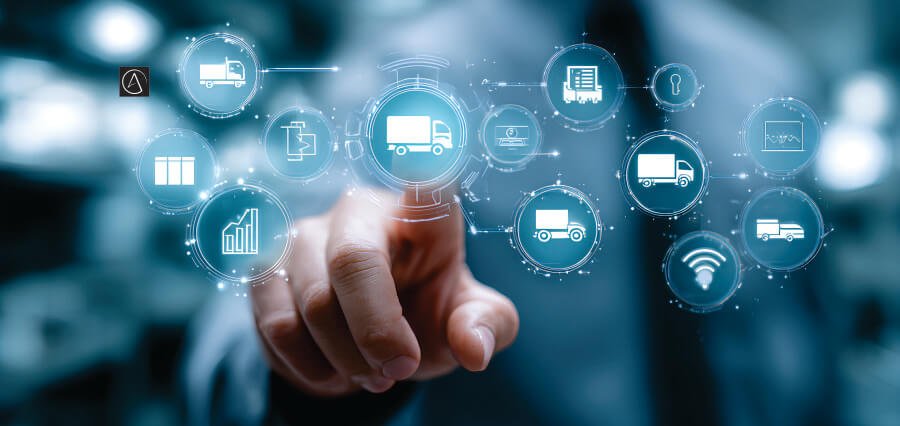
Global supply chains are experiencing deep changes because of fast technological progress and new market demands. Supply chains which used to be cost centers for efficient operations now function as strategic assets which determine a company’s ability to compete and stay strong while providing good service to customers. Traditional supply chain models which depend on linear processes face their greatest challenges during times of geopolitical tension, climate disasters and pandemic outbreaks. The transformation process depends on technology which enables organizations to transition from their existing state toward developing intelligent data-driven operational systems. Companies use digital tools to transform their supply chain functions because these tools enable better planning, sourcing, manufacturing and product delivery processes while enhancing their ability to show information and react to changes. Business success requires technology development because supply chains need it to handle their increasing complexity and interconnectedness.
Digital Visibility
The most essential technological advancement for supply chain transformation delivers improved operational transparency. Organizations can track their inventory levels, shipment status and production performance through advanced data platforms, cloud-based systems and IOT sensors which provide real-time monitoring capabilities. Businesses can use end-to-end visibility to detect operational bottlenecks and decrease uncertainty while achieving rapid responses to unexpected events. Supply chain partners need greater transparency because it enables better collaboration between their operational networks. The supply chain network enables suppliers, manufacturers, logistics providers and retailers to exchange precise information which decreases their need for manual processes and disjointed information systems.
The creation of a single source of truth through digital visibility provides organizations with better demand forecasting capabilities, inventory management solutions and enhanced service delivery which decreases operational risks. Organizations use visibility to achieve two business objectives: operational efficiency, regulatory compliance and sustainability targets. Digital tracking tools enable companies to trace material origins, verify ethical sourcing practices and assess environmental effects. Organizations need technology-based visibility solutions because stakeholders demand accountability which helps maintain public trust while organizations work to comply with new industry standards.
Intelligent Planning
Organizations utilize artificial intelligence and advanced analytics to change supply chain planning from its conventional static forecasting method to its new dynamic decision-making approach. The traditional planning models depended on historical data with their scheduled reviews failed to capture unexpected shifts in demand and supply conditions. Intelligent systems use their ability to analyze extensive structured data with unstructured data to create better and more flexible predictive models. Humans who work as planners face difficulty to identify emerging demand patterns because machine learning algorithms unearth these hidden signals.
The insights organizations obtain through research enable them to schedule production, manage their inventory and design their transportation routes before actual needs arise. The company achieves three objectives through the process which includes reducing excess inventory, eliminating stockouts while increasing capital efficiency. Intelligent planning system enables organizations to create different scenarios which they use to evaluate potential risks. Supply chain managers use digital twins and simulation tools to evaluate their operational strategies through different scenarios which include supplier failures and demand surges. The organization develops enhanced resilience through the ability to make quick decisions during uncertain times because of its improved decision-making capability.
Automation Impact
Automation technologies are changing how supply chain operations execute their work. Robots, self-driving vehicles and automated storage systems now serve as essential equipment for warehouses, factories and distribution centers to achieve faster, precise and safer operations. The technologies enable workers to concentrate on essential tasks because they decrease the need for manual work, which workers perform repeatedly. Software process automation includes robotic process automation that helps organizations manage their administrative work through automated order processing, invoicing and compliance documentation.
Automation achieves two goals because it reduces errors and processing times which improves operational efficiency while decreasing expenses. Supply chains can scale their operations because the system allows them to manage sudden volume changes without needing additional resources. Automation produces efficiency improvements which enable organizations to maintain their operations during periods of labor shortages. Digital skills and analytics with system oversight become critical skills for workers because automation requires human expertise to complete tasks. The organizations that achieve sustainable long-term transformation need to invest in technology and workforce upskilling programs.
Conclusion
Technology is transforming supply chains into flexible systems which use intelligent systems and interconnected networks. Digital tools provide organizations with enhanced visibility which allows them to plan using intelligent systems while managing operational tasks to handle complex situations with improved accuracy. Supply chain transformation has evolved into an ongoing process which requires businesses to make continuous technological investments and develop their organizational skills. The organizations that implement technology-based supply chain will achieve a competitive edge because global competition increases and customer demand grows. The organizations which postpone their operations will experience a fall in their capacity to operate efficiently and maintain resilience while staying relevant. Technology functions as a change accelerator which supports modern supply chain operations in the current business environment.