
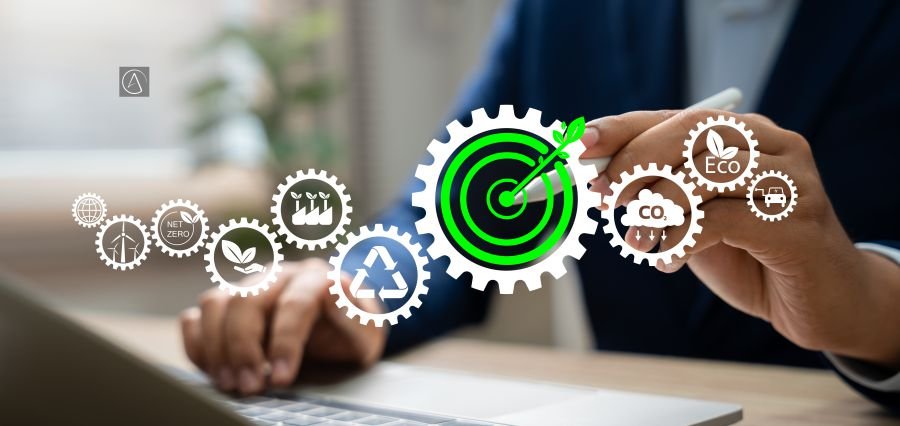
The shift to a more environmentally friendly economy has become a pressing global priority that requires immediate action. The governments, corporations and communities need to work together to come up with the strategic solutions that will address the issues of climate change, depletion of resources and degradation of the environment, which greatly impacts their operations. Environmental leadership professionals are important in crafting policies, advising company practices and coming up with innovative solutions that lead to sustainable economic growth. They operate in any sphere to instill sustainability as a fundamental element of economic action as opposed to a marginal factor. These professionals, who work at the nexus of science, policy, and business strategy, are able to transform the complicated environmental information into practical knowledge. Their capacity to introduce viable and sustainable solutions can help organizations to remain competitive and at the same time be profitable in the long run.
Policy and Governance
Environmental leadership experts drive sustainability development through their work which establishes policies and governance systems that operate at national and international levels. They work with governments, regulatory bodies as well as international organizations to come up with regulations that deal with reduction of emissions, waste management, water conservation, and protection of biodiversity. Their contributions make the environmental policies sound scientifically, economically, and socially. They promote development objectives by aligning environmental regulation with effective policy formulation.
Environmental experts promote sustainable development by incorporating sustainability concepts in urban planning, infrastructure development and in industrial policy to allow the economy to grow without necessarily exhausting environmental resources. They are especially important in developing countries, where the development requirements conflict with environmental preservation. They use their skills to oversee and measure the performance of environmental policies, creating assessment models that keep track of the progress, showing weaknesses and communicating the steps the course needs to take in the future development.
Corporate Strategy
Corporate sustainability practices are now championed by environmental experts as their knowledge on matters concerning the environment justifies how firms should conduct their activities. The professionals provide the necessary advice that can assist the organizations in addressing the growing call by investors, consumers and regulators towards green business practices. The team aids business in integrating environmental factors into their main operations of business rather than treating them as fringe issues. They drive innovation, strengthen risk management, enhance compliance and transparency, and generate long-term value across industries worldwide.
Their main contribution helps businesses to set quantifiable environmental objectives, such as the reduction of greenhouse gas emissions, the increase of energy efficiency, and the decrease of waste. Organizations use clear standards and established schedules to monitor the progress and hold them accountable. The method reinforces regulation and confidence of the stakeholders. There are also environmental leadership experts who find an opportunity to create economic value in the green economy. They also promote efficiency in operations, strategic decision-making, resilience, and long-term growth sustainability in organizations while remaining competitive in the long term.
Innovation and Capacity Building
Environmental leaders drive technological and systemic progress through their work in advancing green economy development which serves as the main foundation for innovation. The researchers, startups and policymakers work together to create solutions which include renewable energy technologies, sustainable agriculture practices, green buildings and low-carbon transportation systems. Their expertise allows them to connect different areas of knowledge which helps to speed up the process of adopting new transformative technologies. The experts dedicate their work to both developing new technologies and bringing about changes to entire systems.
They contribute to green finance initiatives, carbon markets and sustainability-linked investments which help attract funds for projects that protect the environment. Their capacity building activities together with educational programs hold equal value to their work. Environmental leadership experts train people and organizations through their development of programs, workshops and academic programs that teach sustainable practices. They collaborate with educational institutions, industry organizations and community groups to develop a workforce that will lead the transition to green energy.
Conclusion
Environmental leadership experts drive environmental sustainability through their efforts to establish sustainable practices. The experts develop policies and corporate strategies while creating new solutions and building organizational capacities to develop a sustainable economy which enables business growth through green practices. As climate change, resource depletion and environmental destruction become more severe the responsibilities will grow larger. Their work will make sustainability an essential economic transformation which will drive future progress. Environmental leadership experts create a sustainable future which will benefit all future generations because they connect environmental requirements with economic development needs.