
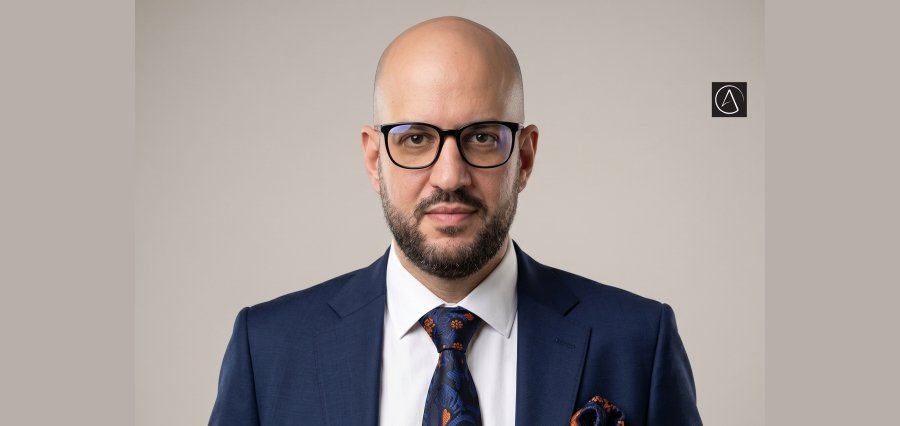
Effective compliance leadership entails much more than oversight and enforcement at a time where financial crime is growing more complex and regulations are always changing. Vision, flexibility, and a steadfast dedication to integrity are necessary. Wael Al Halabi, Senior Vice President and Chief Compliance Officer (MLRO) at Al Maryah Community Bank and awardee of the Compliance Visionary Leader of 2026, is one of those executives who exemplifies these attributes. Over the course of more than two decades, he has helped redefine compliance in the UAE banking sector, transforming it from a regulatory need into a strategic function that strengthens institutions, promotes trust, and creates long-term value.
Working at the intersection of corporate growth, governance, and regulatory responsibility, Wael Al Halabi has a responsibility that goes beyond the boundaries of any particular business. His role requires him to balance long term business objectives, protect institutional integrity, and contribute to the stability and reputation of the broader financial system. Guided by a philosophy he calls Integrity Driven Resilience, he has built a career navigating complex regulatory challenges, leading high-impact transformation initiatives, and fostering a culture where ethics and performance go hand in hand.
A Guardian of Trust
Like many professionals entering the field, Wael Al Halabi initially viewed compliance as a reactive and rule-driven function focused on meeting regulatory requirements and avoiding penalties. At that stage, compliance was largely about following checklists and satisfying regulators. However, his experience in senior leadership roles exposed him to the complexities of the real business environment.
Over time, he recognized the limitations of a purely tactical approach. He came to see compliance as a strategic function that creates corporate value and strengthens institutional trust. Rather than serving only as a safeguard against risk, it plays a vital role in supporting sustainable business growth and credibility.
This shift in perspective was more than a change in thinking. It transformed the way he engaged with boards, business leaders, and regulators. Today,Wael Al Halabi describes his role as the “conscience of the organization,” a phrase he uses with purpose. In his view, a conscience does not merely reject actions or decisions. It explains the reasoning behind them. It helps connect everyday business decisions to the organization’s values, long-term reputation, and broader responsibility to the communities and economies it serves.
Turning Challenges into Growth
When reflecting on the defining moments of his career, Wael Al Halabi does not point to a promotion or a prestigious title. Instead, he highlights his experience leading complex regulatory remediation initiatives and guiding them to successful outcomes. These assignments tested his leadership under intense scrutiny, where the stakes were high, expectations were demanding, and the pressure to take shortcuts was ever present.
In such situations, Wael Al Halabi consistently chose a long-term approach. Rather than focusing only on immediate compliance requirements, he viewed each remediation effort as an opportunity to strengthen and modernize the governance structures of the institutions he served. He encouraged transparent engagement at the board level, rebuilt frameworks to address underlying issues, and developed external partnerships that continued to deliver value long after the challenges had been resolved.
These experiences shaped an important lesson for him. The most complex regulatory challenges should not be viewed merely as obstacles. They can become opportunities to strengthen institutional trust, improve governance, and create lasting value. In his view, this mindset distinguishes compliance professionals who simply manage risk from those who contribute to the long-term success of their organizations.
Wael Al Halabi approaches every major project with a strong sense of responsibility. His focus extends beyond achieving compliance outcomes. He is committed to protecting institutional integrity, preserving stakeholder trust, and mentoring the next generation of professionals.
Compliance as a Partner
One of the defining aspects of Wael’s leadership approach is his belief that compliance must earn its place in strategic decision-making by consistently demonstrating value. Rather than viewing compliance as a function that primarily blocks initiatives or says no, he encourages teams to become trusted business partners. To achieve this, Wael Al Halabi has moved away from the traditional compliance gatekeeper model.
He has built a culture where compliance professionals provide clear, evidence-based guidance that supports business objectives while maintaining regulatory standards. His teams are trained to respond to business questions through detailed analysis of regulations, statutory requirements, and regulatory precedents. The goal is to deliver practical and actionable guidance that removes uncertainty and enables informed decision-making.
By providing clarity and well-supported regulatory insights, compliance becomes more than a control function. It becomes a source of competitive advantage that helps businesses move forward with confidence. Wael Al Halabi also places significant emphasis on organizational culture. He actively fosters an environment where employees feel comfortable raising concerns and identifying potential issues without fear of negative consequences. In his view, transparency is essential for building trust and maintaining strong compliance standards.
He believes that uncertainty and speculation can hinder effective decision-making, particularly in high-pressure environments. Open communication and active collaboration help organizations address challenges more effectively. By encouraging teams to participate in identifying and solving problems, Wael Al Halabi promotes a culture that is both agile and accountable.
Compliance Beyond Monitoring
Wael Al Halabi believes there is a clear difference between compliance cultures that identify errors after they occur and those that prevent risks before they emerge. Reactive compliance focuses on reviewing past issues. Proactive compliance focuses on anticipating potential challenges through data analytics, continuous learning, and advanced monitoring systems that can detect warning signs at an early stage.
His vision is to create organizations where every employee, regardless of role or department, sees themselves as responsible for compliance. Building this level of awareness requires more than policies and training programs. It depends on leaders who set the right example, clearly communicate the importance of compliance, and invest in developing the knowledge and skills needed across the organization.
Wael Al Halabi is a strong advocate for the adoption of advanced regulatory technology and the strategic use of innovation to enhance compliance effectiveness. However, he firmly believes that technology investments must be proportionate to the institution’s size, complexity, risk profile, and overall maturity. Technology should complement and build upon the existing infrastructure, enabling efficiencies, improved oversight, and positive transformation where needed, rather than introducing unnecessary complexity or operational challenges.
In his view, the adoption of sophisticated solutions before the required governance, processes, and organizational maturity are in place can often create additional risks and inefficiencies rather than deliver the intended benefits. Accordingly, innovation should always be implemented within a robust ethical and governance framework, ensuring that technology strengthens compliance systems, supports informed decision-making, and enhances accountability rather than replacing established controls and human judgment.
According to Wael, agility in compliance is not about relaxing standards or compromising core values. It is about anticipating change, staying prepared for emerging challenges, and responding effectively to an evolving regulatory environment. He believes that organizations that build a sustainable compliance framework are those that foster continuous learning and innovation while maintaining robust risk management and strong governance practices.
Mentoring Future Leaders
While Wael Al Halabi places great emphasis on systems, governance frameworks, and technology, he consistently returns to the human side of compliance leadership. A significant part of his time is devoted to mentoring young professionals and sharing the insights he has gained from more than two decades of experience in the UAE’s regulatory and banking environment. However, he believes that effective mentorship extends far beyond technical knowledge and regulatory expertise.
His goal is to help the next generation evolve from task-oriented professionals into strategic thinkers. He encourages them to look beyond processes and consider the broader impact of their decisions on the organization. To support this development, he deliberately involves junior team members in complex regulatory remediation projects, giving them direct exposure to high-level decision-making and problem-solving. Rather than limiting access to leadership discussions, he creates opportunities for young professionals to learn from real-world challenges and strategic initiatives.
For Wael, developing future leaders is not simply about building technical competence. It is about preparing professionals who can think critically, lead with confidence, and contribute meaningfully to the future of the compliance profession.
He also views emotional intelligence as an essential leadership capability. In his experience, strong emotional intelligence enables compliance leaders to understand business priorities, build productive relationships across functions, and communicate regulatory requirements in a way that aligns with commercial objectives. It also helps leaders manage resistance and navigate difficult conversations with professionalism and composure.
Wael’s leadership style combines empathy with objectivity. He listens carefully to different perspectives and values open dialogue, while remaining firm in upholding regulatory standards and protecting institutional integrity. This balance has been a key factor in his ability to lead large-scale initiatives and manage complex regulatory challenges successfully.
A Legacy of Integrity and Leadership
Looking ahead, Wael Al Halabi envisions a future where compliance is guided by both operational excellence and strong ethical principles. He believes the future of governance lies in the seamless integration of advanced technology and human judgment. While technology can improve efficiency and automate processes, human leadership remains essential in safeguarding institutional values, accountability, and trust.
At the core of this vision is a principle that Wael Al Halabi considers non-negotiable. He believes leaders must always stand for what is right, communicate honestly, and present facts without distortion, regardless of external pressures or short-term interests. In his view, many major risks originate from small compromises that gradually weaken organizational integrity.
For this reason, he regards moral courage as one of the most important qualities of a compliance leader. The ability to present difficult realities, provide objective guidance, and uphold regulatory integrity is critical to building resilient and trustworthy institutions.
The legacy Wael Al Halabi hopes to leave reflects these values. He aspires to be remembered as a leader who transformed compliance from a function often viewed as a restrictive cost centre into a strategic pillar that creates value, strengthens trust, and supports sustainable business growth. Beyond the organization, he aims to contribute to a stronger and more resilient UAE financial system through his commitment to integrity, transparency, and constructive regulatory engagement.