
“The essence of investment management is the management of risks, not the management of returns.”
— Benjamin Graham
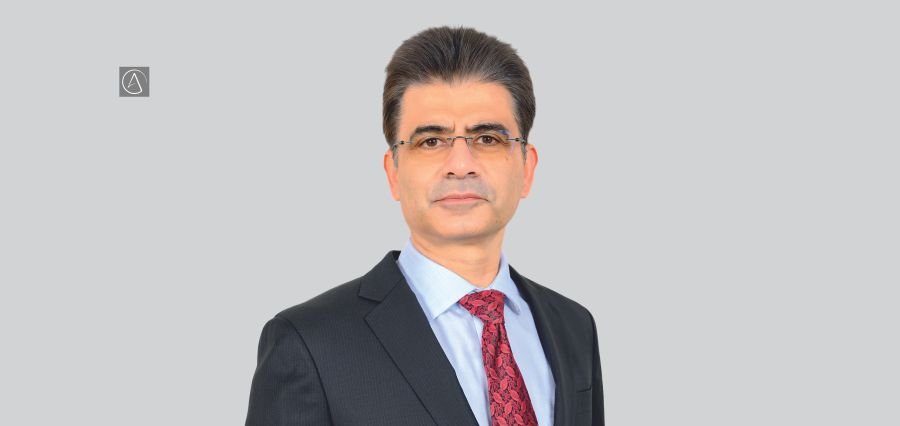
The core of Sanjeev Bhalla’s Investment Management philosophy is a forward-looking, adaptive, and risk-conscious leadership insight, where he emphasizes continuous learning and disciplined decision-making. He possesses extensive technical knowledge but makes decisions based on the connections between markets, risk, liquidity, people, and strategies instead of relying solely on numeric values.
He can remain calm in stressful situations and adapt to changing circumstances; therefore, he sees treasury and investment functions as a way to protect capital from loss, provide future business sustainability through capital and risk management, and provide confidence in navigating complex issues. Currently, he functions as a well-established CFA Charter holder. Associate Director – Treasury and Investment at D360 Bank, Saudi Arabia.
From Early Markets to Institutional Stewardship
At a very young age, Sanjeev gained direct exposure to financial markets. He started investing while still at university, where he learned about data and the uncertainty of this field.
Qualified with an MBA in Finance and CFA Program, reinforced his Analytical, Ethical Judgment & Risk Adjusted Investment across all asset classes. His initial experience in the financial services industry was in the area of managing client investments with different risk profiles.
Later, he moved into banking and started managing treasury and investment activities in a regulated environment. This has changed his view of investing from a return-based to a balance sheet management-based view.
Working through various cycles of the market shifted his mindset, that treasury leadership is a function of capital protection, liquidity strength, and trust.
Also working closely with senior management, investment committees, and regulators has shown him that strong governance, open communication, and disciplined processes are just as important as market insight.
These experiences have collectively led to the development of a management personality in him today.
“I view treasury and investment management as a continuous learning journey,” he states
Where Risk Discipline Guides Value Creation
Sanjeev’s treasury management revolves around alignment, making sure that risk, liquidity, and value creation are aligned in order to support long-term business growth.
His prior experience involved guidance from strong mentors. He views effective treasury management as identifying the clear non-negotiables in the treasury early on and adjusting the overall strategy as the organisation’s risk profile changes.
Whenever he is in a regulated environment like banking, Sanjeev focuses on liquidity strength, regulatory compliance, and capital preservation. When he is in an alternative structure such as a family office, he finds that the focus is on more aggressive approaches to providing returns.
Throughout his positions, he made sure that teams in all organizations understood not just the nature of limits but also their reasons. He views liquidity as a strategic asset rather than as surplus capital and refers to risk teams as his partners in achieving sustainable performance. He acts on every investment decision with full consideration of the institution’s balance sheet and long-term goals rather than short-term gains.
His portfolio strategy consists of scenario-based thinking and stress testing. On several occasions, there are situations where he has foregone lucrative investment opportunities which did not fit the broader goals of his institution.
Building Trust Before the Crisis
Sanjeev understands his responsibility and tries to build empowered teams and disciplined judgment in high-stakes moments.
According to him, in the peak of a volatile financial market, the greatest threat arises from ambiguity. To resolve this, he establishes clear policy, limits on risk and protocols to escalate issues. He promotes the concept of calm over chaos.
Treasury teams are able to make assertive decisions around liquidity issues and funding availability while remaining fully compliant with their respective institution’s risk appetite. A defined structure supports effective execution with control and compliance as a focus.
“My role during high-pressure situations is to provide perspective, filter out market noise, and ensure decisions remain aligned with the bank’s long-term objectives rather than short-term emotions,” Sanjeev says.
He follows preparation and transparency in communication. He believes that effective management of a treasury and investment begins before a crisis. With organized teams, clear governance and risk frameworks which define the overall limits of risks associated with any given situation, teams will be able to execute their authority on time without confusion or delay.
From Prediction to Preparation
During his initial phase, Sanjeev had an opportunity to learn from his seniors. He states that, having faced multiple liquidity crises, large fluctuations in interest rates, and extreme levels of currency fluctuations, he no longer considers uncertainty, which only happens occasionally. He considers it to be the beginning of making decisions.
His perspective has changed to become more resilient in terms of economic conditions. He has been working towards creating investment portfolios that will be able to withstand both tightening and easing cycles.
Sanjeev seeks to prioritize the preservation of capital, use of strong counterparties, and have access to liquid reserves, even when there may be negative impacts on near term returns. By maintaining robust liquidity buffers, diversifying risk across multiple drivers such as duration, credit, geography, and currency, and continuously stress-testing assumptions rather than relying on static models.
Transparency is important, especially during periods of high volatility. He shares his views on economic conditions and risks. He motivates his team members to challenge his views and voice any concerns they may have early in the process.
He believes that effective treasury leadership during periods of crisis is about ensuring the organisation remains resilient, has liquidity and is well governed. So that when the market conditions change and become more difficult, there will be an ability to respond effectively.
Building Teams Within Strong Risk Boundaries
According to Sanjeev, creating environments where people truly thrive requires three foundational elements: competence, clarity, and trust.
In his previous roles, he has hired individuals based on both technical capabilities and factors like judgment, integrity, and their ability to make impactful decisions. Team members are educated on the investment philosophy, risk appetite, and decision-making framework of the institution so they can be confident and can act quickly on their decisions.
To create ownership and accountability within his teams, he tries to create a complementary environment. When performance does not meet expectations, he then helps teams learn and develop from the situation instead of placing blame. Continuous mentorship, open communication, and the opportunity to engage with senior stakeholders provide development opportunities to teams as both markets and regulatory requirements change.
In addition, he builds effective risk management not by reacting but rather by considering it as a first step in making calculated decisions. Well-defined boundaries are respected, rather than penalized. If there is a question regarding liquidity, concentration or tail risk, although it may delay execution, the judgment is respected. The treasury function will not only continue to meet compliance standards and remain resilient but also adapt to current market conditions while maintaining the stability of the institution.
Anchoring Decisions to Long-Term Financial Vision
Sanjeev tries to deal with other leaders solely on one thing that effectively works, which is clarity in communication. He translates the complexity of treasury and investment decisions into strategic significance for liquidity, capital strength, earnings stability and the overall risk profile.
He focuses on the outcomes instead of the technical details, articulating how the funding structure, duration, or investment allocation will provide resilience to an entity based on the various market conditions.
His decision-making is anchored on the entity’s risk appetite, liquidity philosophy, and long-term vision. By identifying potential risks, tightening liquidity, rising funding costs, and regulatory changes early in the process, he gives leaders the data needed to understand the risks associated with performing their function without surprises.
With this mindset, he has developed a high degree of trust with them and subsequently has created a strong relationship with his external partners through all the different economic cycles.
Digital Transformation
Sanjeev is at the forefront of digital transformation in treasury and investment and follows a people- and process-first approach. He knows that when managing liquidity, funding, and investments, any change should be controlled and intentional.
His phased approach to transformation includes stabilizing core processes, automating with discipline and optimizing using data and analytics. He confirms that documented workflows before implementing new systems ensure that new workers will not amplify existing errors or gaps in controls.
Sanjeev has built a solid framework by assigning clear ownership among the treasury, risk, finance, and IT teams. He also engages stakeholders early in the system design and testing process, which reduces resistance. For him, treasury transformation is about continuity, accuracy, and control, not about trial and error.
Ultimately, he sees that when done correctly, technology will create stronger governance and resilience and allow teams to shift from performing manual tasks to creating strategic value.
Consistency Over Brilliance
Sanjeev shares his meaningful leadership lesson that consistency is much more important than brilliance. In his early years, he considered that success was about making the right decision, but later he realized that the long-term success of treasury and investment management is much more reliant.
This is the fundamental principle that he applies today. Sanjeev emphasizes on building teams that operate under predefined frameworks. Additionally, he works to create a simplified environment. He eliminates unnecessary layers and, therefore, makes better decisions. In his opinion, leadership is not about always being correct but rather creating systems and building environments that produce consistent performance in an environment that is subject to change.
Next-Generation Treasury and Investment Decision Makers
Looking ahead, treasury and investment functions are steadily evolving into more strategic roles within financial institutions. The expectations from leaders in this space are expanding beyond traditional liquidity and funding responsibilities. The future demands the ability to operate at the intersection of markets, business strategy, risk management, technology, and people.
Success in this environment will increasingly depend on the capability to connect external market dynamics with internal balance sheet realities.
In a world that changes rapidly, effective decision makers will be able to provide clarity on the options available to them, evaluate trade-offs and make confident decisions based on limited data while protecting against downside risk. He believes that leaders must adapt themselves to this digital transformation. “Develop flexible teams and ensure that technology enhances the governance of an organization,” he states.
In conclusion, he believes that the most successful treasury and investment decision makers will be viewed as trusted capital stewards. This is because they possess the ability to combine financial discipline and strategic foresight, decisiveness and humility, and innovation and discipline to instil confidence in their respective organizations in an increasingly complex and turbulent global economy.
Disclaimer: Sanjeev Bhalla is a CFA Charterholder and currently serves as Associate Director – Treasury and Investment at D360 Bank, Saudi Arabia. Any opinions or forward-looking statements expressed herein are his personal views and do not necessarily reflect those of his employer.