
The risk landscape in the Middle East is among the most dynamic on the planet. Every day, billions of dollars travel through its borders. Global markets are influenced by the decisions made by sovereign wealth funds. The world is still catching up to the rate at which governments are rewriting economic policy.
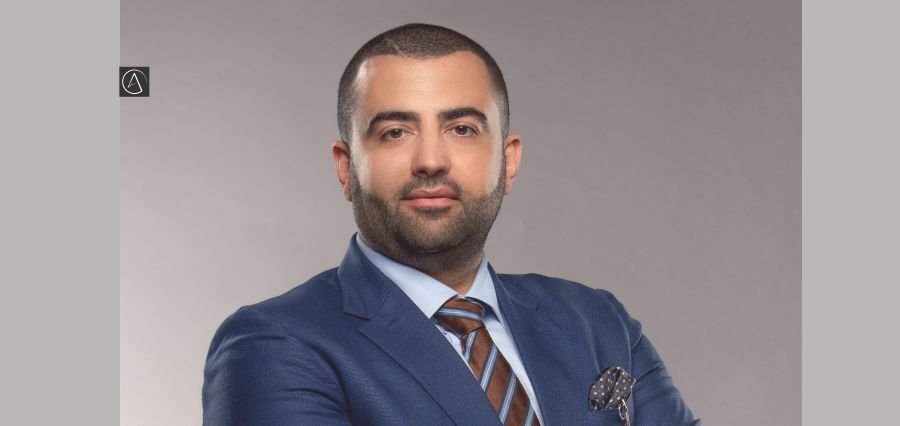
Sitting right at the centre of this transformation, where data meets power, and where trust determines how far a country can go, is Mohamed Abboud. He serves as Regional Director – Middle East at Sayari, a global leader in risk intelligence and supply chain risk management. He is not a figure who stands at the edge of change and comments on it. He steps into the middle of it and shapes what happens next. Mohamed Abboud’s work touches governments, financial institutions, law enforcement agencies, defense, and sovereign wealth funds. He helps them see what they could not see before- the hidden networks, the concealed ownership, and the risks buried inside legitimate-looking transactions.
In a region where data transparency has gone from aspiration to national priority, Mohamed Abboud is one of the people making that shift real. His work is guided by a simple belief: honest economies grow faster and last longer.
Building What Cannot Be Seen
While describing his work, Mohamed Abboud uses a comparison that stays with you. He says data integrity is like electricity; nobody thinks about it until it goes out. When it holds, commerce flows, investors arrive, and economies grow. When it breaks down, everything stalls. His job is to make sure it holds.
At Sayari, Mohamed Abboud works to move risk transparency from a box that organisations tick to a genuine strategic asset. He gives governments the tools to map complex corporate networks, trace who actually owns what, and identify trade-based money laundering before it does serious damage. When countries came off the FATF Grey List, Mohamed Abboud does not see it as a paperwork milestone. He sees it as a signal and proof to every serious investor in the world that this market plays by rules worth trusting.
One Region, Many Realities
The Middle East is not a single market. Anyone who treats it as one is already behind. The UAE is focused on trade facilitation and its identity as a global financial hub. Saudi Arabia is driving Vision 2030 with one of the most ambitious regulatory overhauls the region has seen. Qatar, Bahrain, Oman, Kuwait and the Levant operate their own distinct frameworks, each shaped by different histories and priorities. A strategy designed for one of these markets does not survive in contact with the others.
Mohamed Abboud’s answer to this is what he calls ‘glocal’ execution: global expertise applied through genuine local understanding. He would hire regional talent who know the cultural and regulatory landscape from the inside, builds partnerships with local organisations, and shapes Sayari’s platform around the specific needs of each jurisdiction. The goal stays constant everywhere: give governments and enterprises clear visibility into commercial networks. But how that goal is reached changes from city to city. Supporting AML compliance in Dubai is a different task from trade security in Riyadh or sanctions screening in Doha. He moves between these contexts with ease, because he has done the work of understanding each one.
Speaking Two Languages at Once
On any given week, Mohamed Abboud might be presenting to a financial institution’s technology team in the morning and meeting a government minister in the afternoon. These are very different conversations. Technologists talk in capabilities- data pipelines, network analysis, and algorithms. Policymakers talk in outcomes- economic security, national competitiveness, and citizen protection. Mohamed Abboud has built the ability to speak both fluently.
He calls this cross-sector translation, and it rests on three pillars: contextualisation, visualisation, and narrative. Every insight must connect to a real policy objective. When Sayari flags a suspicious corporate network, the team does not just present a graph. They explain what it means for trade security, tax revenue, or sanctions compliance. They use network maps to turn complex data into pictures that decision-makers can act on. They also frame every insight within the national vision. For the UAE, that means tying the work to its ambitions as a global business hub. For Saudi Arabia, it means aligning directly with Vision 2030.
Technology That Knows Its Place
Many conversations in the region right now circle around digital transformation. Mohamed Abboud has a more demanding standard. He pushes organisations toward what he calls digital maturity- a stage where the question is no longer whether to adopt technology but how to govern it well. How do you make sure algorithms can be explained and challenged? How do you protect privacy while enabling security? How do you build AI systems that reflect your values and not just your processing speed?
Mohamed Abboud puts it plainly: digital transformation without governance is like building a highway without traffic laws. The road exists, but it could cause harm. In the Middle East, he sees governments taking this seriously. The UAE’s National Strategy for Artificial Intelligence and Saudi Arabia’s SDAIA and others in the region are, in his view, governance frameworks as much as technology plans. At Sayari, the same logic shapes the platform- data sourcing is transparent, risk scoring is explainable, and every automated insight goes through human review before it drives any decision. Technology, he believes, exists to support human judgment. Not to replace it.
Finding the Common Ground
Mohamed Abboud regularly brings three very different parties to the same table: governments, law enforcement agencies, and enterprises. These groups have different patterns and pace. Governments prioritise long-term stability. Law enforcement focuses on immediate threats and evidence. Enterprises manage quarterly risk and regulatory compliance. Getting them to move in the same direction and pace takes more than goodwill.
His approach is to find the single threat that touches all three equally: systemic financial crime- money laundering, sanctions evasion, and trade fraud. For governments, it erodes economic sovereignty. For law enforcement, it funds criminal enterprises. For enterprises, it brings penalties and lasting reputational damage. When that shared threat sits at the centre of the conversation, sectoral differences stop being barriers and become complementary strengths. Government provides policy. Law enforcement brings investigative expertise. Enterprises offer transactional visibility. Sayari connects all three.
A Collective Defence for the Arab Economy
Individual organisations can protect themselves. But systemic financial crime does not stop at organisational boundaries. It moves across sectors, borders, and jurisdictions. Stopping it properly requires a collective effort.
Mohamed Abboud is building toward what he calls a Regional Intelligence Collective. It’s a framework through which sectors work together to reduce risk across the entire Arab economy. He is constructing it in three layers: public-private partnerships with government agencies; cross-border collaboration with regional bodies that respect sovereignty; and industry consortiums that bring banks, trade finance institutions, and regulators together around shared knowledge. The goal is straightforward- raise the cost of operating for criminals while lowering it for everyone else. When the whole system becomes more transparent, the benefits compound. The only people who stand to lose are those who benefit from the secrecy.
When Data Becomes Capital
The sovereign wealth funds of the Middle East manage some of the largest pools of investment capital anywhere on earth. Their decisions move global markets. And the way they think about risk is changing. Traditional due diligence used to focus on financial metrics: returns, volatility, credit ratings. That is no longer sufficient. Today’s risk environment demands full visibility into the commercial ecosystem. Who are the real beneficial owners? Where does the supply chain lead? Are there sanctions risks or reputational exposures buried inside portfolio companies?
Institutions like QIA, ADIA, PIF, and Mubadala are increasingly turning to the kind of network analysis Sayari provides. Mohamed Abboud has made the case clear: data is intellectual capital that compounds in value the more it is used. In a world of complex sanctions and growing ESG scrutiny, data-driven risk intelligence is now a core input alongside financial analysis. The region’s most influential investors are focusing on this aspect.
Steady in an Unsteady World
Change in this industry is not occasional. It is constant. Regulations shift, geopolitics intervene, and sanctions landscapes evolve overnight. Leaders who anchor themselves to detailed long-term plans find those plans breaking under pressure. Mohamed Abboud anchors himself to principles instead, and he advises emerging leaders to do the same.
At Sayari, one principle has not changed: transparency powers safer commerce. That holds whether the team works in Washington, London, or Dubai. He describes his approach as ‘directional certainty with tactical flexibility’- knowing where you are headed while staying open about how you get there. The UAE’s post-Grey List reforms, Saudi Arabia’s Vision 2030 momentum, and the shifting sanctions landscape- each demands a fresh response. The long-term plan is a direction, not a script. For Mohamed Abboud, uncertainty is not a problem. It is where sharp leaders do their best work.
Impact Is the Destination
Revenue matters, and Mohamed Abboud does not pretend otherwise. Organisations need to grow and sustain themselves. But he has expanded what success looks like, and he is open about it. He already sees himself less as a Regional Director and more as a Chief Regional Impact Officer- someone whose performance is measured not only in commercial results but in the real difference the work makes.
When a government agency uses Sayari’s platform to disrupt a money laundering network, that is success. When enterprises avoid sanctions violation through better screening, that is success. When the region becomes more transparent and more attractive to global investment, that is success. Revenue is the fuel. Impact is where the journey ends.
Building the Bridge
Wherever Sayari operates across the Middle East, Mohamed Abboud is focused on leaving something lasting behind; not just a software relationship, but real capability. His team transfers knowledge, trains analysts, and partners with local institutions to develop the next generation of risk intelligence professionals. He is not building a client base. He is building a profession.
The Middle East now has a stronger position in terms of international risk transparency thanks to regulatory advancements over the last five years. Mohamed Abboud thinks whether that trend continues will be determined over the next five years. The Arab world has always served as a link between economies, cultures, and continents. It is becoming a link between risk and trust, between opacity and responsibility, and between the economy it was and the one it is becoming under leaders like him. Keeping this in perspective, he shows up for the work every single day.