
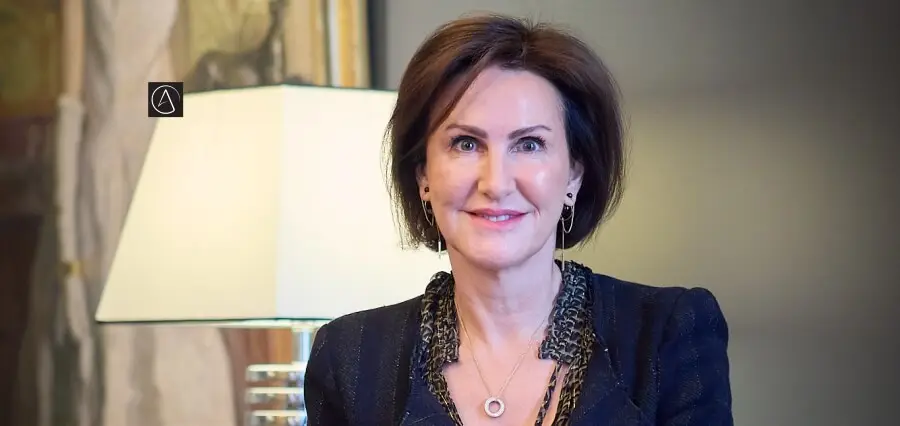
It is easy to neglect the importance of insurance until it becomes necessary; yet enterprises, governments, and communities cannot function without it. With geopolitical risks, climate change, fast technology advancement and regulatory changes affecting everything more than ever before, risks are no longer compartmentalized. Given this, the most highly esteemed leaders in the industry are those who combine their expertise with cultural competence, humility, agility and attention to their people. They realize that resilience requires a strong as team as much as it does a strong strategy. Pamela Thomson-Hall exemplifies that combination in many aspects.
She is CEO, International and Head of Risk & Broking, International at WTW, where she leads a diverse team across extensive range of markets. She works with over 60 international and emerging markets, navigating their diverse regulations, cultures, and business strategies. Her leadership approach is built on purpose, trust, and empowerment of the people in her team. Colleagues and clients value her leadership for its emphasis on active listening, global thinking, and developing others.
An Unconventional Beginning
Pamela did not plan a career in insurance, but she fell in love with it soon after joining Willis. She now regards it as one of the most purposeful and intellectually rich industry sectors in the world. Its international reach, complexity and tangible influence on business, community and sustainability set it apart from any other field.
Her journey began at Willis, where she joined as a junior lawyer. The role immersed her in a fast-moving environment and taught her, through what she describes as a baptism of fire, that delivering for clients must always come first. She learned to see beyond the policy or the transaction to the ambition behind it. Every risk and every claim, in her view, represents a client trying to achieve something significant, whether its entering a new market, ensuring financing infrastructure, creating jobs or protecting a family legacy.
Those early years gave her a rare grounding. She confronted legal, governance, regulatory and strategic questions across multiple jurisdictions, and each one forced her to weigh competing perspectives and cultural expectations. The habits she formed then, bringing clarity to complexity and preserving purpose under pressure, still shape how she leads today.
Leadership Built on Enablement
Pamela’s philosophy rests on three principles: purpose, trust and empowerment. She believes leaders create the greatest impact when they set a clear vision, back talented people and cultivate an environment where diverse viewpoints matter. Her thinking on the subject has matured considerably over the years.
Earlier in her career, she delivered results largely through personal expertise and execution. As her responsibilities expanded, she shifted her focus toward enabling others, building resilient teams and nurturing a culture that withstands constant change. She distils this into one tenet: “leadership is not about having all the answers, but about creating the conditions in which teams can thrive.”
She also insists that the best leaders stay curious. In a rapidly changing world, she argues, humility and the ability to unite people matter as much as strategic vision.
The Lesson of 48 Markets
Pamela identifies one milestone above all others as the moment that defined her: taking responsibility for more than 48 international and emerging markets. This immersed her in teamwork for clients experiencing different environments, and it was deeply humbling. She discovered that one size rarely fits all.
Leading across that many geographies reinforced her commitment to stay curious, agile and build trust. It deepened her belief in trusting her instinct by pulling from a range of experiences to inform good decisions. Above all, it transformed her understanding of what leadership means. She stopped measuring it by whether she was the smartest person in the room and started measuring it by whether talented people could contribute, collaborate and succeed together.
Staying Ahead of a Changing Industry
Pamela approaches the industry’s rapid evolution with a clear view of how risks can change. Geopolitical developments, technological advances, climate events, regulatory change and economic shifts interconnect more than ever before and this is where she sees the important of WTW’s role helping clients navigate that web of exposure with confidence.
To stay relevant, she pairs deep expertise and continuous learning with agility and a readiness to challenge assumptions. She urges her teams to stay close to clients, because understanding what keeps business leaders awake at night keeps the industry relevant. Data and analytics play an increasingly important role in her approach, but she never underestimates the value of experience and judgment.
The pace of transformation across international markets energizes her, and she points to the Middle East as a compelling example. It’s where investment, innovation and ambition converge with pace and extraordinary scale. As businesses expand across borders and adopt new technologies, they meet new and evolving risks, and Thomson-Hall considers it her team’s responsibility to learn, adapt and look ahead alongside them.
Leading with Humanity Through Disruption
Pamela does not cite one career obstacle alone but instead a sustained run of challenges, including a global pandemic, geopolitical uncertainty and economic disruption. Each of these events affected colleagues, clients, and communities. During COVID, her attention shifted almost overnight from growth strategies and business plans to keeping people safe, supported and connected.
That period, and the turbulent years that followed, heavily influenced her leadership stye. She concluded that leadership begins with humanity. Strategy and execution remain essential, but she believes people perform at their best when they feel supported, valued and heard. She treats empathy as a core element of effective leadership rather than a separate soft skill. Since then, she has sharpened her focus on listening and on communicating clearly, consistently and often, so that people can thrive through change and uncertainty, not just survive.
Inclusion as a Way of Leading
Pamela believes innovation and inclusion are inextricably linked. She refuses to treat inclusion as a program that sits alongside the business. “For me, inclusion is not an initiative, it is a way of leading.” She actively looks for the same trait in the leaders she selects and develops.
Her experience has taught her that great ideas do not only come from one geography, or homogenous group of people. Innovation flourishes when different people feel comfortable speaking up, challenging established thinking and bringing their authentic selves to work. Building that environment starts with trust. She wants people to know that different perspectives are welcome and that constructive debate has value. Some of the strongest solutions emerge when individuals with different experiences unite around a shared challenge.
She also feels a personal responsibility to open doors. Mentors and sponsors encouraged her to accept roles she might never have considered, and she now extends the same encouragement to others.
Technology, Trust and the Human Advantage
Pamela views technology as a transformative force for good in the insurance sector, but not the only lever to pull to keep progressing. She believes the industry’s future will depend on how effectively people use technology to make better decisions and deliver better outcomes. Artificial intelligence sits at the center of that conversation. She warns that organizations that fail to embrace it will fall behind, and she highlights its capacity to accelerate work, raise quality, analyse vast volumes of data, detect patterns and surface insights that help teams respond faster to emerging risks.
She frames AI as an enhancement to the team rather than a replacement for it. In her view, AI works best when it’s treated as a team member, and humans combine it with their own experience and judgment. She also insists on responsible adoption. Governance, transparency and ethics are growing in importance, and she considers building trust in AI as critical as building the technology itself.
Looking ahead, she expects AI to become embedded across the industry. That shift, she argues, will free people to concentrate on the work where human insight matters most: advising clients, solving complex problems and helping businesses make confident decisions in an uncertain world.
The Recognition That Endures
Pamela has earned numerous accolades, but the achievement she values most has no trophy attached. She takes the greatest pride in watching colleagues build careers that exceed what they once thought possible, and in knowing she played a small part in their progress.
She has worked with exceptionally talented people from different countries, cultures and backgrounds, and she finds deep reward in uncovering hidden talent and encouraging people to take on stretch roles. Building strong teams, developing future leaders and creating inclusive, empowered environments rank among the achievements she expects to endure long after any formal honour fades.
A Message to Emerging Leaders
Pamela speaks with conviction to those rising through the ranks, especially women who aspire to leadership in global insurance. She offers four pieces of advice. First, she urges them to recognize the value of their unique perspective, because diversity of thought gives organizations a competitive advantage. Second, she encourages them to embrace opportunities beyond their comfort zone, as some of her own most rewarding steps began with challenges that felt unfamiliar or daunting. Third, she stresses the importance of relationships and advises them to assemble a network of mentors, sponsors, colleagues and supporters who will challenge and encourage them. Finally, she asks them to stay authentic and lead in a way that reflects their values rather than conforming to traditional expectations.
To women, she delivers a direct message. She tells them to be bold about their aspirations, to stop waiting for permission and to refuse to let self-doubt set the limits of their careers. Leadership, she reminds them, does not demand perfection. It demands the courage to step forward, learn and grow. “The confidence you are looking for often comes after you take the leap, not before.”
Building a Legacy Through People
Pamela looks to the future with optimism. She sees clients confronting geopolitical uncertainty, adopting new technologies, entering new markets and responding to rising societal expectations. She wants WTW to serve as the trusted advisor that helps them see around corners and decide with confidence.
The opportunity change presents energize her most. Across many of the markets where WTW operates, and particularly in the Middle East, she senses real ambition and momentum. Governments, businesses and communities are investing in transformation at a scale and pace that will shape economic growth and innovation, and she considers it a privilege to help clients pursue those goals and manage the complexity that accompanies them.
At this stage of her career, she measures impact less by individual achievement and more by the people and organizations she helps shape. She intends to keep uncovering hidden talent and refining team ethos, and she treats that work as a constant rather than a one-time effort, because people change and personalities develop. She also wants to make role models of every shape and size visible across WTW and the wider industry, so that they inspire others to act.
Her vision for the legacy she hopes to leave is clear. She wants to help build a business and an industry known for its contribution to commercial and societal sustainability, and a healthy culture that brings out the best in people. She also states the principle behind that vision plainly: “Ultimately, organizations succeed because of their people, and investing in people remains the most important priority for any leader.”
For Pamela Thomson-Hall, that conviction guides every market she leads, every team she builds and every client she serves. It also explains why the industry counts her among the most visionary leaders to watch in 2026.